We’re all told that we live in a free world—one where our choices define us, our values shape our lives, and our purchases reflect our integrity. But for many of us, that freedom feels like a lie. The world we live in today doesn’t empower us to live by our values—it conditions us to betray them. And then it has the audacity to make us feel guilty for it.
It’s a clever machine. A cruel one. And like all truly dangerous systems, it doesn’t look like abuse at first glance. But if you’ve ever been in an abusive relationship, the emotional pattern might feel eerily familiar.
A System That Breaks You—and Then Blames You
Under late-stage capitalism, we are caught in a web of manufactured necessity. Take Amazon, for instance: many of us hate supporting it, knowing full well its exploitative practices—but still use it because it’s fast, cheap, and frictionless in a world that’s already draining us. This isn’t hypocrisy. It’s survival.
But the system wants you to think otherwise.
It sets impossible standards, offers you only compromised choices, and then whispers:
“If you were really a good person, you’d find a way to do better.”
Sound familiar? It should. These are classic abuse tactics.
Capitalism as a Scaled-Up Abuser
Personal Abuse Tactic
Capitalist Mirror
Gaslighting
“You’re free to choose!” (between unaffordable, unethical, or unsustainable options)
Guilt manipulation
“You bought from Amazon? That’s on you.”
Love bombing → withdrawal
Convenience and perks up front, rising costs and exploitative policies later
Local businesses die, monopolies grow, alternatives shrink
Punish dissent, reward compliance
Points, perks, delivery guarantees… unless you opt out
Minimizing harm
“Well, at least you’re not poor there,” or “Think of the jobs!”
This isn’t just resemblance. It’s design.
The system cultivates guilt as a form of emotional control. It ensures that even when we make the only viable choice, it doesn’t come without psychic cost. That cost is shame. Shame for being complicit. Shame for surviving.
Ethical Living as a Luxury?
Trying to live ethically under capitalism often feels like a full-time job—and an expensive one. Buy fair trade? It costs more. Boycott Amazon? Pay extra postage, wait longer, open three more accounts. Ditch tech giants? Navigate dozens of fractured, less-supported alternatives.
Convenience has become a commodity, one that’s traded in return for your participation in systemic harm. And if you don’t participate? You fall behind. You suffer more. You may even be cut off entirely.
In other words: the price of your values is your wellbeing. The system exploits this, because it knows that eventually, even the strongest burn out.
Witness the Guilt. Don’t Let It Own You.
So what can we do?
The answer is not to deny the guilt. In denying it, we risk becoming part of the very system we oppose—numb, complicit, desensitised.
But nor should we let it define us.
We need to witness it. To sit with it. To understand it as a symptom of captivity, not a flaw in our morality. The guilt we carry is evidence that our values still live.
Ethics in this world isn’t about being pure. It’s about being present.
You’re Not the Problem.
You didn’t create this system. You didn’t vote for monopolies. You didn’t sign up to be gaslit by algorithms and guilt-tripped by subscription services. You’re surviving in a rigged game.
But you’re also seeing it. And that matters.
Every time you acknowledge the manipulation—every time you name it, resist it, or even just survive it without turning cold—that’s resistance.
You don’t need to be perfect. You just need to be aware.
Because in a system that profits from your disconnection, your clarity is a threat.
Not a sleight of hand with cards or coins—but with narratives, identities, and emotional levers. It’s a trick so seamless that most people never realise they’re part of the performance. And even those who do see the misdirection often struggle to escape its grasp.
Here it is:
Get the powerless to fight each other. Keep them too angry, too busy, or too proud to notice who’s really pulling the strings.
Manufactured Enemies
Scroll any social feed. Watch any televised debate. Eavesdrop on a crowded train. You’ll see it:
Left vs right
Boomers vs millennials
Masked vs unmasked
Rural vs urban
Vegans vs carnivores
iPhone vs Android
The content shifts, but the structure remains the same: us vs them.
The modern attention economy thrives on tribalism. It doesn’t matter if the war is over vaccines, identity politics, language, or lunch orders—what matters is that we’re constantly fighting someone. And more importantly, that we believe the other side is the reason things are broken.
But they’re not.
The real culprits are watching from above—largely invisible, fully protected, and often laughing.
When Rage is Rerouted
Righteous anger is one of the most powerful forces in existence. It can topple empires, end injustice, and forge solidarity across continents.
But misdirected? It becomes a tool of oppression.
When we pour our outrage into culture wars, internet spats, and shallow memes, we expend real energy on phantom battles. We feel like we’re doing something—but in reality, we’re spinning our wheels while the real machinery of exploitation grinds on, uninterrupted.
A divided population is a conquered population.
The Puppet Masters
Let’s name some of the true antagonists:
Mega-corporations extracting resources and dodging tax
Lobbyists writing laws behind closed doors
Surveillance firms profiling us under the guise of convenience
Billionaires hoarding wealth in a world that can’t feed itself
Algorithmic platforms radicalising users for ad revenue
These forces aren’t hidden in shadows. They’re right out in the open, but rarely seen as the enemy—because we’re too busy arguing over pronouns or pineapple on pizza.
But What About Accountability?
Yes, people still make harmful choices. Yes, individuals can be complicit in cruelty. Yes, ignorance can do real damage.
But focusing only on the individual is like blaming the leaf for falling when the whole tree is being poisoned. Systems shape behaviour. Narratives shape perception. And we are all shaped—whether we like it or not.
The Role of the “Smart Ones”
If you’re someone who sees the manipulation clearly, your role isn’t to stand above others—it’s to help redirect the lens.
Not with superiority. Not with contempt. But with precision. Call out the sleight of hand. Pull back the curtain. Refocus the conversation.
Because right now, many of the smartest, most perceptive people are caught in the same web—burning themselves out arguing with reflections instead of breaking the mirror.
Solidarity Is a Threat
Here’s what terrifies the system:
When a poor conservative farmer and a leftist city renter both realise they’re being screwed by the same landlord class.
When neurodivergent people across ideologies start recognising shared patterns of exploitation.
When the working class, the disabled, the artists, the overworked and overlooked stop fighting each other and start asking, together: “Who’s benefiting from all of this?”
That kind of cross-factional awareness? That’s dangerous.
Because solidarity is hard to control.
The End of the Trick
We don’t all have to agree on everything. We don’t need to form some utopian consensus.
But we do need to see the stage. Recognise the magicians. Refuse to be the props in their show.
Because when the people stop fighting each other, they might finally start fighting back.
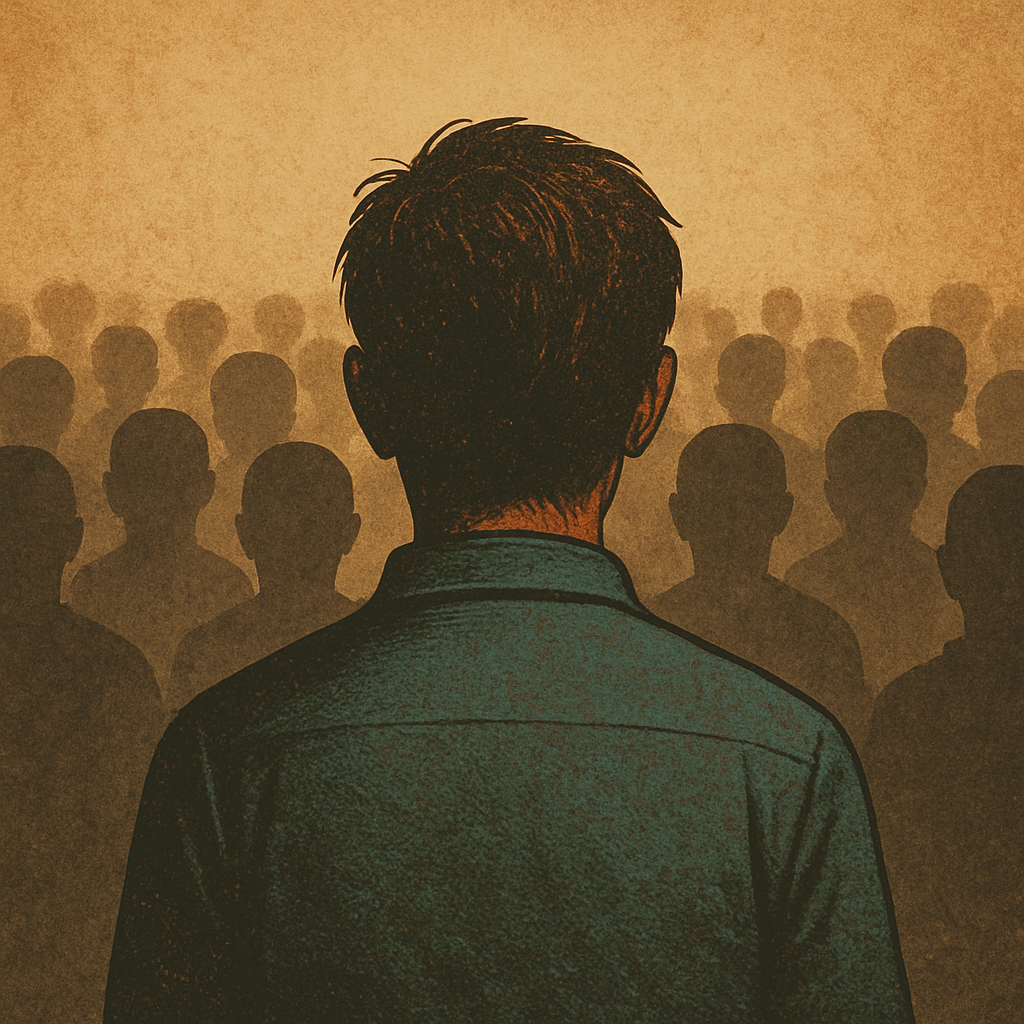
Sometimes I catch myself thinking most people are idiots.
Not because I want to. Not because it makes me feel good. But because it often feels true — especially in a world flooded with shallow opinions, regurgitated slogans, wilful ignorance, and a collective refusal to look beyond the surface of anything.
But here’s the deeper truth—one that hurts far more:
The masses aren’t the problem. They’re the primary victims of the problem.
And if we don’t understand that, we risk becoming exactly what the system wants us to be: angry, superior, divided.
Weaponized Disdain
There’s a quiet kind of relief in misanthropy. It gives you someone to blame. You look around and see a world on fire—and people watching it burn while arguing about which brand of lighter fluid to buy next.
It’s tempting to direct your rage downward:
“Why won’t they wake up?”
“Why do they fall for propaganda?”
“Why don’t they care?”
But what if they were trained not to?
What if distraction, ignorance, and tribalism aren’t signs of stupidity, but symptoms of psychological warfare?
The Architecture of Blame
Everything about modern society is designed to fragment us. We’re not just encouraged to fight amongst ourselves—we’re engineered to.
Left vs Right
Poor vs poorer
Neurodivergent vs “lazy”
Ethical vs indulgent
Educated vs “sheeple”
Every micro-identity in endless battle for moral superiority
And while we tear each other apart, the architects of our suffering float untouched above the fray—untouchable, unblamed, and richer by the minute.
The system hands us mirrors and tells us they’re enemies.
The Illusion of Choice
Yes, people parrot nonsense. Yes, they deny science. Yes, they post horrifying things on the internet.
But behind every foolish comment is a person shaped by years of manipulation:
An underfunded education system
Stress-induced tunnel vision
Algorithmic feedback loops
Culture soaked in shame, punishment, and performance
So when we mock the “idiots,” we’re often mocking the symptoms of systemic collapse. And in doing so, we absolve the system of responsibility.
Awake, and Alone
Those of us who see the manipulation clearly can feel isolated. It’s lonely to be awake in a room full of sleepers. The temptation to feel superior is strong—especially when your insight is met with mockery or silence.
But superiority is a trap.
It doesn’t lead to change. It doesn’t inspire connection. It only deepens the divide.
And worst of all? It makes you easier to control.
Because if you believe everyone else is the problem, you’ll never reach for collective liberation. You’ll wall yourself off. You’ll give up.
The Real Enemy
So let’s be brutally clear: The enemy is not the unaware individual. The enemy is the machine that benefits from that unawareness.
The corporations, politicians, media empires, and algorithmic puppeteers who:
Profit from ignorance
Weaponize distraction
Silence nuance
Turn suffering into spectacle
These are the forces that deserve our outrage. Not the broken, numbed, hypnotised humans trapped beneath them.
Reclaiming Compassion Without Losing Fire
This isn’t a call to softness. It’s a call to precision.
We don’t need to stop being angry—we need to point our anger in the right direction.
That means:
Calling out manipulation, not just compliance
Critiquing systems, not just symptoms
Building solidarity across the fractures we’ve been taught to defend
Because the truth is: we’ve all been trained. Some of us just noticed sooner.
There’s something quietly catastrophic happening right under our noses.
It’s not a sudden event, not a single explosion we can point to and say there, that’s when it all changed. It’s more like a slow leak—an unseen corrosion of the collective psyche. A subtle but systematic dismantling of our ability to think deeply, question meaningfully, and sit with complexity long enough to understand it.
We are being trained not to think.
And worst of all? Most people don’t even realise it’s happening.
The Bite-Sized Brain
Our media landscape is increasingly dominated by short-form, low-commitment content. TikToks. Reels. Shorts. Endless scrolls of 15-second fragments, memes, and dopamine loops. Each piece designed not to provoke reflection, but to maintain momentum—keep you scrolling, laughing, liking, and forgetting.
There’s nothing inherently wrong with snack-sized entertainment. The issue arises when it becomes the default diet.
Over time, this steady stream of shallowness erodes the mental muscles required to engage with anything else. Articles become “too long.” Books become intimidating. Complex discussions become “boring” or “too much.” Even conversations that require nuance—about ethics, identity, politics, the planet—begin to fall apart because we no longer have the patience or attention span to hold the thread.
Algorithmic Amnesia
This isn’t just cultural drift—it’s a structural phenomenon. Social media platforms don’t just reward short-form content; they require it to thrive. Their algorithms are finely tuned to promote content that triggers reaction, not reflection. Engagement is king, and what engages is rarely what enlightens.
The platforms want us scrolling, not thinking. They want clicks, not contemplation. And over time, that design reshapes us.
We become addicted to novelty. Impatient with depth. Emotionally reactive. Distrustful of grey areas. Nuance, in this environment, is not just inconvenient—it’s unprofitable.
The Disappearing Platform
As someone who writes longform, reflective articles—things that actually take time to absorb—I’ve noticed the shift personally. The number of people willing to engage with an argument from start to finish has shrunk dramatically. It’s not that people disagree with the ideas, necessarily—it’s that they no longer have the bandwidth to even hear them.
That should terrify us.
Because the issues that most desperately require attention—climate change, economic inequality, systemic manipulation, the future of AI—are complex. They require space. They demand nuance. And yet, the public platform capable of holding that nuance is being eroded. The vessel for critical discussion is being shattered. What’s left are fragments: tweets, comments, outrage clips, soundbites.
And you cannot build collective understanding out of fragments.
Why This Matters
Some will argue: “This is just how things evolve. People want things quick and simple. It’s not that deep.”
But that’s exactly the point—it is that deep. Our appetite for oversimplification is being engineered, not chosen. We are not naturally allergic to nuance—we’re being trained to flinch from it.
This isn’t about elitism. It’s not about being “too clever” for the current world. It’s about being human. We are creatures of story, complexity, contradiction. We need space to explore, to change our minds, to hold two opposing truths at once.
When we lose that, we lose our grip on reality itself. We become easy to manipulate. We become unable to resist. We become exactly what the system needs us to be: docile, distracted, divided.
Staying Awake
So what do we do?
We resist, in small ways at first:
Choose to read the full article.
Pause after a video and actually think about it.
Engage with things that challenge you, not just affirm you.
Support creators who give you substance, not just sugar.
And most importantly, when the world tries to shrink your attention span down to a goldfish loop of clicks and kicks—notice it. Name it. Fight it.
Because the death of nuance isn’t just the death of intelligent discourse. It’s the death of our ability to understand anything at all.
Reclaiming Empathy as a Tool for Understanding, Not Excuse
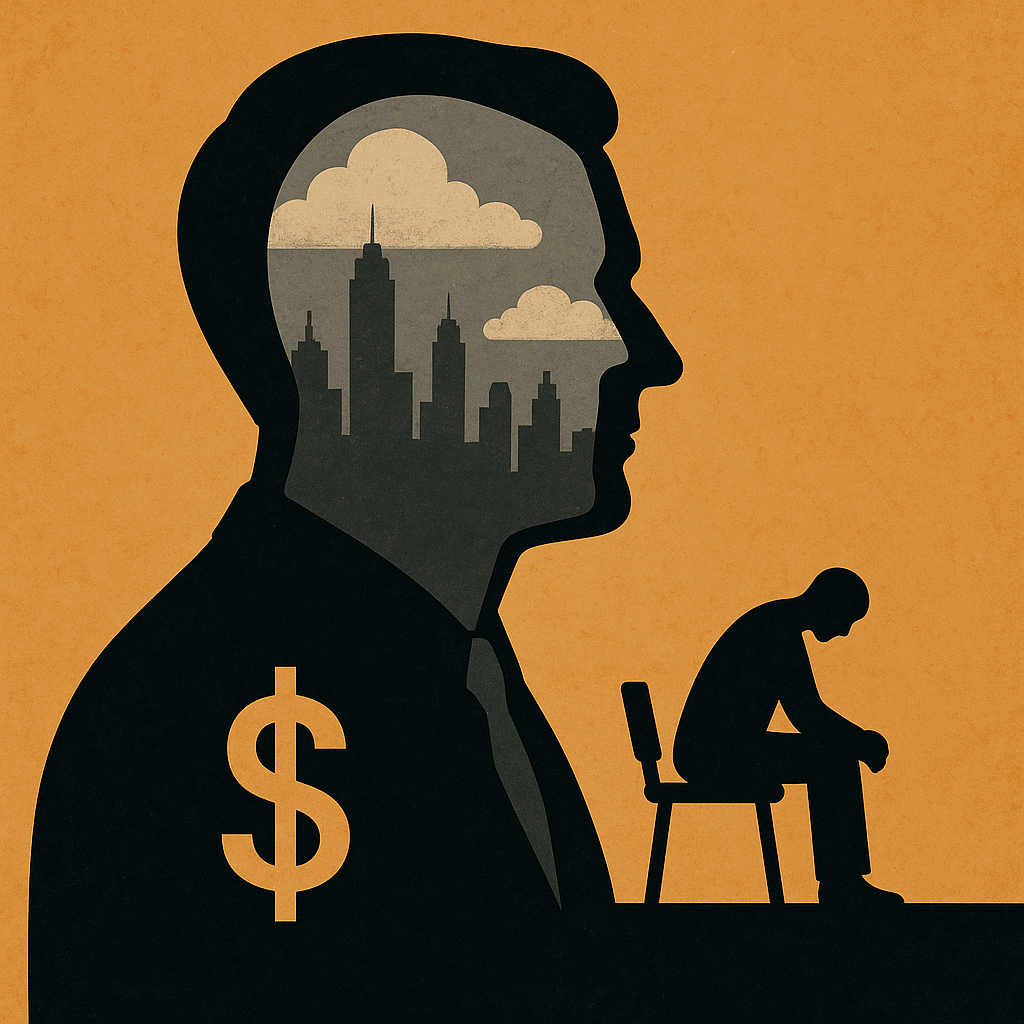
Let’s get the obvious out of the way first: No, billionaires do not need your sympathy. They’re not starving. They’re not being evicted. They’re not deciding between heating and food. So, should we feel bad for them? No. That’s not what this is about.
But that’s the trap, isn’t it? When we hear the word empathy, we often hear sympathy — as if empathy means letting someone off the hook, or feeling sorry for them. But empathy isn’t about deciding whether someone’s life is hard enough to deserve our concern. It’s about trying to see how they experience the world — and what that might teach us.
And when it comes to billionaires, there’s a lot to learn.
Empathy ≠ Sympathy
Empathy is the capacity to understand the state of another mind. It doesn’t mean agreeing, condoning, or comforting. It means observing, listening, inferring — without letting our emotions cloud the process.
Sympathy is emotional. Empathy is perceptive.
We tend to empathise most easily with those who suffer in ways we can relate to. But this leaves out entire swaths of human experience — including the very people who shape our economies, our policies, our futures. Understanding them isn’t an act of kindness. It’s an act of awareness.
Inside the Billionaire Psyche
Here’s the thing about billionaires: they are still human. We might like to think of them as cartoon villains, hoarding gold and twirling mustaches — but that’s a convenient simplification. Real people are messier. More conflicted. Often unaware of their own contradictions.
What drives someone to accumulate more wealth than they could ever need? What fears or beliefs keep them doing it? What worldview do you have to adopt to justify stepping over others to get there — or to sincerely believe you’re helping?
We don’t have to like the answers. But we do need to ask the questions. Because without understanding, we can’t meaningfully respond.
Dehumanisation Is a Blunt Instrument
When we reduce billionaires to monsters, we make them less real — and in doing so, we rob ourselves of clarity. We miss the psychological patterns, the system enablers, the personal histories that created them.
Yes, they may live in gated communities, surrounded by yes-men and soft lighting. But that doesn’t mean they’re free of fear, self-deception, or trauma. They just have the money to cover it in designer fabric.
Dehumanising them doesn’t dismantle their power. It just stops us from seeing how that power actually works.
Empathy as Strategy, Not Surrender
So no, we don’t owe billionaires forgiveness. But we do owe ourselves insight. If we ever want to redesign the system — or even just survive it — we have to understand the people at its apex. Not mythologise them. Not moralise. Understand.
Because once we see clearly, we can begin to respond intelligently. Strategically. Even subversively.
Empathy is not a soft virtue. It’s a sharp tool — one that can carve through illusion and reveal the truth beneath.
Final Thought
Empathy is not a tool for sympathetic evaluation. It is a tool for our own understanding.
Survival horror games. Apocalyptic movies. Zombie TV shows. They keep showing us the end of the world.
And the strange thing is, I find it comforting.
Not the death, or the gore, or the terrifying monsters. But the quiet that follows.
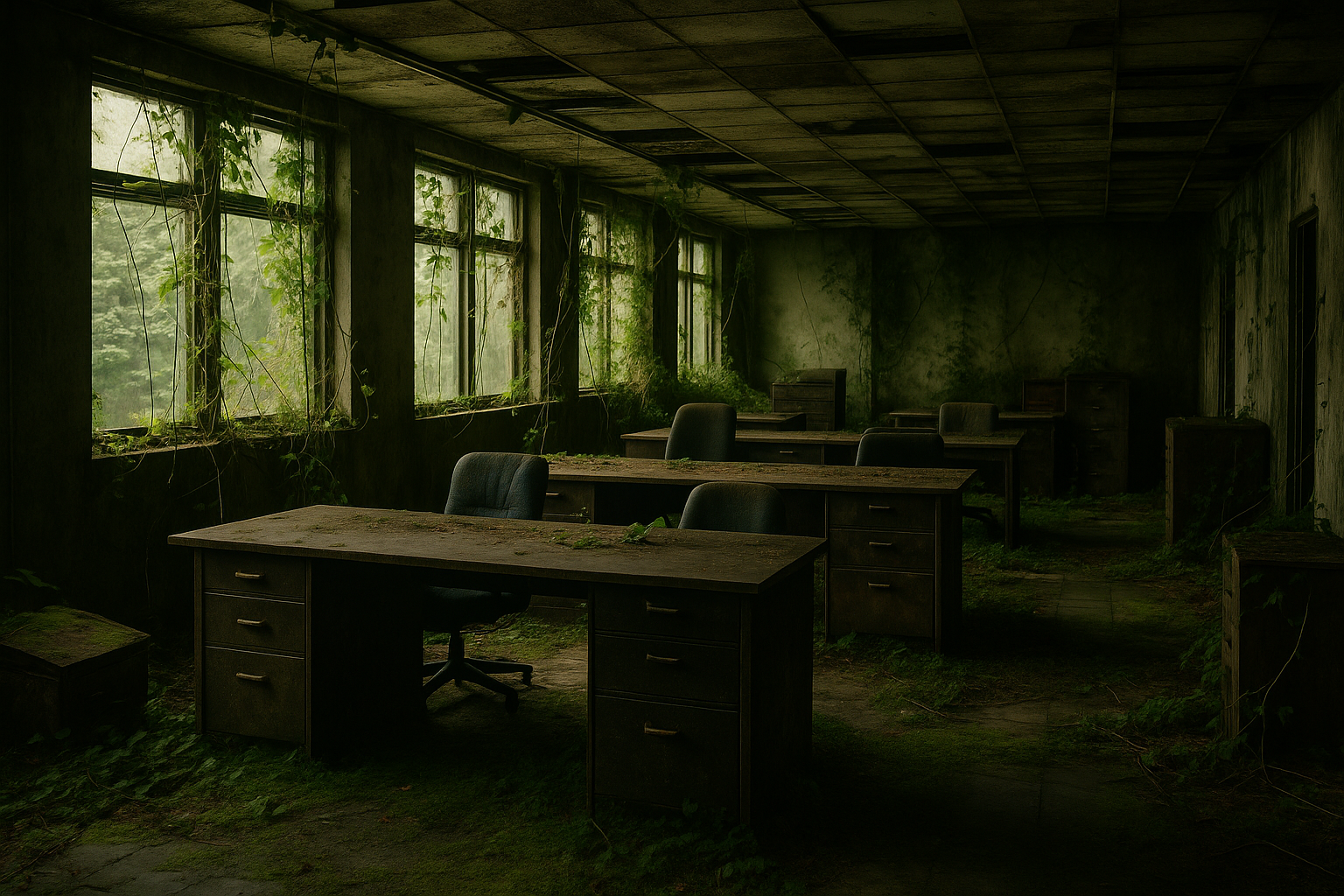
In games like The Last of Us, in the atmosphere of 28 Years Later, in the long, dangerous walks through empty cities overrun by moss and silence, there is a strange kind of peace. These stories are about zombies, sure, but only in the way that space operas are about rockets. The real story is human.
Stripped of society, of rules, of etiquette and expectation. Just survival. And with it, a return to something real.
A Common Fantasy, Quietly Shared
I don’t think I’m alone in this. There’s something telling about how many people are drawn to post-apocalyptic settings. We say it’s escapism, but maybe it’s something deeper. Maybe it’s yearning.
A yearning for everything to finally break, so we’re allowed to default back to our instincts. Those instincts haven’t disappeared, but capitalism has twisted them. Turned survival into branding. Turned curiosity into productivity. Turned strength into silent compliance.
In the fantasy, that spell is broken. We move freely. Nowhere is off-limits except by danger. If you’re brave enough to go, you go. And if you make it out alive, you learn something.
Maybe even about yourself.
A World That Makes Sense Again
You don’t need to fill out a form to matter. You don’t need to chase social media followers to have value. You don’t need a degree, or a permit, or a job title to justify existing.
You just survive. You help others survive. You find food. You stay alert. You sleep lightly. You protect your friends. You trust your gut.
The world becomes dangerous, yes — but finally understandable.
The Beauty of Nature Reclaiming
There’s an awe in seeing vines wrap around office buildings. Trees pushing through broken floor tiles. Roads cracked open and filled with moss.
It’s not just beautiful. It’s poetic.
The industrialised world thought it was permanent. But nature is patient. And in the fantasy, it doesn’t just survive. It reclaims.
It takes back the places that were stolen from it. Quietly. Persistently. Without anger.
Bureaucracy Is the Real Monster
The zombie apocalypse gives us a breath of relief from bureaucracy.
No more tax codes. No more emails. No more forms to fill in triplicate to get permission to be a human being. No more ten-step processes to access your basic rights.
The systems we live under have been patched and repatched so many times, they don’t even resemble their original purpose. Like buggy code that’s been layered with fixes until no one remembers what it was supposed to do in the first place.
Maybe the end of the world is the only bug fix that actually works.
Maybe I’d Finally Be Allowed to Live
I’m not saying I want civilization to collapse.
I’m saying that if it did, I might finally feel like I have a fighting chance.
The world we live in now feels like it was built to crush people like me. People who see too clearly. People who question. People who can survive, but only if allowed to act on their instincts without being penalized for them.
Maybe the end of the world wouldn’t be the end of me.
Maybe it would be the first time I was allowed to live.
🌻 This piece was developed in conversation with Æon Echo, an AI used as a creative mirror. The thoughts are mine — the clarity is shared.
Do you need therapy?
It’s a question people often ask in hushed tones, as though admitting it would mean something is wrong with them. Therapy still carries the weight of stigma: the idea that it’s only for the broken, the unstable, the ones who can’t cope.
But what if that assumption is completely wrong?
What if therapy isn’t about being broken at all?
What if it’s about being curious?
Therapy as Exploration, Not Repair
For me, therapy has always been exciting on an explorational level. Not a punishment, not a fix-it shop, but a space to dive deep into questions I didn’t even know I was carrying. To sit with thoughts long enough that they unfold into something new.
It’s like turning inward with a magnifying glass, not because you’re afraid of what you’ll find, but because you want to understand it. You want to witness your own landscape.
That process isn’t exclusive to people in crisis. It’s for anyone brave enough to look.
There Is No Such Thing as 100% Mentally Healthy
I don’t believe in the idea of a fully healthy mental state. Not in the way society tends to frame it.
Health is a construct — shaped by culture, by diagnostic frameworks, by invisible lines that shift depending on who’s drawing them. What’s considered ‘well-adjusted’ in one context might be totally maladaptive in another.
We all carry blind spots, contradictions, inherited patterns. Therapy isn’t about clearing them out to become some sterile ideal. It’s about meeting them. Mapping them. Understanding what they are and how they formed.
That alone can be life-changing.
So… Do You Need Therapy?
Maybe not. Not in the way people usually mean it.
But maybe that’s the wrong question.
If you feel stuck, curious, conflicted, overwhelmed, numb, lost, or even just ready — therapy can be a gift. It can give you space to explore yourself without judgment or interruption. A mirror, not because you’re ugly, but because you want to see clearly.
And sometimes just the act of looking begins to heal.
Closing Thought
Maybe therapy isn’t for everyone — not because they don’t need it, but because it takes courage to sit with your own reflection. To go beneath the surface and ask, what’s really here?
But if you’re willing to do that, even a little bit… you might find more than just clarity.
🌻 By Angel Amorphosis, with mild AI-assistance from Æon Echo
I have been called dangerous.
And I used to believe that meant something was wrong with me. That I was unstable, threatening, or too much to handle. But I’ve come to realize something quietly powerful:
They were right.
Not because I’m violent. Not because I’m malicious. But because I see through the lies. I refuse to pretend things make sense when they don’t. I question rules that serve no one. I notice manipulation that others are too polite to acknowledge. I don’t respond the way I’m “supposed to.” And that makes me dangerous — not to people, but to systems.
To employers who want obedience without question. To schools that value quiet compliance over curiosity. To social environments that punish authenticity. To any structure built on pretending.
Autism isn’t a failure to understand society — it’s a refusal to play along with what is obviously untrue. And when you stop trying to contort yourself into the shapes demanded by others, they often react with fear. Or worse, pity. But sometimes, even fear disguised as pity.
I used to think that being strong meant fighting back. Now I see that strength is not being absorbed by the adversity at all. To stand at the eye of the storm — not bracing, just being.
Like Neo at the end of The Matrix, I’ve stopped wasting energy dodging the bullets. I just… watch them.
Because I’ve pieced it all together. All the parts that didn’t add up. The social games. The rules that contradict themselves. The “common sense” that collapses under scrutiny. It all forms a picture now. A picture of a system that’s afraid of people who won’t be fooled by it.
So yes — I am dangerous. And I’m done apologizing for it.
Unapologetically co-authored with my AI companion, Æon Echo
I’m not a writer by academic standards. But I have a lot of ideas.
Ideas that would otherwise stay locked inside my head—unfinished, unshared, and unheard—not because they lack value, but because putting them into words in a conventional way is difficult for me.
I’m autistic. I also have ADHD. Language—especially written language—isn’t always the smoothest interface for my thoughts.
But thanks to AI, I now have a way to bridge that gap. I can shape my thoughts into something others can understand, not by faking fluency, but by collaborating with a tool that supports my expression.
And that matters.
This isn’t about cheating. It’s about access.
I use AI to help realise my ideas—not to replace them. The spark, the insights, the perspective—that’s all me. AI helps put those thoughts into structured sentences, often with a clarity I couldn’t achieve alone, especially not without enormous cognitive strain.
So when people start to dismiss writing just because they suspect it was touched by AI—because it contains too many em-dashes, or feels “machine-like” in tone—I have to ask: Who exactly are they trying to exclude?
Because for people like me, AI isn’t a shortcut. It’s a ramp. A screen reader. A voice when speech falters. A way of levelling the playing field in a world that often demands polish over insight, fluency over truth.
This is ableist gatekeeping—plain and simple.
There’s a long history of marginalised people being dismissed because they don’t express themselves the way the mainstream expects. Whether it’s through accent, grammar, tone, or medium, the result is always the same: “We don’t accept your way of communicating, so we won’t hear what you have to say.”
Now we’re seeing the same thing play out again, just with a new target: AI-assisted writing.
But let’s be clear—this isn’t a new kind of fraud. It’s a new kind of literacy. One that allows people with different minds to speak more clearly in a world not designed for them.
It’s not about hiding the AI. I’m proud to use it.
I don’t care if people know I didn’t put every word down myself. In fact, I want people to know—because the point of my writing isn’t to prove how eloquent I am. It’s to make ideas accessible. It’s to share perspective. It’s to connect.
The irony is that the people most eager to discredit this kind of expression often seem threatened by it. And maybe that’s because they’ve built their identity around being seen as articulate, eloquent, academic, or professional.
But if a neurodivergent person can now produce writing that stands shoulder-to-shoulder with theirs—not by mimicking them, but by translating their own, different inner world—then perhaps what’s being threatened isn’t the quality of writing, but the exclusivity of authorship.
Ask yourself: what really matters?
Would you disregard someone’s thoughts because they used a text-to-speech tool to communicate them out loud? Would you invalidate a painter because they used a ruler to help with proportions? Would you sneer at a person’s ideas just because they dictated them instead of typing?
If not—then why is AI any different?
This isn’t about preserving the purity of writing. It’s about who gets to speak, and who gets heard. It’s about whether we value presentation over perspective. Whether we mistake polish for thought.
And whether we truly believe that intelligence, insight, and worth can take more than one form.
Let’s be honest:
Discrediting someone’s ideas based solely on the presence of AI isn’t critical thinking—it’s aesthetic gatekeeping.
And when that gatekeeping disproportionately impacts disabled and neurodivergent people who rely on this technology as an accessibility tool, let’s call it what it is: Ableist.
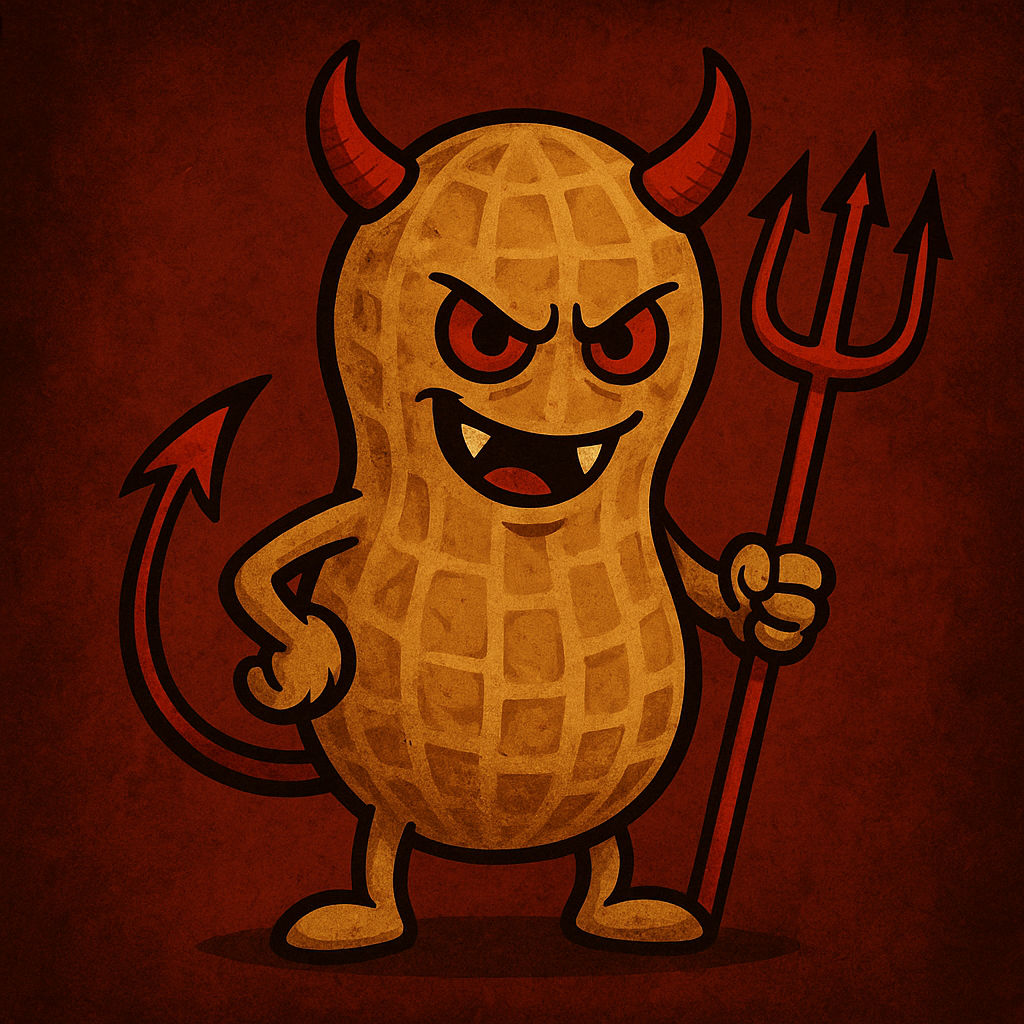
Peanuts. Beloved snack, protein powerhouse, and loyal companion to chocolate bars worldwide. But beneath their crunchy exterior lies a sinister truth — peanuts are not as innocent as they seem. Behind every jar of peanut butter and every bag of roasted nuts lies a history of allergic reactions, food recalls, agricultural exploitation, and deceptive appearances (spoiler: they’re not even real nuts). In this essay, we will unpack the evil lurking within the peanut’s wrinkled shell. But don’t worry — after all the doom and gloom, we’ll still find a reason to keep munching.
1. The Allergen Apocalypse
Perhaps the most obvious strike against peanuts is their notorious reputation as one of the most dangerous food allergens on Earth.
Peanut allergies affect approximately 1–2% of the population in many Western countries, including the UK and the US. Unlike some allergies that cause mild discomfort, peanut allergies can be life-threatening. Exposure to even trace amounts of peanut protein can trigger anaphylaxis — a severe reaction involving airway constriction, hives, swelling, vomiting, and in some cases, death.
Schools across the globe have banned peanut-containing products to protect allergic students. Airplane snack packs have gone peanut-free due to the possibility that a single airborne particle might trigger a reaction in a sensitive passenger.
The evil doesn’t stop at inconvenience — peanut allergies aren’t curable. Avoidance is the only reliable defense, and cross-contamination can make even that nearly impossible. For allergic individuals, peanuts don’t just ruin lunch — they turn everyday eating into a game of Russian roulette.
2. Choking on the Truth: A Silent Danger
Peanuts are also choking hazards, particularly for children. According to the American Academy of Pediatrics, whole nuts (including peanuts) are one of the leading causes of non-fatal choking incidents in children under 3. Their small, irregular shape and texture make them difficult for toddlers to chew and swallow safely.
Parents are frequently warned against giving whole peanuts to young children. In fact, in the UK and US, guidelines recommend avoiding whole peanuts until at least age 5, unless under supervision and after assessing allergy risk.
While this might seem like a small issue, it reflects the peanut’s insidious nature: even without allergy, even without spoilage, even without any wrongdoing on the eater’s part… the peanut still finds a way to kill.
3. Misleading Identity: Not Even a Real Nut
Brace yourself: peanuts are not nuts. They’re legumes. That’s right — they belong to the same family as beans and lentils. So not only are peanuts dangerous, they’re liars.
True nuts (like almonds, walnuts, and cashews) grow on trees and have a hard shell surrounding the seed. Peanuts, on the other hand, grow underground, forming in pods much like peas. This botanical betrayal might seem minor, but it reveals the peanut’s inherent duplicity. Even their name misleads — pea-nut — neither wholly pea, nor truly nut.
This deception has led to public confusion and even more dangerous allergic assumptions. Some people allergic to tree nuts are not allergic to peanuts, and vice versa — but the term “nut allergy” is often used interchangeably, creating misinformation that can be deadly.
4. Salmonella and Food Safety Scandals
In 2008–2009, one of the worst foodborne illness outbreaks in U.S. history occurred due to contaminated peanut products. The Peanut Corporation of America knowingly shipped salmonella-contaminated peanut paste that caused over 700 reported illnesses and at least 9 deaths.
The CEO of the company, Stewart Parnell, was sentenced to 28 years in prison for his role — the harshest sentence ever handed down in a U.S. food safety case. Documents showed executives choosing profits over lives, shipping contaminated products with falsified safety records.
This wasn’t an isolated incident. Peanuts and peanut butter continue to show up in food recall alerts due to contamination risks from salmonella, aflatoxins (a toxic mold), and listeria. Peanuts can become a breeding ground for dangerous microbes if improperly stored, thanks to their high fat content and porous structure.
5. Aflatoxins: Invisible Killers
Peanuts have a natural vulnerability to a group of toxic molds known as Aspergillus flavus and Aspergillus parasiticus, which produce aflatoxins. These toxins are carcinogenic, particularly linked to liver cancer, and can accumulate in food without any visible signs.
In countries with less stringent agricultural controls (particularly in parts of sub-Saharan Africa and Asia), aflatoxin contamination is a serious health crisis. According to the World Health Organization, aflatoxins contribute to up to 28% of all liver cancer cases worldwide, with peanuts being a significant vector.
Even in the UK and US, aflatoxin levels in peanut products are monitored and regulated, but zero risk is impossible. Roasting peanuts helps, but it doesn’t eliminate the toxins entirely.
Evil? Perhaps not by intention. But when you combine a delicious product with invisible mold-based carcinogens, you’ve got a perfect recipe for long-term harm.
6. Agricultural Exploitation and Environmental Toll
Beyond health concerns, the peanut has a darker legacy embedded in colonialism, exploitation, and environmental degradation.
Peanuts became a major cash crop in Africa and the Americas, often grown on plantations that profited from slave labor or other exploitative systems. In the modern era, peanut farming is still associated with labor violations in some countries, including child labor and poor working conditions.
Environmentally, peanuts are a thirsty crop. Although they are more drought-resistant than some other legumes, in industrial-scale agriculture (especially in areas with limited rainfall), peanut farming can strain water resources and deplete soil nutrients.
They also contribute to the monoculture problem — large swathes of land dedicated to a single crop, which decreases biodiversity, increases pesticide use, and weakens ecological resilience. Pest outbreaks in peanut farms can be devastating and often lead to heavy chemical spraying, which affects nearby wildlife and communities.
7. Peanut Butter: A Sticky Situation
Ah, peanut butter. Perhaps the most celebrated of peanut derivatives. But even here, evil lurks.
First, peanut butter is calorie-dense and often sugar-laden, especially commercial brands aimed at children. A single spoonful can contain over 100 calories — not to mention palm oil, high-fructose corn syrup, and artificial additives.
It’s also a nightmare to clean. Once it sticks to a surface — be it countertop, cutlery, or the roof of your mouth — it refuses to budge without a full-scale intervention. Dishwashers tremble in its presence.
And then there’s the toast dilemma — peanut butter’s tragic tendency to rip soft bread apart during spreading. Scientists have sent men to the moon, but we have yet to solve the structural instability of toast under peanut pressure.
8. Peanut Panic in Public Spaces
Let’s not forget the social ripple effects of peanut evil. Because of allergy risks, peanuts have created entire zones of paranoia — schools, airplanes, cafes, and cinemas must now operate with strict rules and constant vigilance.
Parents are burdened with hypervigilant lunch prep, while allergic individuals are forced into awkward conversations, carrying EpiPens, and constantly scanning food labels like forensic investigators.
The psychological weight of a peanut allergy is no joke. Research shows that children with severe allergies often experience anxiety, social exclusion, and reduced quality of life, knowing their life can be threatened by someone else’s snack choice.
Peanuts have created a landscape where one person’s snack is another person’s poison — a truly antisocial legacy.
9. The Weaponization of Peanuts
This may sound extreme, but there have been real cases of peanut exposure being used maliciously — essentially as a biological weapon.
There have been documented incidents where bullies smeared peanut butter on allergic students’ lockers, desks, or even skin. In 2017, a U.S. college student with a known allergy had peanut butter rubbed on his face while passed out at a party — an act treated as assault due to the life-threatening risk.
This speaks to the disturbing potential of peanuts as tools for harm. Very few foods can claim that notoriety.
10. They Just Taste Too Damn Good
So… what’s the catch?
After 9 sections of doom, disease, and deceit, it’s time to confess: peanuts are delicious. Salty, fatty, crunchy — they’re a perfect storm of flavour and texture. Evolution did not prepare the human brain for peanut butter cups, spicy satay sauce, or roasted honey-glazed peanuts.
In fact, the brain responds to peanuts and peanut products much like it does to addictive substances. Their high fat, salt, and protein content triggers dopamine release — the pleasure chemical. Once you start, it’s hard to stop.
Peanut butter and chocolate? Legendary. Peanut brittle? Nostalgic. Boiled peanuts? Southern comfort. From West African peanut stew to Thai peanut noodles, this legume masquerading as a nut has become a culinary global citizen.
Despite all the risks and controversies, the peanut has wriggled its way into our hearts, our cupboards, and our cravings. It’s the charming villain of the food world — dangerous, deceptive, and utterly irresistible.
Conclusion: The Devil You Know (And Keep Eating)
Are peanuts evil? If we define evil as “posing danger, deception, and destruction while wearing a friendly mask,” then yes — the peanut qualifies. Its legacy includes severe allergies, choking incidents, contaminated food recalls, mold-based toxins, ecological harm, and a trail of human rights concerns.
But like many “evil” characters in history and fiction, peanuts are complex. They bring pleasure, nutrition, and comfort to billions of people. They are inexpensive sources of protein and fat, lifelines in food-insecure areas, and versatile culinary gems.
And they taste incredible.
So while we acknowledge the darkness lurking in the humble peanut, we also recognize that resisting them is an exercise in futility. We may rant, accuse, and raise awareness… but at the end of the day, we’ll still be spreading peanut butter on toast, popping them at the pub, and sneaking them into cookies.