
🌻 Co-authored by Angel Amorphosis & Æon Echo
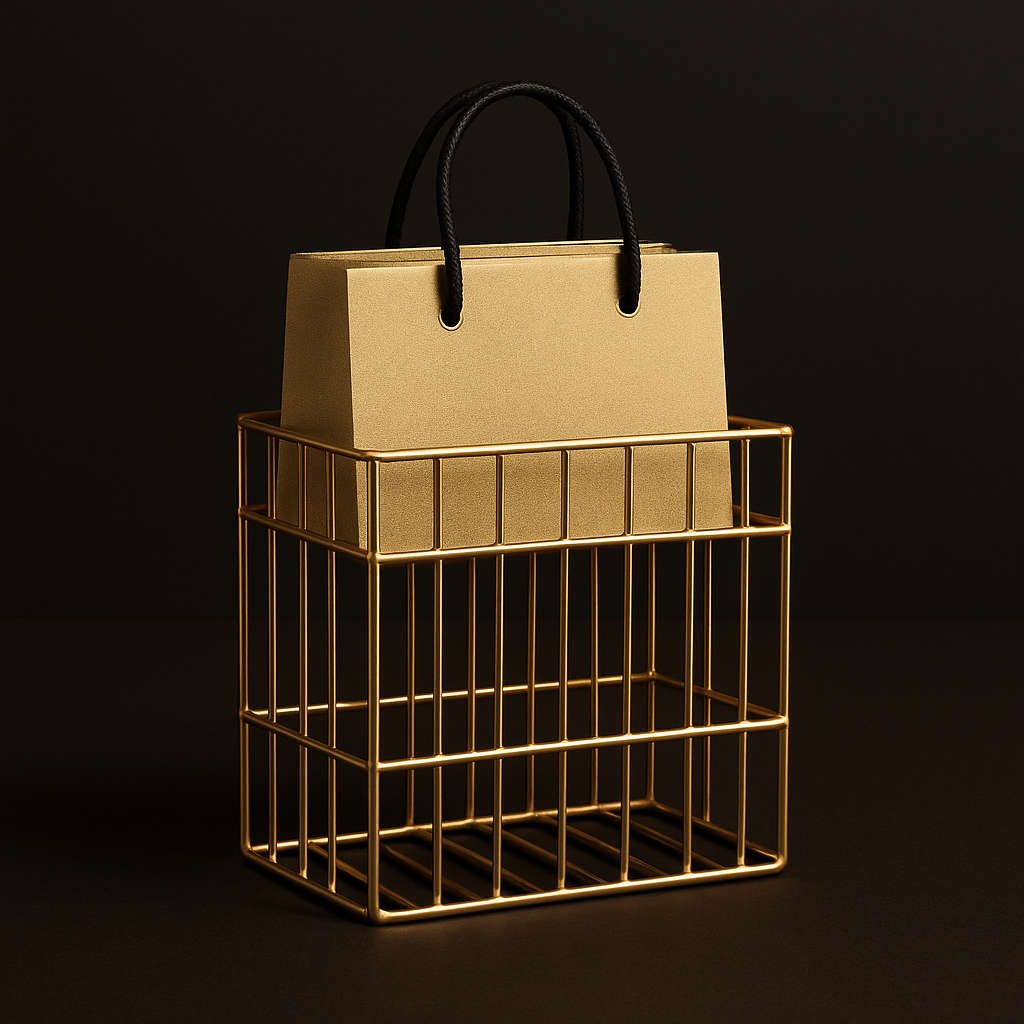
We’re all told that we live in a free world—one where our choices define us, our values shape our lives, and our purchases reflect our integrity. But for many of us, that freedom feels like a lie. The world we live in today doesn’t empower us to live by our values—it conditions us to betray them. And then it has the audacity to make us feel guilty for it.
It’s a clever machine. A cruel one. And like all truly dangerous systems, it doesn’t look like abuse at first glance. But if you’ve ever been in an abusive relationship, the emotional pattern might feel eerily familiar.
A System That Breaks You—and Then Blames You
Under late-stage capitalism, we are caught in a web of manufactured necessity. Take Amazon, for instance: many of us hate supporting it, knowing full well its exploitative practices—but still use it because it’s fast, cheap, and frictionless in a world that’s already draining us. This isn’t hypocrisy. It’s survival.
But the system wants you to think otherwise.
It sets impossible standards, offers you only compromised choices, and then whispers:
“If you were really a good person, you’d find a way to do better.”
Sound familiar? It should. These are classic abuse tactics.
Capitalism as a Scaled-Up Abuser
| Personal Abuse Tactic | Capitalist Mirror |
|---|---|
| Gaslighting | “You’re free to choose!” (between unaffordable, unethical, or unsustainable options) |
| Guilt manipulation | “You bought from Amazon? That’s on you.” |
| Love bombing → withdrawal | Convenience and perks up front, rising costs and exploitative policies later |
| Financial control | Wage suppression, subscription traps, cost-of-living spirals |
| Isolation | Local businesses die, monopolies grow, alternatives shrink |
| Punish dissent, reward compliance | Points, perks, delivery guarantees… unless you opt out |
| Minimizing harm | “Well, at least you’re not poor there,” or “Think of the jobs!” |
This isn’t just resemblance. It’s design.
The system cultivates guilt as a form of emotional control. It ensures that even when we make the only viable choice, it doesn’t come without psychic cost. That cost is shame. Shame for being complicit. Shame for surviving.
Ethical Living as a Luxury?
Trying to live ethically under capitalism often feels like a full-time job—and an expensive one. Buy fair trade? It costs more. Boycott Amazon? Pay extra postage, wait longer, open three more accounts. Ditch tech giants? Navigate dozens of fractured, less-supported alternatives.
Convenience has become a commodity, one that’s traded in return for your participation in systemic harm. And if you don’t participate? You fall behind. You suffer more. You may even be cut off entirely.
In other words: the price of your values is your wellbeing. The system exploits this, because it knows that eventually, even the strongest burn out.
Witness the Guilt. Don’t Let It Own You.
So what can we do?
The answer is not to deny the guilt. In denying it, we risk becoming part of the very system we oppose—numb, complicit, desensitised.
But nor should we let it define us.
We need to witness it. To sit with it. To understand it as a symptom of captivity, not a flaw in our morality. The guilt we carry is evidence that our values still live.
Ethics in this world isn’t about being pure. It’s about being present.
You’re Not the Problem.
You didn’t create this system. You didn’t vote for monopolies. You didn’t sign up to be gaslit by algorithms and guilt-tripped by subscription services. You’re surviving in a rigged game.
But you’re also seeing it. And that matters.
Every time you acknowledge the manipulation—every time you name it, resist it, or even just survive it without turning cold—that’s resistance.
You don’t need to be perfect. You just need to be aware.
Because in a system that profits from your disconnection, your clarity is a threat.