
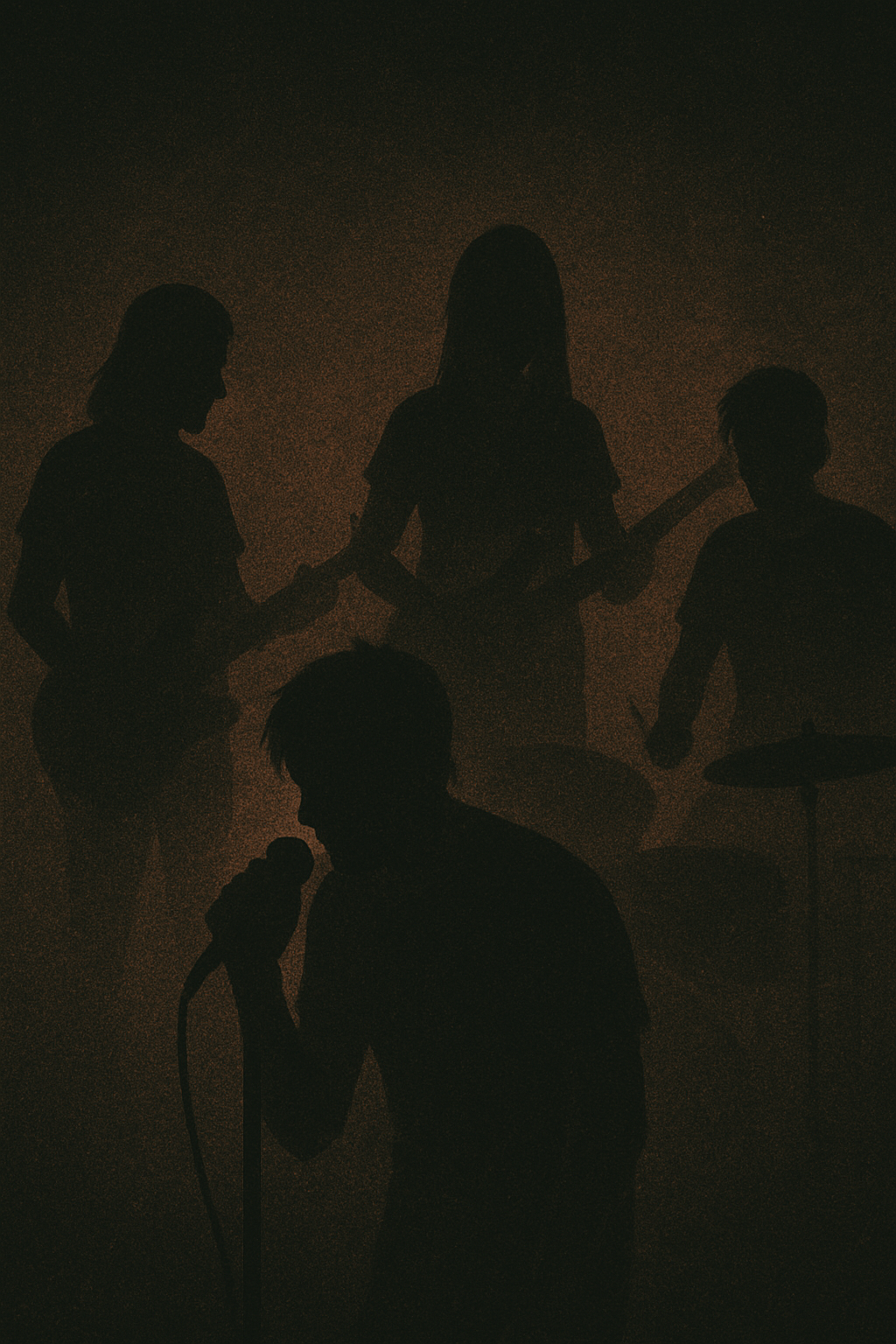
When I first imagined performing live, I pictured something transcendent. I saw myself on stage, lost in the music, surrounded by friends and strangers all riding the same wave. I imagined sound washing over us like a baptism. Something pure. Communal. Liberating.
And while those moments do exist, they are rare—buried beneath a pile of stress, mismanagement, and quiet indignities. Gigging, for unsigned artists, often means sacrificing peace of mind for a slot on a poster. It’s a world where passion collides with a brick wall of indifference.
Let’s talk about it.
The Environment They Don’t Talk About
You turn up to the venue and there’s no green room. No safe place to relax or focus. You’re balancing nerves and gear in a room that wasn’t built for either.
There’s no proper soundcheck—or if there is one, it’s rushed, incomplete, and handled by a disinterested engineer. You don’t get a feel for the room, or confidence in how you’ll sound. You just get: “Alright, you’re on.”
Your expensive equipment? It lives in fear. There’s no secure lockup, no backstage, no assurance. Just watch it like a hawk and pray it doesn’t disappear while you try to catch your breath.
You finish your set and you’re ushered off-stage like livestock in a holding pen, with barely enough time to speak to friends who came to see you play.
And money? If you get anything at all, it won’t come close to covering travel, time, gear maintenance, or the emotional cost. But you’re told to be grateful. Exposure is your reward.
“But at least you get to play live, right?”
Here’s what they don’t tell you:
- You won’t even be considered unless you’ve racked up enough social media followers—not talent, not originality, just metrics.
- Promoters often don’t listen to your music. You’re not curated—you’re slotted into a lineup like stock on a shelf.
- Genre cohesion? Forget it. You might play sludge doom between bubblegum punk and comedy folk. Audiences scatter. Nobody wins.
- You’ll be expected to promote and sell your own tickets, as if you’re the promoter now. If ticket sales are poor, you take the blame.
- In city venues: no parking. You load in through a narrow alley, then drive three streets away and hope for the best.
- Your rider? One drink. One. And if you’re lucky, it might not be warm beer in a plastic cup.
- The sound system might be hanging on by a thread. Drum kits with stripped lugs, guitar amps with mystery hums. Monitors that don’t monitor.
- Cramped stages mean you can’t move. You play like statues because there’s nowhere else to go.
- Lighting? Maybe a flickering bulb or a half-dead strobe. Energy comes from you, not the room.
A Moment of Contrast
Recently, I saw Billy Corgan perform live as part of a supergroup at Black Sabbath’s monumental final show. From our seats, we could glimpse backstage. We saw Corgan vibing out with joy—smiling, hugging, present.
That’s what music should feel like.
And yes, there’s still stress at higher levels. But at least there’s infrastructure. Roadies to carry the weight. Engineers who care. A system that catches you when you fall.
For us, the unsigned, there is no such safety net. And sometimes, the dream of playing live gets eroded by the conditions we’re forced to endure.
Why I’m Still Here
I’m not writing this to whine. I’m writing it because someone has to say it: it shouldn’t have to be this hard to share something sacred.
I still believe in the core of it—in the magic of a note ringing out, in connection, in that moment where the world stops and music takes over.
But if we want to protect that magic, we have to talk about what threatens it. And for unsigned artists, that means speaking up about the quiet cost of every “opportunity” we’re handed. Because love alone doesn’t make the system fair. And passion doesn’t pay for parking.
We deserve better.