We were promised liberation.
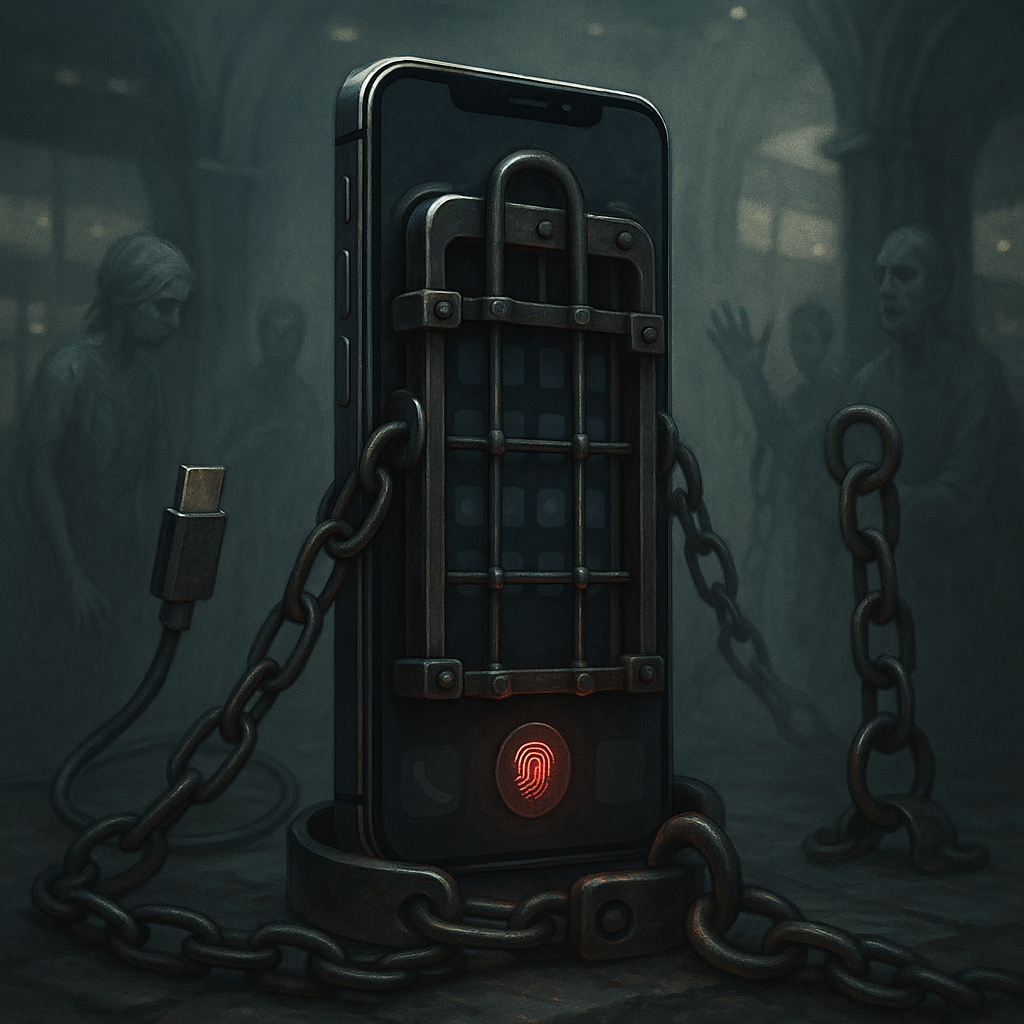
Sleek devices that fit in our pockets, connect us to the world, and put the power of creation in our hands. But instead, many of us now live in quiet submission to machines that seem to serve corporate masters more than their owners.
Our phones and laptops were once portals of personal freedom. Now they behave more like obedient jailers — installing apps we didn’t ask for, blocking accessories we bought with our own money, updating themselves while we sleep, and feeding our data to companies we never consented to.
Worse still, the more you rely on these devices — for work, communication, creativity, or accessibility — the tighter the leash becomes. And for neurodivergent users, whose very functioning may depend on predictability, clarity, and user agency, these constraints are not just frustrating — they can be disabling.
This isn’t just bad design.
It’s a philosophy: one that says you don’t really own the tools you buy.
Welcome to the era of built-in tyranny.
1. The Illusion of Ownership
You buy a phone. You expect it to work with whatever charger or headphones you already own. But surprise: it demands an official accessory. Or worse, it just won’t work at all.
Many devices now contain hardware-level restrictions that reject third-party gear unless it’s certified by the manufacturer — which often means more expensive and less sustainable.
Example: Apple’s Lightning cable ecosystem often blocks uncertified accessories, while newer MacBooks only support external displays via specific USB-C docks.
On the software side, entire ecosystems are locked down.
Samsung Galaxy phones ship with unremovable Facebook apps.
Amazon Fire tablets restrict app choices to their own store.
You’re not choosing an experience; you’re renting a branded enclosure.
2. Forced Updates, Feature Loss, and UX Hostility
Updates used to be a good thing. Now, they’re Trojan horses. You wake up one day to find your device has rearranged your menus, removed your favorite feature, or is running slower because your old hardware can’t handle the new bloat.
Examples:
- Many Windows 10 users were forcibly upgraded to Windows 11 despite preferring the previous layout.
- Google Nest devices lost key features like local device control after updates.
- Instagram moved the post button to prioritize shopping.
- Spotify now auto-plays algorithmic tracks after your playlist ends.
For neurodivergent users, this is deeply destabilizing.
Predictable routines become shifting sands.
Custom workarounds break.
The cognitive load to re-learn an interface you never asked to change can be overwhelming.
3. Vendor Lock-In and the War on Repair
Remember when you could pop open a laptop or phone, swap out the battery, maybe upgrade the storage? Now, you need specialized tools just to open the case — and even if you succeed, you might find parts refuse to work unless the manufacturer “pairs” them via software.
Examples:
- Apple requires calibration for many replacement parts like screens and batteries.
- HP printers have rejected third-party ink cartridges via firmware updates.
- Tesla has remotely disabled features like Autopilot on used vehicles.
- John Deere tractors require proprietary software access, blocking DIY repairs.
For many neurodivergent users, the ability to tinker and customize is part of how they function. Taking that away is more than just annoying — it’s disempowering.
4. Surveillance and Consent Illusions
Your device is always listening. Your apps are always tracking. Settings may appear customizable, but they often hide the truth.
Examples of “dark patterns” include:
- Confirmshaming: “No thanks, I prefer boring content.”
- Pre-checked boxes for mailing lists or data collection.
- Buttons where “Accept” is bright and big, but “Decline” is small and grey.
- Amazon’s multi-page unsubscribe process.
- Google’s multi-click cookie opt-out.
For neurodivergent users especially, these deceptive experiences create anxiety and a feeling of being manipulated. The illusion of control is a form of psychological strain.
5. The Neurodivergent Toll
For many neurodivergent people, consistency is survival.
We rely on routines and predictability to function. When updates override our settings, change layouts, or disable our workarounds, it can throw everything out of balance.
Sensory overload from flashy animations, auto-playing videos, or constant notifications compounds the stress.
Many ND users report:
- Updates that reset accessibility settings
- UI layouts that defy logic or require too many steps
- Changes that break assistive tools or workflows
This isn’t just a usability issue — it’s a form of systemic inaccessibility.
6. A Glimpse at Alternatives
Some hopeful alternatives include:
- Librem 5 and PinePhone: Linux-powered open-source smartphones
- /e/OS or LineageOS: De-Googled Android systems
- Right to Repair: Supported by groups like iFixit
- Linux laptops and mod-friendly systems
They’re not always easy or accessible to everyone, but they do prove that different models are possible — ones that respect the user’s right to own, modify, and control.
7. Conclusion: Know Your Shackles
Built-in tyranny doesn’t arrive with jackboots.
It arrives with glossy screens, sleek packaging, and biometric locks.
It whispers, “for your convenience,” while tightening its grip.
If you can’t fix it, can’t change it, and can’t control it —
Then you are not the owner.
You are the product.
If we want a more ethical, inclusive, and truly empowering digital world, we must start by naming the shackles that come standard — and imagining a world where they don’t.