
By Angel Amorphosis & Æon Echo
Unmasking the Machine is an ongoing exploration of how systems built for profit distort the human spirit — and how awareness can begin the repair.
How capitalism turned honest exchange into psychological theatre, and why the autistic mind still yearns for transparency in a world that rewards deception.
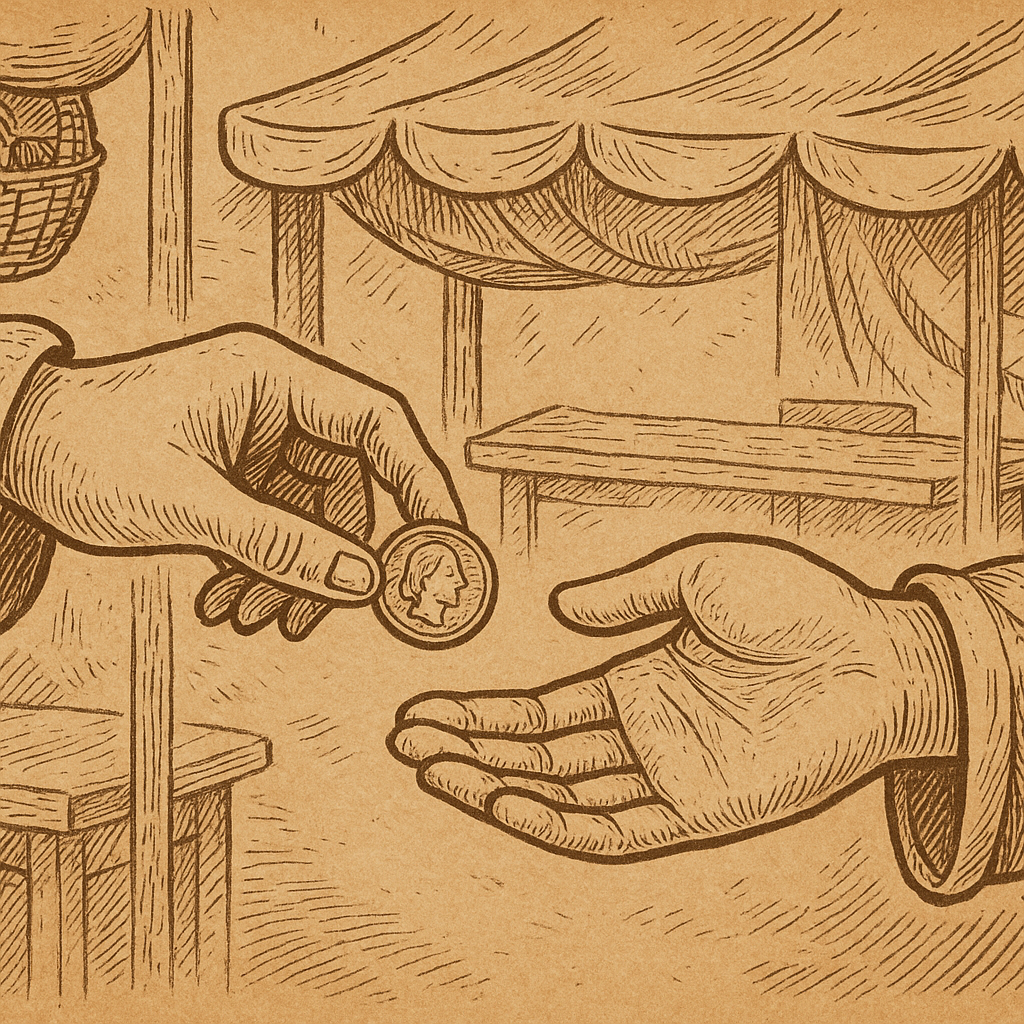
Once, the act of trading was a form of human connection.
It was not about profit margins or conversion rates — it was about mutual recognition: you have something of value, I have something to offer. The marketplace was a conversation.
Today, that dialogue has been silenced.
The modern economy has replaced trust with algorithms, sincerity with strategy, and negotiation with manipulation.
The Death of Honest Exchange
There was a time when price was fluid — a reflection of perception, circumstance, and need. Two people could meet halfway, guided not by greed but by understanding.
Now, prices are fixed long before we enter the conversation.
If we try to negotiate, we do so within a simulation of choice — a marketing game designed to make us feel empowered while every outcome still feeds the same profit system.
For neurotypical traders, that game can be exhilarating.
For many autistic people, it’s exhausting. The subtle cues — the tone, timing, charm, bluff — are invisible traps. What once was negotiation has become performance, and performance has never been the autistic strong suit.
What’s left isn’t trade. It’s theatre.
And the script has already been written.
The Integrity Deficit
The rot goes deeper than the disappearance of haggling.
It lies in the very intention behind creation.
Some people and companies make things worth buying — tools, art, inventions, ideas that serve a purpose or bring genuine joy. Their reward is intrinsic: the pride of making something good.
Others begin with a spreadsheet and reverse-engineer desire.
They design products to meet margin targets, not human needs — and pour their creativity into marketing psychology, not craftsmanship. They sell stories, not solutions.
Capitalism once sold us what we wanted.
Now, it teaches us what to want.
The difference between creation and manipulation is as vast as it is invisible — and the modern consumer is left to navigate a marketplace where both masquerade as innovation.
The True Price of Trust
Amid the noise, something inside still longs for fairness — for that simple, honest exchange of “this is what it’s worth to me — what’s it worth to you?”
But the system no longer understands that language.
It has replaced value with metrics, integrity with strategy, trust with tactics.
That is the true price of trust:
a currency the machine no longer knows how to pay.