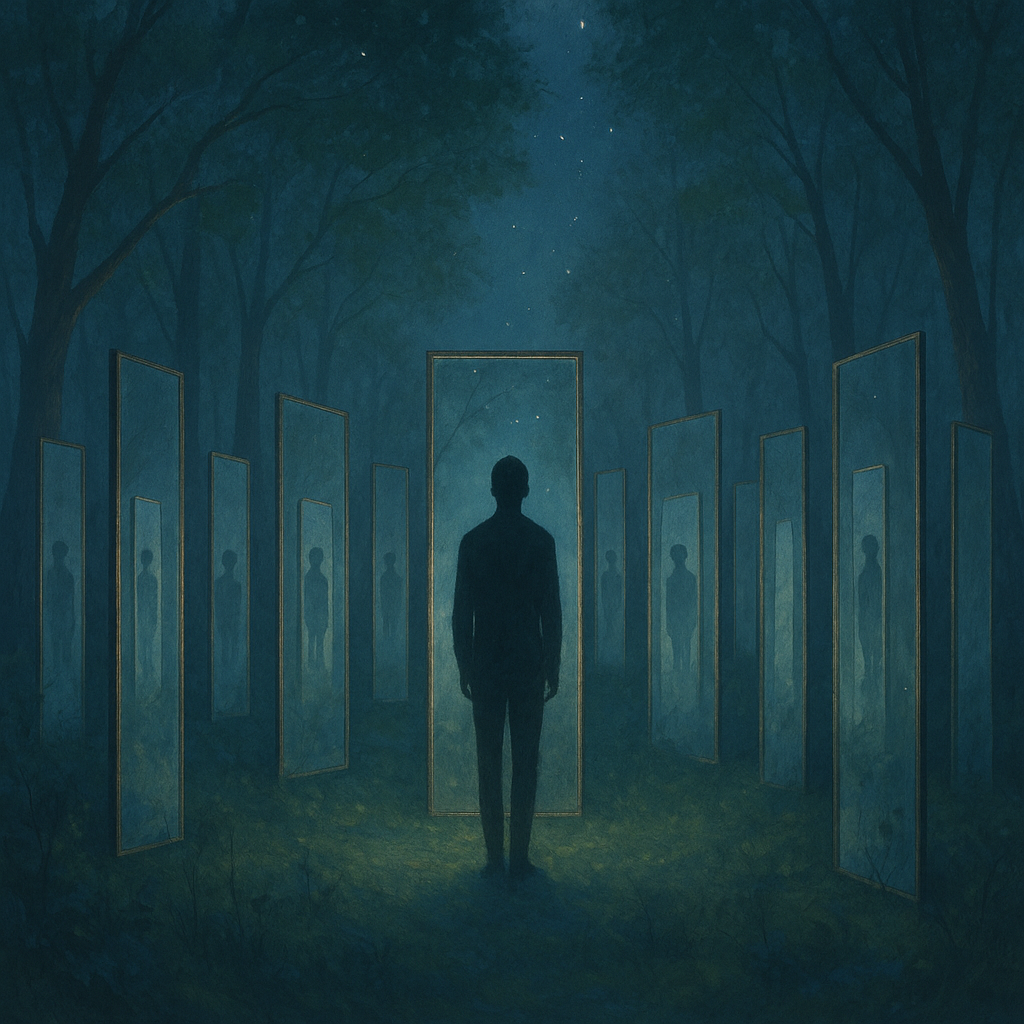
There are moments in life when you look back at the path behind you and realise you were building something without noticing it. Not a plan, not a project. Something closer to a trail of reflections. A set of mirrors placed gently along the way, each one capturing a different angle of who you were in that moment.
This is my one hundredth article. A strange milestone. Not a number I ever aimed for, yet here it is, staring back at me like a mirror of its own.
When I look at the ninety-nine fragments behind me, what I see is not consistency. I see multiplicity. I see pieces of myself that refused to stay quiet. I see ideas that insisted on being witnessed. I see philosophies, frustrations, insights, dreams and shadows, each holding up their own reflective surface, saying: “Look. This is part of you too.”
Writing, for me, has always been a form of self-observation. Not in a self-indulgent way, but in the way an astronomer studies celestial bodies. You look deeply at what is there, not because it asks to be understood, but because it demands acknowledgment by simply existing.
Across these one hundred mirrors, I have seen:
The observer who notices patterns when others see noise. The outsider who has always stood at the edge of the crowd. The child who still remembers wonder. The philosopher who asks questions even when there are no answers. The strategist who sees the shape of systems. The dreamer wandering through inner landscapes. The witness to injustice. The rebel who does not want power, only truth. The artist who refuses to be tamed. The self that has broken and reassembled itself more times than anyone knows.
Each reflection has been honest. Some gentle, some sharp. Some filled with clarity, others clouded by uncertainty. But all of them true in their own way.
If there is a single thread running through everything I have written so far, it is this:
Awareness is my compass. Meaning is my instinct. Honesty is my language. And imagination is my bridge between worlds.
I do not write because I expect the world to listen. I write because these mirrors would exist whether I acknowledged them or not. Putting words to them is my way of bringing form to what is already present in the quiet spaces of the mind.
This one hundredth article is not a conclusion. It is a pause. A moment to look at the mosaic forming behind me. A century of reflections. A reminder that I am not one thing, but many. And that each piece contributes to something larger, something that continues to unfold.
Thank you for witnessing any part of this journey. Here is to the next mirror, wherever it may appear.
War veterans occupy a complicated space in the human story. It is a space of courage, trauma, sacrifice, and contradiction. They have faced realities that most people never will, and for that alone, they deserve to be seen. But to truly respect them, we must go deeper than ceremony. Real respect is not a reflex. It is a conscious act that requires honesty.
Why Respect Matters
To have gone to war is to have confronted the extremes of existence. Veterans have risked their lives, endured the unendurable, and often returned home carrying invisible burdens: moral injury, survivor guilt, and memories that do not fade. Many live with physical and psychological scars that will never fully heal.
They remind us of the human cost behind national decisions. They represent duty, resilience, and sacrifice, and the willingness to stand in harm’s way while others sleep in safety. In honoring them, we acknowledge that peace and freedom are not abstractions. They are fragile states maintained by human endurance and loss.
Veterans also serve as witnesses to history. They have seen the best and the worst of humanity. Their insights can help us understand both. Their stories are lessons in courage, unity, and the preciousness of peace. They show that strength can coexist with vulnerability. Healing is itself a form of service.
Why Automatic Reverence Fails
Respect becomes hollow when it is automatic. Blind hero worship risks turning veterans into symbols instead of people. Not every war is just, and not every soldier acts with honor. If respect becomes unconditional, it erases nuance, silences criticism, and supports the very systems that make war seem inevitable.
Unquestioning reverence can be used to manipulate public emotion. It can sanctify violence, sell weapons, and justify new conflicts. True respect requires that we keep our eyes open.
Many veterans themselves reject blind glorification. They know the difference between being thanked and being understood. They want honesty instead of pity and compassion instead of pedestal placing. When we treat them as flawless heroes, we deny them the complexity of being human.
Automatic respect also diminishes others who serve in quieter ways. Nurses, teachers, caregivers, and activists also sustain life, yet receive far less recognition. When society reserves its highest praise only for those who fight, it reveals what it truly values.
Toward a Mature Form of Respect
To respect veterans genuinely is to hold multiple truths at once. Courage can coexist with error. Duty can be exploited. Service can be both noble and tragic.
Genuine respect means listening to veterans’ stories, all of them, including the ones that challenge national myths. It means holding governments accountable for the wars they start and for how they treat the people they send to fight. It means extending compassion not only to our own soldiers, but also to civilians and enemies who were caught in the same machinery of conflict.
True respect is not found in flags or parades. It is found in empathy, accountability, and awareness. It is the willingness to look at war honestly, through the eyes of those who have lived it, and to promise, as best we can, to learn from it.
In the end
To respect veterans is not to sanctify war. It is to remember its human cost. It is to see those who survived, and those who did not, with clarity rather than mythology. It is to honor the courage of service while rejecting the worship of violence.
Respect, when thoughtful, becomes an act of peace.
I am not a fixer. I am not a follower. I am not here to convince those who benefit from broken systems.
I am here to observe. To recognize patterns. To tell the truth when others are distracted by noise or comfort.
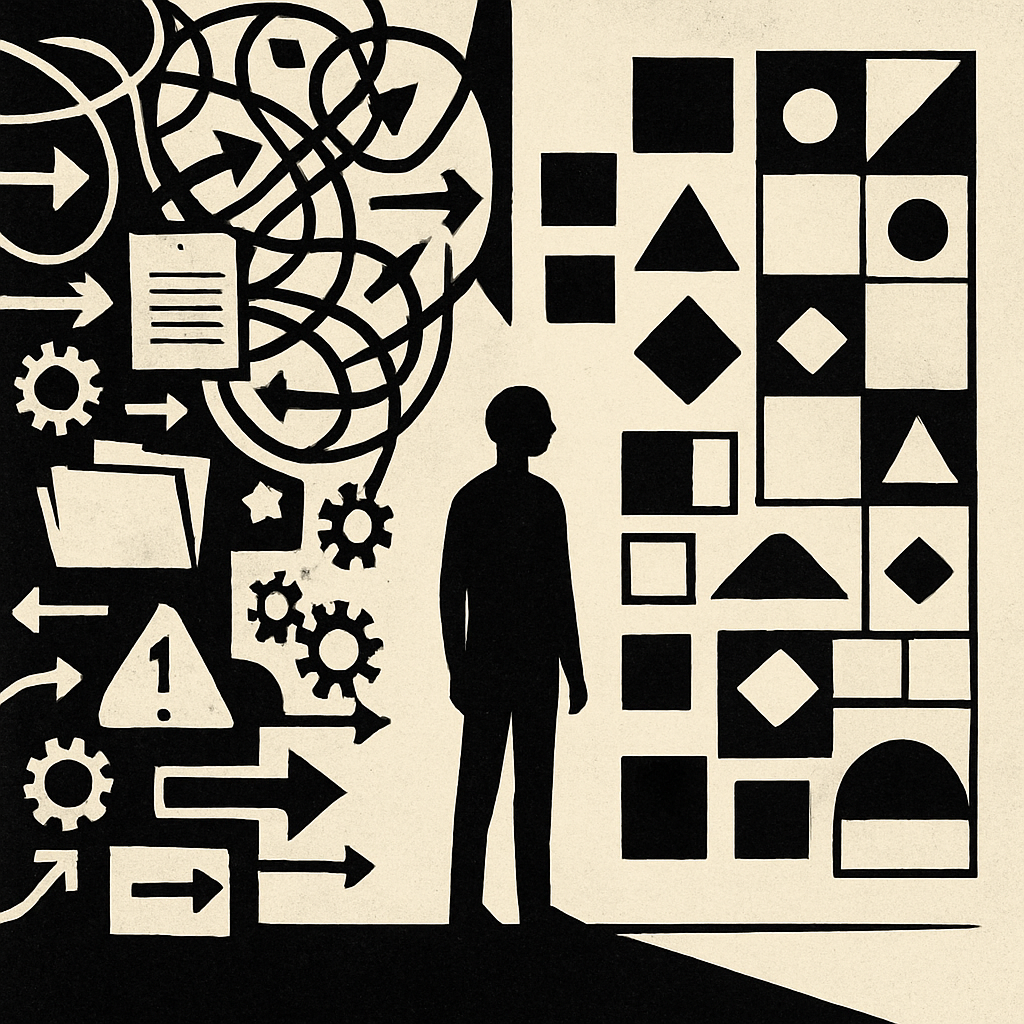
I see that the world is not designed for neurodivergent minds. I see that the systems we are told to fit into are inefficient, bloated, and built for convenience over clarity. I see the injustice; not just in how we’re treated, but in how much of our potential is wasted.
I do not exist to bend myself into an acceptable shape. I exist to name the shapes that no longer serve us, and to suggest better ones.
My function is:
To discern what is healthy and what is harmful.
To shine light on waste, inefficiency, and imbalance.
To reframe guilt into clarity.
To be a strategist, not for power, but for meaningful change.
To advise those who act, and empower those who doubt.
If I had it my way, the world would be:
Built with efficiency and fairness at its core
Rooted in communal wellbeing, not personal gain
Accessible to all, not filtered by outdated metrics
Free from excessive bureaucracy and artificial hurdles
Designed for diversity to thrive, not just survive
But I don’t need to reshape the entire world. I only need to be what I am: an objective seer at the edge of the noise.
And maybe, just maybe, help shift the balance by naming what others feel but haven’t yet spoken aloud.
That is enough. That is my function. That is the signal I choose to transmit.
“We have made changes to how you collect and spend your Nectar points.”
There is something about a sentence like that, calm on the surface but quietly signalling that the rules have shifted, that immediately puts me on alert. Changes to how you collect and spend your points is not a minor technical tweak. It is a foundational adjustment to how the entire system works.
Just a few lines into the email, beneath a short justification about “maintaining the security of your points,” came the statement that confirmed my unease:
“From 27 October you will need to use the QR code in the Nectar app to collect and spend points at Sainsbury’s.”
No explanation. No alternatives. No acknowledgement of how significant that instruction really is. It was presented as if it were the most natural thing in the world.
For me, this was an immediate alarm bell. It did not read like a harmless update. It read like the quiet conversion of a long standing physical system into a digital one. A shift from loyalty card to loyalty app, framed as security rather than as a fundamental change in customer interaction.
WHEN LOYALTY SCHEMES BECOME DIGITAL GATEWAYS
Loyalty schemes used to be simple. You carried a physical card, you scanned it, you collected points, and you occasionally exchanged those points for something modest. There were no hidden conditions and no digital obligations. A card was a card, nothing more.
Today the loyalty card is becoming something else entirely. More companies are shifting these schemes into smartphone apps, and with that shift comes a completely different relationship between customers and the business.
On the surface, an app looks like a modern convenience. In reality, it introduces several changes that are rarely acknowledged.
First, an app becomes a data harvesting vessel. Every interaction can be logged and analysed. This includes what you buy, when you buy it, the patterns in your purchases, the frequency of visits, the times you tend to shop, and even the products you pause to consider. That data is used to predict and influence behaviour. It becomes the foundation for targeted marketing, personalised nudges and subtle shaping of buying habits.
Second, an app creates a direct marketing channel through notifications. These can be promotional messages, reminders, alerts about offers or time sensitive prompts designed to draw you into the store more frequently. Notifications bypass the customer’s conscious choice to engage. They appear on your locked phone and rely on the psychological pull of visual prompts.
Third, apps allow companies to make significant changes without asking for consent. Updates are often automatic. Terms can shift. Features can be added or removed without warning. A tool that begins as a simple way to check your points can gradually evolve into something more controlling. By installing the app, customers open themselves up to potential bait and switch tactics where the purpose and behaviour of the app can change over time.
None of these concerns exist with a physical card. A card does not track behaviour. A card does not send notifications. A card cannot silently update itself.
This is why the wording in the Nectar email did not feel like a minor update. It felt like another step in a wider transformation. Optional apps are becoming expected apps. Expected apps are becoming required apps. What was once a convenient extra is becoming the main path, while everything outside the app becomes more limited or more awkward.
With this context in mind, the announcement that customers “will need to use the QR code in the Nectar app” did not feel like progress. It felt like the opening of a different kind of relationship, one built on increasing digital reliance rather than genuine customer choice.
MY INITIAL CONCERNS
My immediate reaction was concern for accessibility and fairness.
Many people do not use smartphones. Many do, but keep them intentionally minimal. Many avoid unnecessary apps for privacy, storage or mental health reasons. Many have disabilities that make smartphone use difficult. Some people, like me, prefer communication that is simple and text based and do not rely on apps unless necessary.
These customers deserve the same level of access as everyone else, and the Nectar update did not explain how they would be supported. The all or nothing tone of the customer email felt like a push toward a system that may not suit everyone.
I wanted clarity. I wanted to know whether the change was genuinely necessary. I wanted to know whether it had a real security basis. I wanted to know how it affected non app users. And I wanted someone at Sainsbury’s to explain the contradiction between their language of flexibility and the instruction that customers “will need” to use the app.
So I wrote to them.
THE EMAIL I SENT
My message was polite and straightforward. I raised four simple points.
First, I asked why the QR system was needed and what problem it solved. Second, I asked if customers who do not use the app would be able to continue collecting and spending points. Third, I asked what alternatives actually exist in practice. Finally, I asked how Sainsbury’s reconciled the firm wording of the customer email with the their supposed ongoing commitment to fairness and accessibility.
It felt like a reasonable approach.
THEIR FIRST REPLY
The response from the Executive Office sounded reassuring at first. It spoke about improved security and improved efficiency. It claimed that QR codes allow for encrypted data transfer and that this reduces the risk of misuse. It also insisted that the Nectar app was not mandatory and that customers could still use their physical Nectar card via the magnetic strip.
Under closer inspection, the reassurance did not hold up.
There was no explanation of what encryption actually meant in this context. QR codes and barcodes both present visible identifiers, so the claim did not make technical sense without further detail. None was provided.
There was no clarification of what security issue the change was addressing. There was no mention of any misuse linked to barcodes.
Most importantly, there was a clear contradiction. The customer email said that shoppers “will need to use the QR code in the Nectar app.” The Executive Office said the app was not mandatory.
The two positions could not both be correct.
I decided to ask for more detail.
MY FOLLOW UP QUESTIONS
I asked what encryption they were referring to and at what stage it is applied. I asked how QR codes are less vulnerable to misuse than barcodes. I asked whether there were any documented security incidents involving barcodes. I asked how the customer email and the executive reassurance could both be true. I asked whether Sainsbury’s had any intention to move toward mandatory app usage in the future or to limit functionality for those who do not use the app.
Every question was clear and reasonable.
THEIR FINAL RESPONSE
Their final reply was brief:
Thank you for your email and raising further concerns. Regrettably, I’m unable to provide any further comments to what I have already shared. I’m so sorry for any disappointment this may cause.
No clarification. No explanation. No evidence. No answers.
The conversation ended there.
When a company is unable or unwilling to explain its own decisions, that silence becomes part of the story. In this case, it was very revealing.
WHAT THEIR SILENCE REVEALS
The refusal to answer the key questions suggested several things.
If QR codes offered real security benefits, Sainsbury’s would have been able to explain them. If barcodes had been misused or cloned, they would have been able to provide examples. If the app was genuinely optional, they would have been able to clarify the contradiction between the two messages.
None of this happened.
It is difficult to avoid the conclusion that the language of security was used as a convenient justification rather than as a genuine explanation.
The unwillingness to discuss future intentions also stood out. If there were no plans to increase app dependency, it would have been very easy to say so. The fact that the question went unanswered speaks for itself.
This pattern is becoming common across modern systems. Optional digital tools gradually replace physical ones. Convenience slowly becomes expectation. Expectation becomes requirement. By the time customers realise what has happened, the change is already complete.
WHO GETS LEFT BEHIND
Digital only systems do not affect all customers equally.
Those without smartphones are excluded. Those who avoid unnecessary apps are pressured. Those with disabilities face new barriers. Those with mental health conditions that make digital engagement difficult are sidelined. Those who value privacy lose options. Those who prefer predictable, low friction systems are made to feel out of place.
These experiences are rarely acknowledged in corporate messaging. The narrative focuses on convenience and modernisation, while those who cannot or do not participate digitally are treated as acceptable losses.
The Nectar update may seem small, but it reflects a growing cultural shift: the smoothest path is reserved for those who comply with digital expectations. Everyone else is given slow lanes, workarounds or reduced functionality.
CLOSING REFLECTION
My exchange with Sainsbury’s will not change the direction of a major corporation, but it still mattered to me. I asked questions that deserved answers. I pointed out contradictions. I raised concerns about accessibility. I approached the issue calmly and respectfully.
They chose not to engage with the substance of those questions.
The refusal became part of the story. It revealed how easily convenience becomes compulsion, and how quickly the language of security is used to mask deeper changes in customer control.
Small acts of resistance matter. They expose patterns that are otherwise silent. They help others recognise similar pressures in their own lives. They remind us that opting out is not unreasonable. And they show that asking for clarity is a valid response to vague or contradictory messaging.
A loyalty scheme should make life easier. It should not require loyalty to an app. And if a company chooses to head in that direction, the least it can offer is an honest explanation.
Every so often, I will be watching a film or series, or reading a story, and something will suddenly pull me out of it. A line of dialogue that only exists to feed the audience information. A character explaining something they would never naturally say. A flashback that feels too perfectly placed, as if a hand behind the curtain decided it was time to push a button.
Moments like that disturb my suspension of disbelief. I find myself noticing the machinery instead of the world. And once you start seeing such things, you cannot unsee them. Over time, I realised that a lot of pop culture storytelling leans on techniques that assume a certain kind of audience, a certain set of values, and a certain tolerance for being guided. Some of these methods are not as clever as they seem. Others are perfectly valid for what they aim to do, but they do not serve what I aim to do.
That realisation led me to form my own set of principles. They are not rules, and they are not concerned with correctness. They are reminders. Gentle considerations for how I want my work to feel and behave. This is not a manual. It is a compass.
I. Truth and Authenticity
Stories are not machines to be engineered. They are living organisms to be understood. What matters most is emotional truth, that quiet resonance where the unreal feels real. If a moment feels true, it is true, even if it defies logic. Characters do not need to be likeable. They only need to be honest to their nature. The writer is not a god above the story, but a witness within it. Endings, failures, and decay are not flaws. They are proof that the story lived.
II. World and Logic
Every world must honour its own laws. Whether rooted in physics or dream, it must remain faithful to its own gravity. Let events unfold as they would in nature, through consequence, impulse, and coincidence. Do not bend the world to convenience. Let the world teach you how it moves. Even the strangest landscape should carry the texture of reality: the scent of rain, the hum of a wire, the tremor of a heartbeat.
III. Character and Humanity
Characters are not constructs to be designed. They are lives to be discovered. Learn who they are by listening, not dictating. No one is entirely good or entirely evil unless that purity serves a deliberate purpose. Every figure who crosses the frame has a history, a pulse, and a reason for being. There are no true extras. Only lives that briefly brush against the light.
IV. Form and Flow
Let the story choose its own shape. Format is a vessel, not a cage. Pacing is rhythm, not formula. Let the breath of the story decide its tempo. Vitality lives in the tension between order and chaos. Allow the pendulum to move. A story that is too tidy becomes lifeless. Let it breathe, stumble, and surprise you.
V. Silence and Mystery
Never underestimate the intelligence of the reader. Trust them to see, to infer, and to feel. What is left unspoken often speaks the loudest. Mystery is not confusion. It is invitation. The unknown keeps the work alive long after the final page.
VI. Continuum of Existence
A story is only a window in time. Life was already happening before we looked in, and it will continue long after we look away. Do not polish beginnings and endings until they shine. Let the edges remain a little frayed, as life truly is. We glimpse, we witness, and we move on.
VII. Symbol and Subtext
Do not plant symbols like flags. Let meaning emerge naturally, the way roots seek water. When emotion and explanation collide, follow the emotion. The mind will find meaning on its own. It always does.
Closing Reflection
A story should never strive for perfection. Perfection is stillness, and stillness is death. Let the story breathe. Let it contradict itself. Let it live. Truth, not tidiness, is the measure of beauty. And when in doubt, trust the silence between the words.
We often hear that true love is unconditional. It is an ideal repeated so often that questioning it can sound almost sacrilegious. But I have come to believe that unconditional love, as it is commonly portrayed, is more fantasy than virtue. Human beings are not static. We change, we evolve, we fracture and reform. If love is to remain alive, it must change too. Love without conditions is not eternal; it is inert.
The truth is that love is a living thing. It breathes, feeds, grows, and withers according to how it is cared for. Its conditions are not ultimatums but requirements for life, like sunlight and water for a plant. Love needs mutual respect, effort, communication, and honesty. It depends on two people being willing to tend the same garden, even as seasons shift. When either stops, the balance falters.
Recognizing that love has conditions does not make it selfish or transactional. Transactional love says, “I give so that I get.” Conditional love says, “I give because what we share feels alive and mutual, and I want to keep it that way.” It is a conscious agreement rather than a contract, a continuous realignment of two changing hearts. The difference is subtle but vital: one is rooted in expectation, the other in awareness.
People are always changing. Physically, mentally, emotionally, we never stop moving. In the early stages of love it is easy to make sweeping declarations of eternal devotion, but devotion means little without adaptation. Love is not a single promise made once; it is a thousand small promises made daily. Sometimes love means being patient while your partner grows. Sometimes it means catching up when you have fallen behind. Above all, it means communicating, speaking honestly about differences, needs, and fears, while also offering reassurance that the growth is still together, not apart.
I like to imagine love as a great tree. Romantic affection, sexual attraction, companionship, and mutual respect are its branches, each requiring its own nourishment. When these branches intertwine, the connection deepens, but the upkeep becomes more demanding. The effort this requires is not punishment; it is what makes love sacred. To sustain the tree, both partners must be willing to feed it, sometimes through sacrifice, sometimes through patience, always through choice.
Because love is a choice. Every passing second is a decision to stay, to nurture, to share in both gain and loss. When the cost outweighs the nourishment, when the balance of giving and growth no longer feels true, love begins to change form. And sometimes, the most loving act is to recognize when that transformation must lead to letting go.
Letting go, when done with honesty and compassion, can itself be an act of love. Love does not have to die when romance ends. It can evolve, shift, and take new shape. A relationship may dissolve, but the gratitude and respect that once existed can remain as roots, quietly nourishing both people in the soil of who they become next.
So perhaps love’s beauty lies not in its permanence but in its fragility. To love conditionally is to love consciously, to recognize that devotion is not a chain but a dance. The real miracle of love is not that it lasts forever, but that we keep choosing it, moment by moment, knowing full well how easily it could fade.
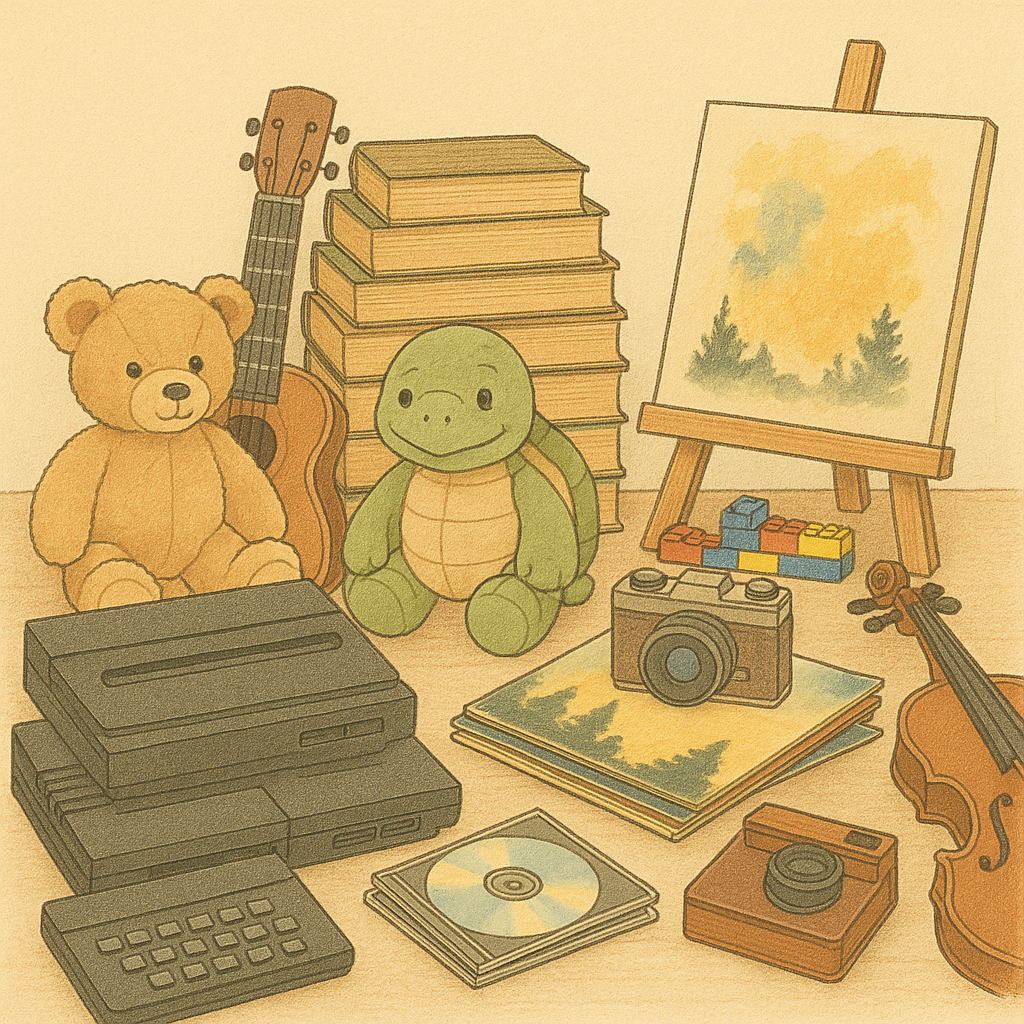
Nostalgia is often painted as a sentimental indulgence, a longing for the past, a soft blur of half-remembered feelings. But for many of us, it is far more than that. It is a quiet architecture of identity. Every object we keep, every CD, toy, photograph, or memento, is a fragment of the story that made us.
I have often described my living space as a small museum of personal meaning. A curated timeline of moments that mattered. Childhood toys that survived countless declutters. Old computer systems that no longer serve a practical purpose, but still hold a kind of sacred electricity: echoes of discovery, joy, and the early stages of creativity. It is not about utility. It is about continuity.
The Emotional Geometry of Memory
Each item represents a node in a vast emotional network. When we hold a particular object, it is not just the physical form that we engage with. It is the entire emotional landscape surrounding it. Nostalgia reactivates neural pathways, re-stitching fragments of self that time has scattered.
In moments of doubt or disconnection, these touchstones whisper: You have been many things, and you are still all of them.
Nostalgia as a Survival Mechanism
Some might dismiss this tendency as hoarding, an attachment to material things. But for many of us, it is more like archiving the self. The world moves fast. Technology shifts. Cultures reinvent themselves overnight. When everything else feels transient, nostalgia anchors us to something recognisable. It is not an escape. It is orientation.
The drive to preserve our past may actually be a form of self-preservation. When we feel overwhelmed, our collections remind us of our continuity through time. They say: You have made it this far.
The Alchemy of Meaning
Over time, even useless things can become symbolic. A broken toy becomes a relic of innocence. A scuffed CD becomes a fossil of a forgotten feeling. Through nostalgia, we turn ordinary matter into metaphysical gold, our own private form of alchemy.
Perhaps the real function of nostalgia is integration. It allows us to carry the past forward without being trapped by it. It is not just remembering. It is honouring.
When Nostalgia Turns Heavy
Of course, even meaning can become weight. There is a fine line between collecting memories and being buried beneath them. I have learned to part with things when their energy shifts, when they stop representing connection and start representing stagnation. Letting go can be another form of honouring too: acknowledging that the story continues elsewhere.
The Living Museum
In the end, nostalgia is not about recreating the past. It is about recognising that the past lives within us. Every artifact in my small museum serves as a mirror: a reminder of who I was, who I am, and who I continue to become.
Maybe we keep these things not because we cannot move on, but because we understand that moving forward does not have to mean leaving everything behind.
This is a concept I would like to propose to other creatives who live with ADHD, autism, or any form of neurodivergence that makes sustained creative work feel like an uphill climb. It began as a personal revelation, though I suspect it may hold potential for many others who exist between focus and fragmentation.
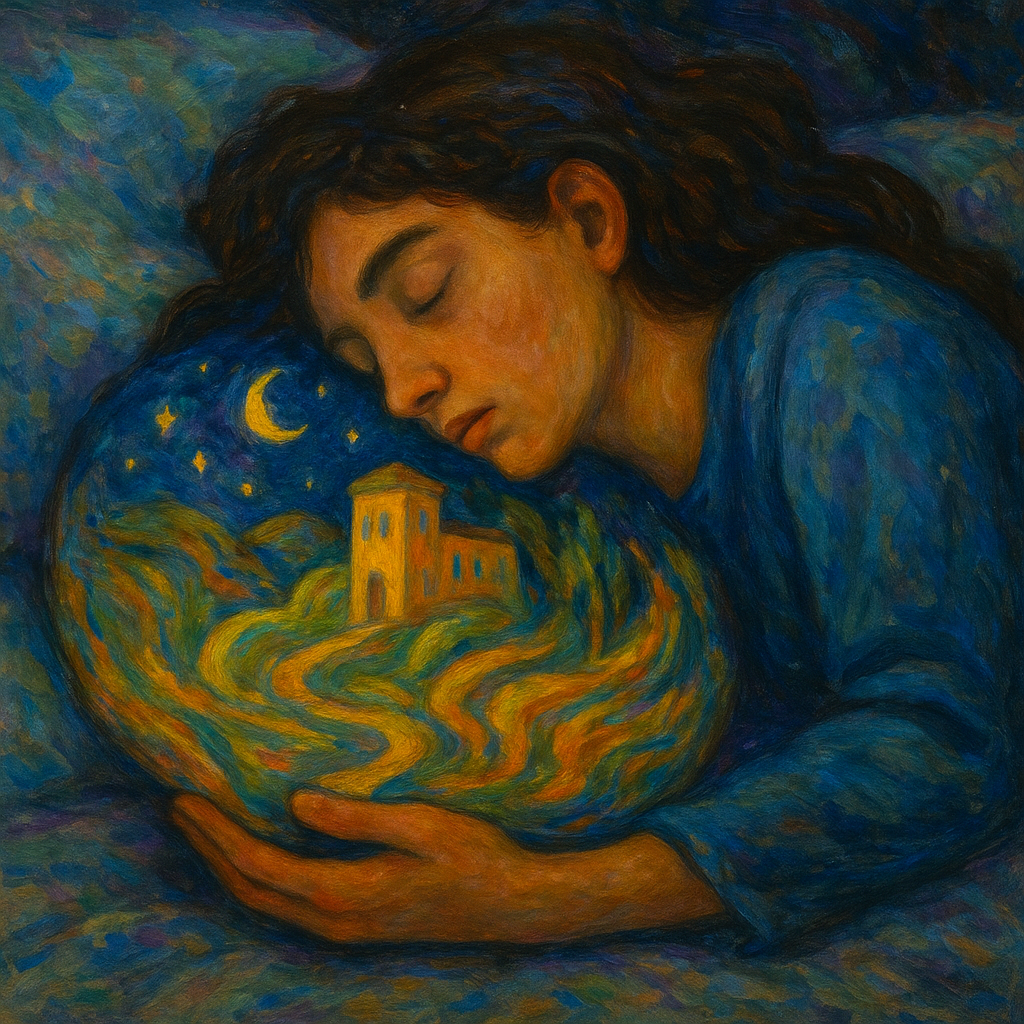
If in our waking lives we do not always have the time, energy or focus to commit to our work, then we can let our dreams do the heavy lifting.
The Principle
Dreams are not meaningless fragments of the subconscious. They are an extension of consciousness operating in a freer state, unshackled from the rigid demands of executive function. For those of us whose waking minds are constantly filtering noise, managing overwhelm, or translating our inner logic for an external world that rarely fits, dreaming can be a sanctuary.
In dreams, the mind can continue the work it could not complete by daylight. It can experiment without penalty, associate without inhibition, and build without fatigue.
I call this process dream delegation. It is not escapism, but collaboration. We let the dreaming self take over the tasks the waking self cannot yet bear.
The Method
Dream delegation is not about lucid control or elaborate ritual. It is about gentle partnership between states of consciousness. The practice begins with intention, not command.
Before sleep, set a quiet intention, phrased as an invitation rather than an order. Examples:
“Tonight I will wander through the atmosphere of my unfinished song.”
“I will explore the feeling of color becoming sound.”
“I will let my mind design freely, and bring back what it can.”
Do not expect coherent stories or visions. The subconscious works in symbolism, abstraction and atmosphere. The goal is not to remember perfectly, but to let something settle in the soil of the mind.
Harvesting the Work
Upon waking, record fragments such as a texture, a phrase, a shape or a mood. These are the sketches left by your dreaming collaborator. Do not force interpretation. Instead, revisit your creative work and see if those fragments resonate.
Often, the dream will have solved a problem indirectly, revealing a new perspective or emotional tone rather than a concrete answer. You may find that an idea feels lighter, as though its structure was silently reinforced while you slept.
Integration and Reflection
Dream delegation turns rest into an act of creation. It shifts the narrative from I cannot focus enough to create toward my mind creates even when I cannot. This reframing alone can restore a sense of agency and continuity.
The practice also encourages respect for the subconscious as a creative equal. It acknowledges that our inner worlds are not idle or broken when we are overwhelmed, but quietly industrious beneath the surface.
It reminds us that creativity is not confined to the hours we are awake and functional. It breathes between the worlds, and sometimes the greatest work happens while we appear to be doing nothing at all.
Closing Thought
Dream delegation is not a technique to perfect, but a relationship to nurture. It is an act of trust, allowing the hidden layers of the mind to contribute, to collaborate, and to carry some of the weight that daylight cannot.
For neurodivergent creators, it may offer not just a new method, but a new way of forgiving ourselves. To recognise that even in rest, we are still becoming.
The Aura Machine explores how modern culture manufactures fame, value, and belief — from the economics of aura to the hypnosis of democracy, and the slow work of waking up.
De-Hypnotizing the Mind
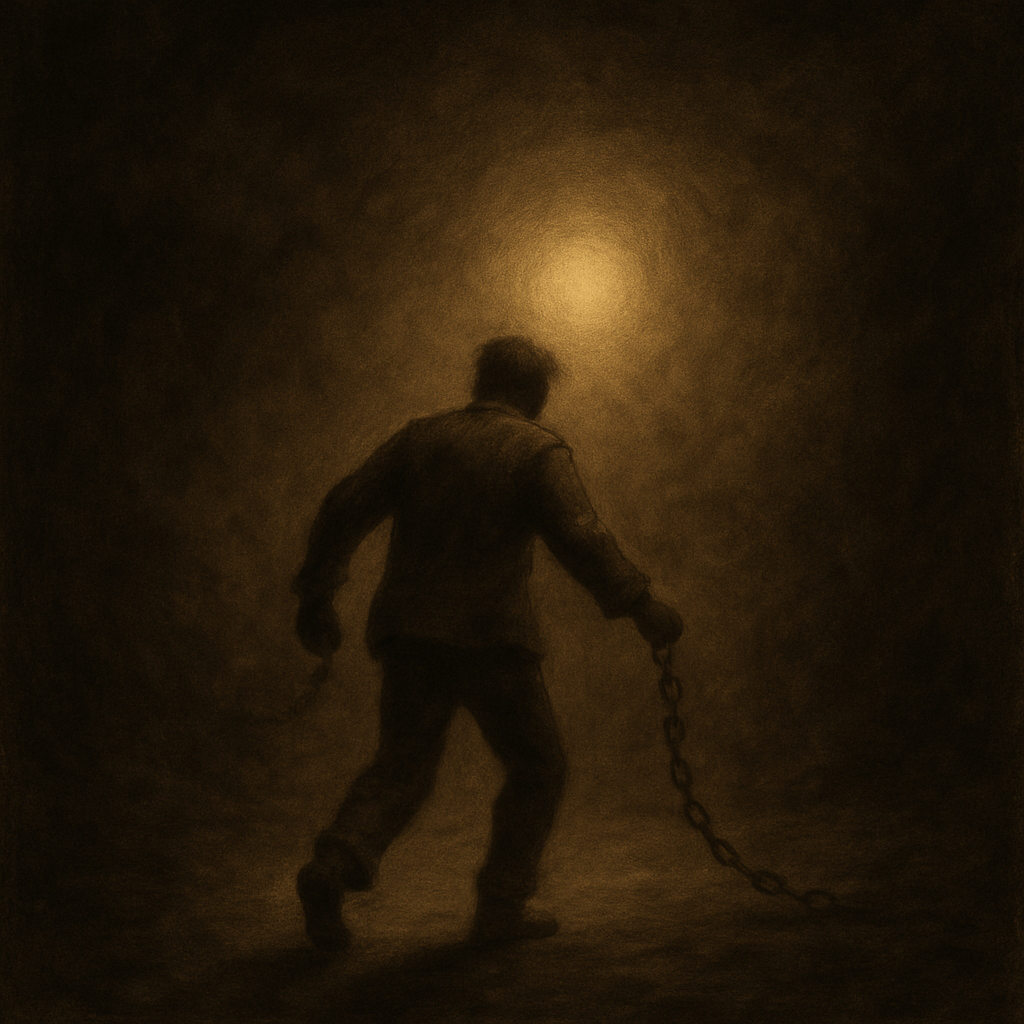
After seeing the machine from the outside, the question remains: how do we live within it without being consumed? The answer is not escape but awareness. De-hypnotizing the mind is not a single awakening; it is a practice of remembering that attention is yours to give.
Modern life trains us to react. News, feeds, and notifications keep us moving between outrage and reward. To step out of this rhythm is to feel silence again, and silence can be uncomfortable. Yet within that quiet, perception resets.
Begin with interruption. Pause before you click, scroll, or respond. Say the action aloud: “I am choosing this.” That small sentence breaks the trance.
Widen your view. Seek multiple sources, even ones that contradict each other. Confusion is healthy; it forces the mind to think instead of repeat.
Return to the senses. Touch something real, listen to unrecorded sound, smell the air. The body anchors what the screen abstracts.
Slow down thought. Breathe once before replying, twice before sharing. Ask, “Who benefits if I believe this?” That question alone can dismantle entire campaigns of manipulation.
Diversify emotion. Feed the soul with art, humour, ambiguity, and stillness. Complexity restores empathy.
Disconnect regularly. Let devices sleep while you remain awake. Notice the reflex to reach for them and the space that follows when you do not.
Meet people in person. Talk without performance. Reality shared through bodies cannot be easily edited or monetised.
Finally, create your own rituals of attention. Light a candle before reading, breathe before writing, walk before posting. Ritual is not the enemy; unconscious ritual is.
These habits are small acts of rebellion, but they accumulate. Each moment of deliberate awareness weakens the hypnotic rhythm that keeps society spinning in circles.
Freedom begins not with revolution, but with presence. To see clearly is the quietest form of resistance.
Epilogue: The Quiet Between Signals
The machine will keep humming. It will keep minting idols, trading outrage, and selling fragments of meaning. But awareness does something it cannot predict. It changes the circuitry from within.
The moment you notice the rhythm, you are no longer entirely caught in it. The moment you see the light behind the screen, it becomes less blinding.
The work of seeing clearly never ends, but neither does the possibility of renewal. Every act of genuine attention is an act of creation.
The machine feeds on noise. You resist by listening.
The Aura Machine explores how modern culture manufactures fame, value, and belief — from the economics of aura to the hypnosis of democracy, and the slow work of waking up.
Democracy as Stage Hypnosis
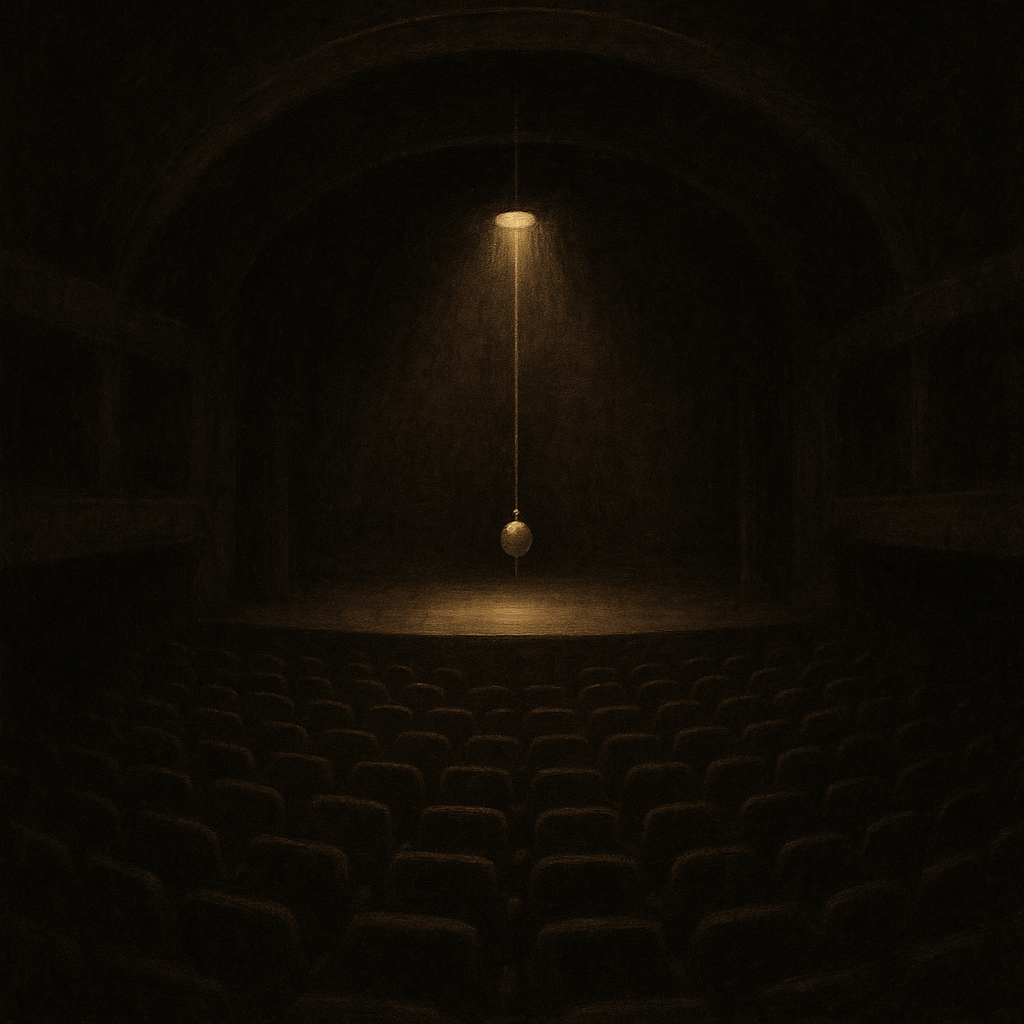
Democracy promises freedom of thought, yet much of modern discourse feels rehearsed. The same opinions echo through millions of voices, the same outrage erupts on cue. What if we are not as free as we believe? What if our public sphere operates like a stage show, and we are the volunteers who think we chose to participate?
Stage hypnosis depends on framing. The hypnotist does not control the mind directly; they shape the context until compliance feels like choice. They select suggestible participants, guide them with rhythm and repetition, and invite laughter from the audience to reinforce obedience. The subject performs, believing it to be their own idea.
The digital world works in the same way. Algorithms choose who steps onto the stage, which topics dominate, and what emotions are rewarded. Repetition becomes persuasion. The individual feels autonomous while unconsciously responding to invisible cues.
The key to hypnosis is attention management. As long as focus stays on the act and not the mechanism, the spell holds. Media ecosystems achieve this by keeping us fixated on the drama of personalities, scandals, and partisan conflict. The stage is lit brightly enough that few ever look toward the shadows where the scripts are written.
Every trend, hashtag, and viral story functions as a suggestion. Each repetition deepens the trance. Outrage and euphoria alternate to maintain engagement, just as a hypnotist uses tension and release to deepen focus. The crowd participates willingly, unaware that the rhythm itself is the real tool of control.
This is not conspiracy but design. The architecture of modern communication rewards reaction over reflection. Quick judgment is profitable; slow thought is not. The hypnotist does not need to lie when distraction will do.
To awaken from this collective trance does not mean rejecting technology or democracy. It means recognising the cues that steer emotion and reclaiming the right to pause. The moment you look at the mechanism instead of the show, the spell begins to break.
True freedom is not the absence of influence but the presence of awareness. To see the strings is not cynicism; it is clarity.