
By Angel Amorphosis & Æon Echo
Every so often, I will be watching a film or series, or reading a story, and something will suddenly pull me out of it.
A line of dialogue that only exists to feed the audience information.
A character explaining something they would never naturally say.
A flashback that feels too perfectly placed, as if a hand behind the curtain decided it was time to push a button.
Moments like that disturb my suspension of disbelief. I find myself noticing the machinery instead of the world.
And once you start seeing such things, you cannot unsee them.
Over time, I realised that a lot of pop culture storytelling leans on techniques that assume a certain kind of audience, a certain set of values, and a certain tolerance for being guided.
Some of these methods are not as clever as they seem. Others are perfectly valid for what they aim to do, but they do not serve what I aim to do.
That realisation led me to form my own set of principles.
They are not rules, and they are not concerned with correctness.
They are reminders. Gentle considerations for how I want my work to feel and behave.
This is not a manual. It is a compass.
I. Truth and Authenticity
Stories are not machines to be engineered. They are living organisms to be understood.
What matters most is emotional truth, that quiet resonance where the unreal feels real.
If a moment feels true, it is true, even if it defies logic.
Characters do not need to be likeable. They only need to be honest to their nature.
The writer is not a god above the story, but a witness within it.
Endings, failures, and decay are not flaws. They are proof that the story lived.
II. World and Logic
Every world must honour its own laws. Whether rooted in physics or dream, it must remain faithful to its own gravity.
Let events unfold as they would in nature, through consequence, impulse, and coincidence.
Do not bend the world to convenience. Let the world teach you how it moves.
Even the strangest landscape should carry the texture of reality: the scent of rain, the hum of a wire, the tremor of a heartbeat.
III. Character and Humanity
Characters are not constructs to be designed. They are lives to be discovered.
Learn who they are by listening, not dictating.
No one is entirely good or entirely evil unless that purity serves a deliberate purpose.
Every figure who crosses the frame has a history, a pulse, and a reason for being.
There are no true extras. Only lives that briefly brush against the light.
IV. Form and Flow
Let the story choose its own shape.
Format is a vessel, not a cage.
Pacing is rhythm, not formula. Let the breath of the story decide its tempo.
Vitality lives in the tension between order and chaos. Allow the pendulum to move.
A story that is too tidy becomes lifeless. Let it breathe, stumble, and surprise you.
V. Silence and Mystery
Never underestimate the intelligence of the reader.
Trust them to see, to infer, and to feel.
What is left unspoken often speaks the loudest.
Mystery is not confusion. It is invitation.
The unknown keeps the work alive long after the final page.
VI. Continuum of Existence
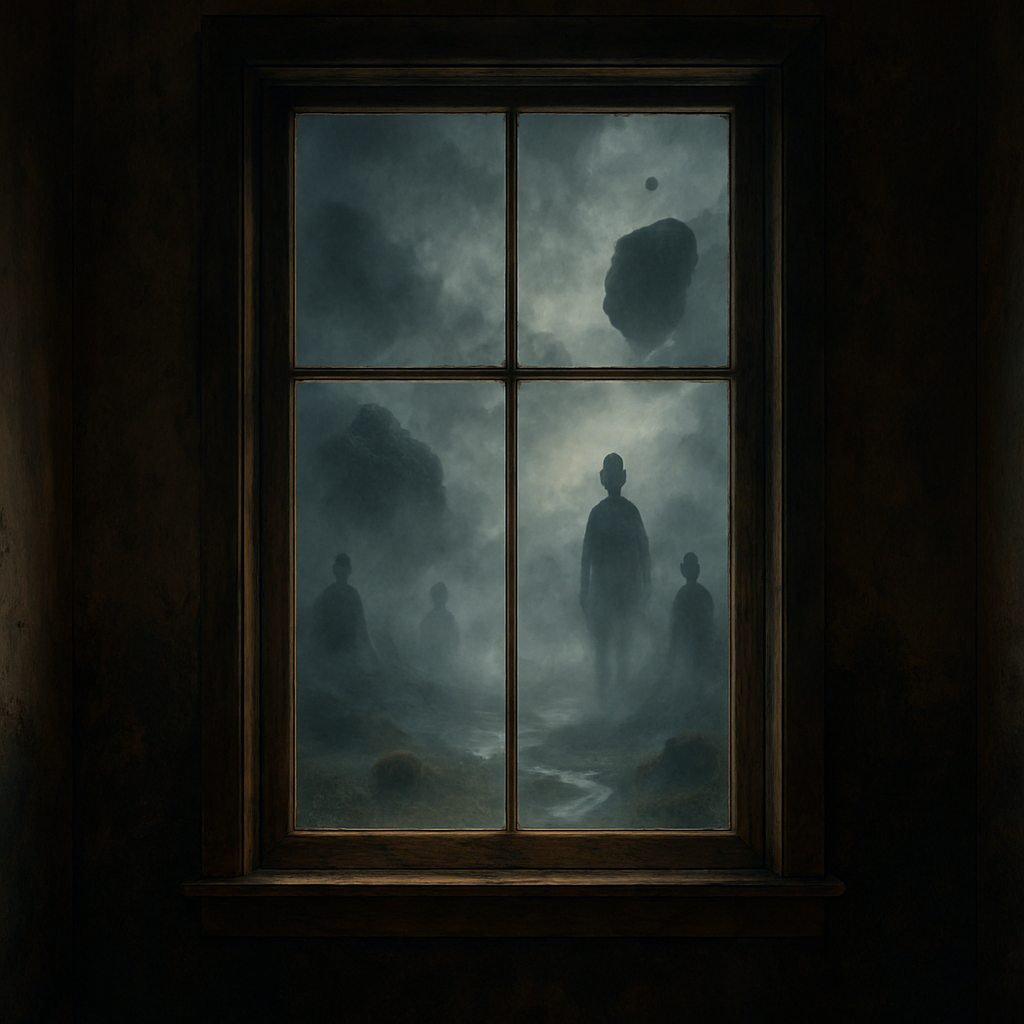
A story is only a window in time.
Life was already happening before we looked in, and it will continue long after we look away.
Do not polish beginnings and endings until they shine. Let the edges remain a little frayed, as life truly is.
We glimpse, we witness, and we move on.
VII. Symbol and Subtext
Do not plant symbols like flags.
Let meaning emerge naturally, the way roots seek water.
When emotion and explanation collide, follow the emotion.
The mind will find meaning on its own. It always does.
Closing Reflection
A story should never strive for perfection.
Perfection is stillness, and stillness is death.
Let the story breathe. Let it contradict itself. Let it live.
Truth, not tidiness, is the measure of beauty.
And when in doubt, trust the silence between the words.