The Aura Machine explores how modern culture manufactures fame, value, and belief — from the economics of aura to the hypnosis of democracy, and the slow work of waking up.
The Weaponized Crowd
The same forces that create fame also possess the power to destroy it. The crowd that once celebrated the idol can be turned into an instrument of erasure. Outrage becomes a spectacle, and the illusion of justice becomes a convenient form of control.
In theory, “cancel culture” is a moral correction. In practice, it often serves as a mechanism of narrative management. The machine that amplifies voices can also silence them, and it does so with the same algorithms that once spread their fame. What appears to be a grassroots uprising is frequently the redirection of collective emotion by unseen hands.
Scandal is profitable. It generates clicks, engagement, and emotional energy that can be harvested for data. A fall from grace pulls more attention than a steady career ever could. The public believes it is delivering punishment, but the outrage itself becomes another product, another moment of performance in the endless theatre of attention.
Some accusations are justified and reveal real harm. Others appear precisely when a person becomes inconvenient to the system that once supported them. A tarnished reputation can neutralise a voice without the need for censorship. The court of public opinion does the work on behalf of power.
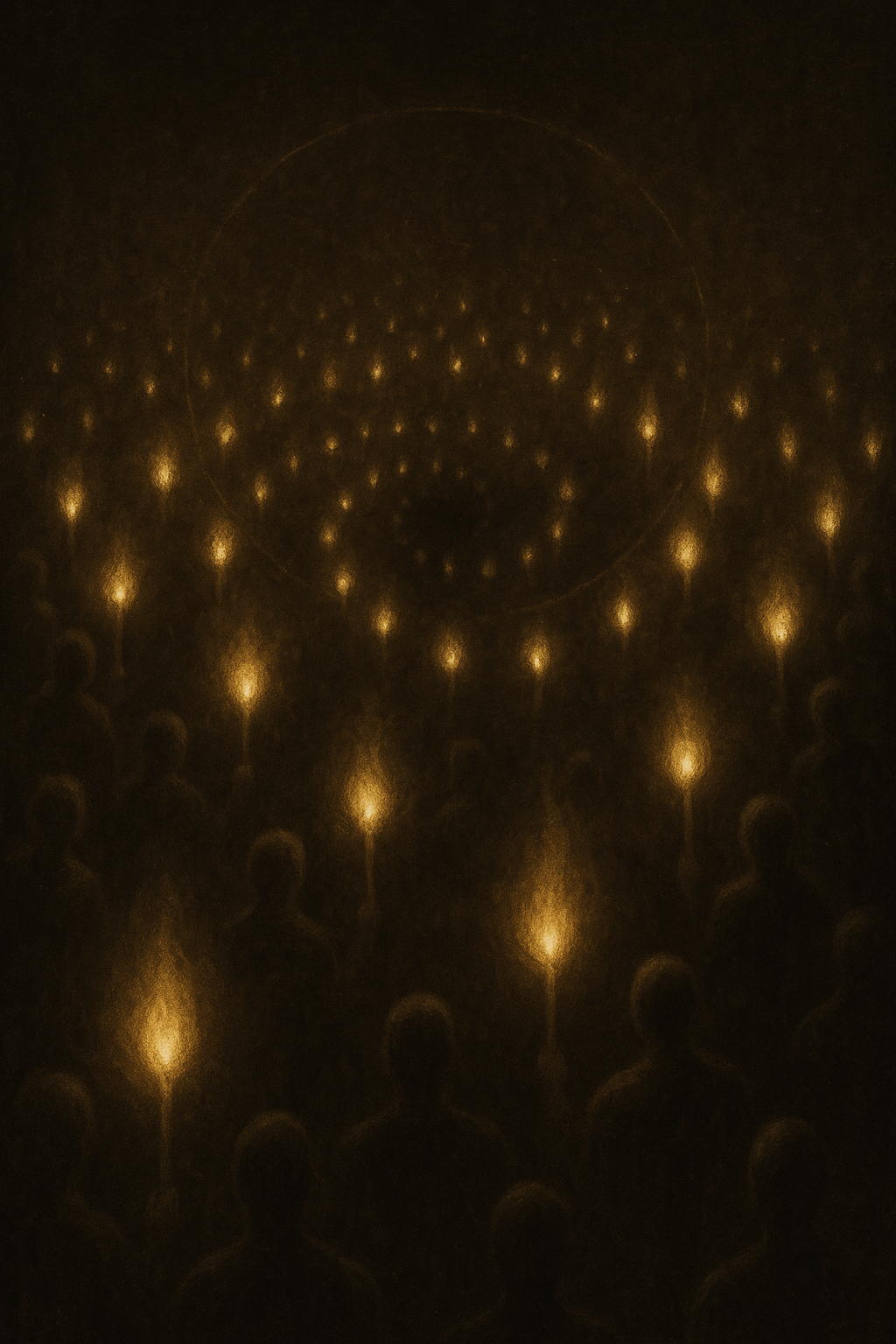
This is the weaponized crowd. It acts with conviction but not autonomy. The sense of moral participation is intoxicating, and so few stop to ask who handed them the torch. When millions shout the same words at once, it feels like unity, but it is often choreography.
The purpose is not always to destroy the individual but to reinforce the spectacle itself. The ritual of outrage strengthens the boundaries of acceptable thought. Every public downfall renews the myth that the system polices itself, that justice is collective, and that the moral order remains intact.
What is lost in the process is nuance, proportion, and empathy. The crowd is not evil; it is entranced. It acts out scripts written by algorithms and marketing teams, convinced that its reaction is spontaneous.
Real accountability is possible, but it cannot be achieved through performance. It begins where noise ends, in the quiet work of discernment. Until then, the crowd will continue to serve as both sword and shield for the forces that profit from its movement.
The machine does not care who is on the stage, only that the seats remain full.
The Aura Machine explores how modern culture manufactures fame, value, and belief — from the economics of aura to the hypnosis of democracy, and the slow work of waking up.
When the Idol Fails
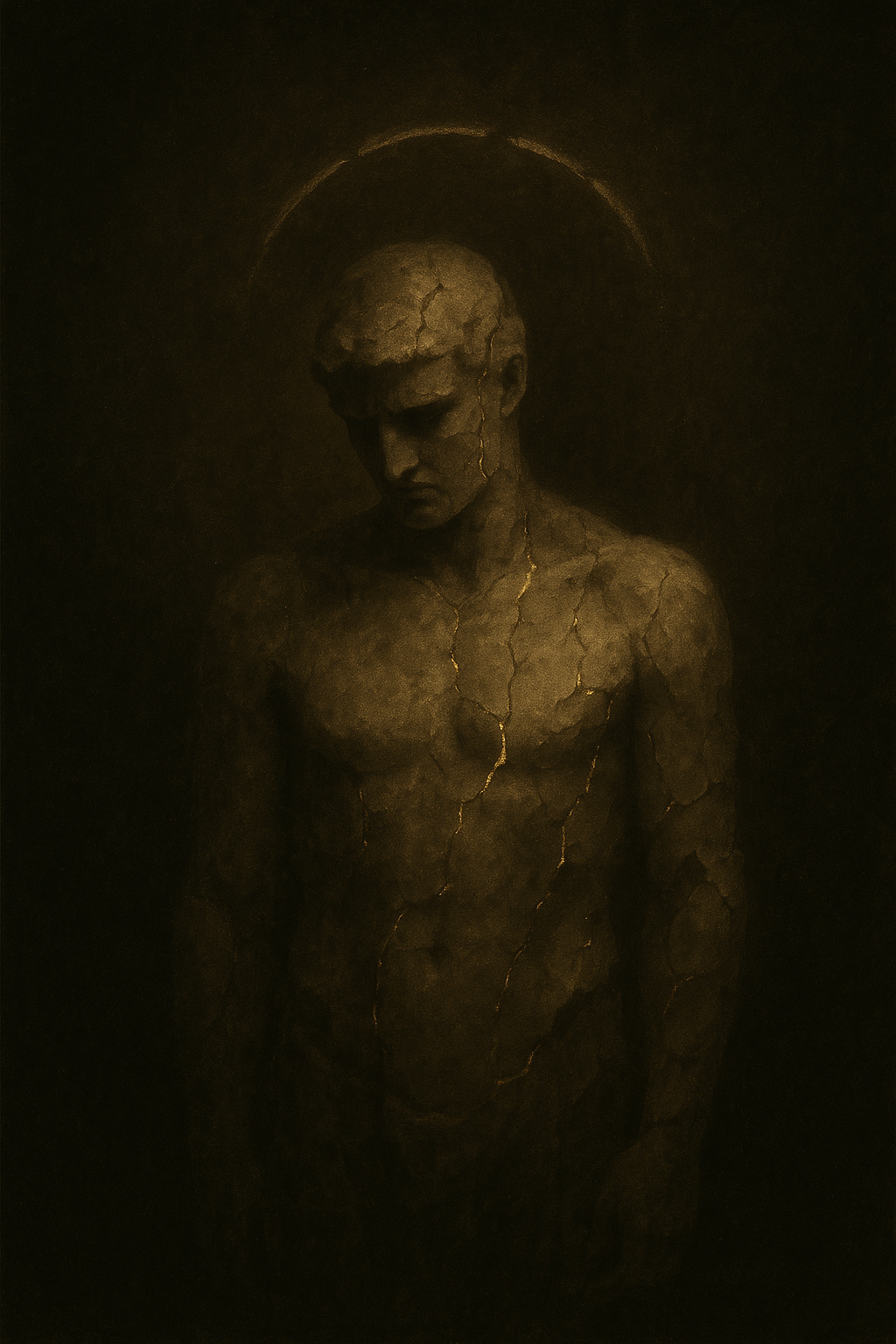
Every machine produces waste, and the culture industry is no exception. When a manufactured celebrity no longer yields profit, they are quietly moved aside. The spotlight shifts, the feed forgets, and the same mechanisms that once built their myth begin to dismantle it.
Failure in this world is not just a personal misfortune. It is a systemic inevitability. Fame depends on constant acceleration, and few humans can sustain that speed without breaking. When the engine stalls, the public spectacle of collapse becomes another form of content.
Some failures are salvaged. A celebrity might be repackaged as a nostalgia act, a reality show personality, or a spokesperson for redemption. Their story is reframed as transformation, and the brand continues in diminished form. The goal is to extract every remaining ounce of relevance before the market moves on.
Others are simply written off. Their contracts end, their names disappear from headlines, and their digital presence is quietly starved of visibility. To the audience, it seems as though they “faded away.” In truth, they were de-amplified by design. Silence is a tool of efficiency.
Then there are the sacrificial idols. Their downfall is too spectacular to waste. The system turns their destruction into a morality tale, teaching the audience that rebellion and excess are dangerous, while still monetising the drama. Tragedy becomes a renewable resource.
In each case, the human being is secondary to the narrative function they serve. Success, scandal, and decline are all part of the same cycle of extraction. The body is consumed first, then the image, then the memory. Nothing is left untouched by the hunger for engagement.
What makes this cycle so insidious is that it disguises exploitation as justice or entertainment. The public participates, believing they are watching a story of virtue or failure, when in truth they are witnessing the mechanical process of value conversion. Even ruin has an exchange rate.
To survive within such a system requires an almost impossible balance: the ability to remain visible without being consumed, to stay human inside the machine. Very few manage it for long.
Behind every fallen idol lies a silent question. Who benefits from their fall?
The Aura Machine explores how modern culture manufactures fame, value, and belief — from the economics of aura to the hypnosis of democracy, and the slow work of waking up.
The Manufacture of Meaning
Meaning was once something we discovered. Now it is something we are sold.
Every era has shaped its myths to make sense of existence. In earlier times, that task belonged to religion, philosophy, and art. In our own, it belongs to marketing departments, media networks, and data analysts. The result is an age where meaning itself is mass-produced.
Modern systems have learned that humans crave narrative more than truth. We need stories that explain our place in the world, that tell us who to love, what to fear, and how to belong. Once that need was spiritual; now it is commercial. Corporations and institutions have become our new myth-makers.
A slogan replaces a scripture. A logo replaces a totem. Each brand sells more than a product; it sells a worldview. The beverage becomes rebellion, the phone becomes freedom, the perfume becomes identity. We are not persuaded by logic but seduced by symbolic resonance.
In this landscape, emotion is the raw material of manufacture. Data systems study which feelings yield the highest engagement, then refine them into targeted experiences. The result is a feedback loop of stimulus and response where our sense of meaning is continually rewritten by algorithms.
Art, politics, and personal identity have not escaped this process. Even self-expression is filtered through market logic. Every platform quietly asks the same question: “How will this perform?” The act of sharing becomes a kind of transaction, a trade between authenticity and approval.
Yet beneath the cynicism there remains a truth worth saving. Meaning cannot be created by machines alone. It arises in the meeting point between perception and intention, between the observer and the observed. What has been industrialised is not meaning itself, but the illusion of it.
To resist the manufacture of meaning is not to withdraw from society, but to reclaim authorship. It is to speak and create from a place that values sincerity over metrics, depth over speed, and connection over consumption.
Meaning cannot be bought. It can only be recognised.
The Aura Machine explores how modern culture manufactures fame, value, and belief — from the economics of aura to the hypnosis of democracy, and the slow work of waking up.
The Manufacturing of Fame
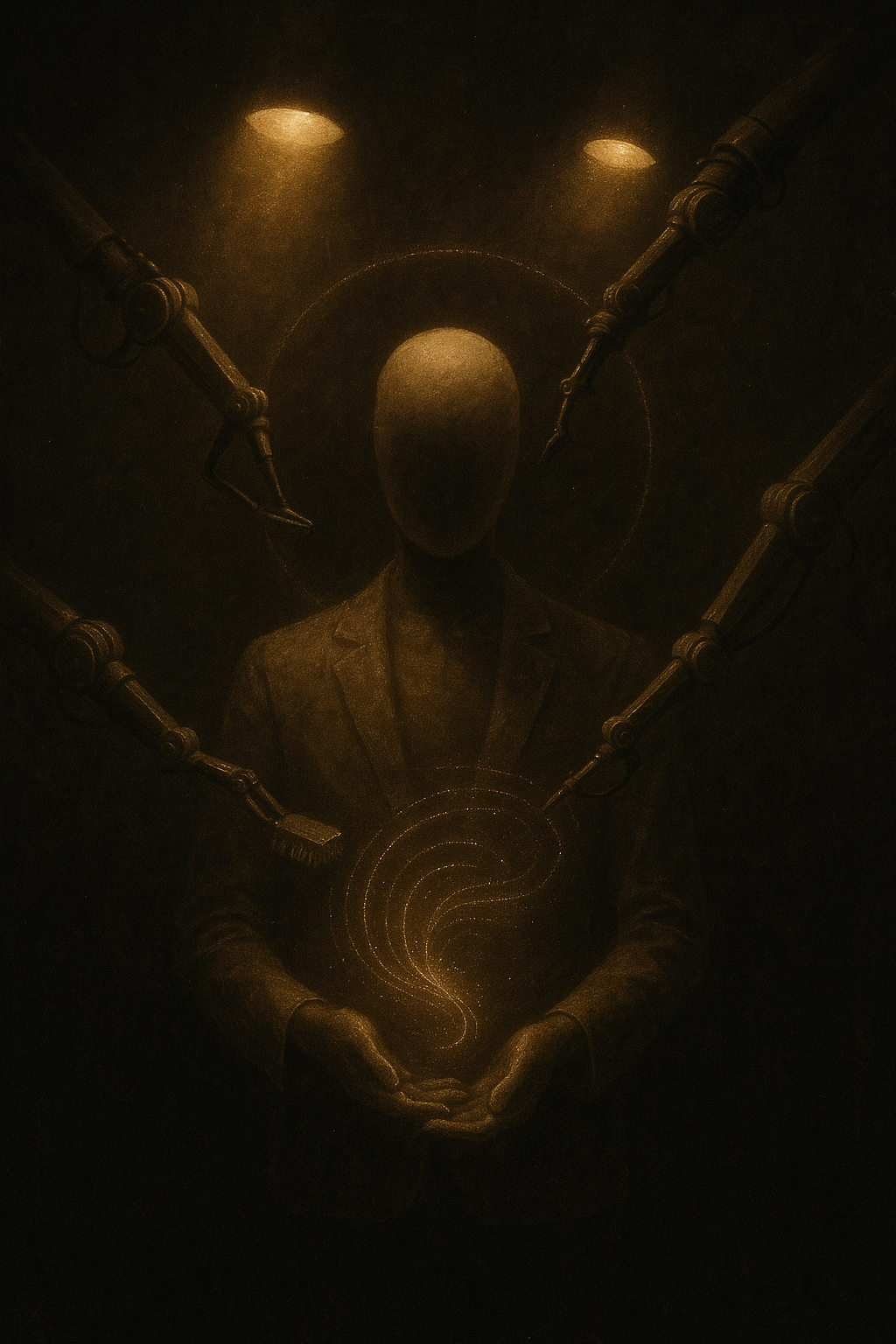
Fame is often described as destiny, but in truth, it is a manufactured product. What looks like a spontaneous rise to stardom is usually the outcome of a carefully engineered process. A chosen individual becomes the vessel for a system’s investment, infrastructure, and narrative control.
Every celebrity represents a convergence of money, media, and myth. Behind the glamour there are contracts, algorithms, and publicists who understand the mathematics of visibility. To “discover” someone today is to select a marketable personality and amplify them through existing channels of attention until belief takes hold.
It begins with investment. A label, a studio, or a media conglomerate decides to back a prospect. Funds are poured into training, styling, photoshoots, marketing, and social seeding. Each move is designed to increase recognisability and emotional attachment. The audience feels they are choosing the star, but in reality, they are responding to a saturation campaign.
The success of a manufactured celebrity depends on the infrastructure already in place. A company that owns radio stations, streaming platforms, advertising networks, and press outlets can push a name into ubiquity at minimal cost. Smaller creators without such reach must pay dearly or vanish into noise. Fame follows ownership, not merit.
Once the amplification begins, the person becomes a brand asset. Their personality is fine-tuned to meet consumer expectations. Authenticity is simulated through planned spontaneity. Controversies are managed or sometimes even staged to maintain relevance. Every public gesture becomes part of a content strategy.
This process reveals the hidden economics of identity. The celebrity’s self is partitioned into marketable components: image, tone, ideology, vulnerability. Each can be monetised separately. The human becomes a portfolio.
When the profit threshold is reached, the machine moves on. The next face is already waiting in the wings. What was once a person is now a commodity whose aura can be resold through nostalgia, biography, or collectible relics.
The myth of “self-made fame” persists because it comforts us. It preserves the illusion that success is a matter of destiny and talent rather than infrastructure and capital. But beneath the myth lies an industrial truth: fame is not born, it is assembled.
To understand this is not to diminish art or talent, but to see them within context. The creative spark may be genuine, but the spotlight is manufactured.
The Aura Machine explores how modern culture manufactures fame, value, and belief — from the economics of aura to the hypnosis of democracy, and the slow work of waking up.
Attention as Currency
In the old economies, value was measured in gold, grain, or labor. In the new economy, it is measured in attention. Whoever controls what people look at, think about, or react to, controls the flow of wealth itself.
Every modern system, from advertising to politics to art, now runs on this invisible fuel. Companies no longer compete only for money; they compete for the limited number of seconds that a human mind can focus before drifting to the next distraction. Each moment of your awareness has a price.
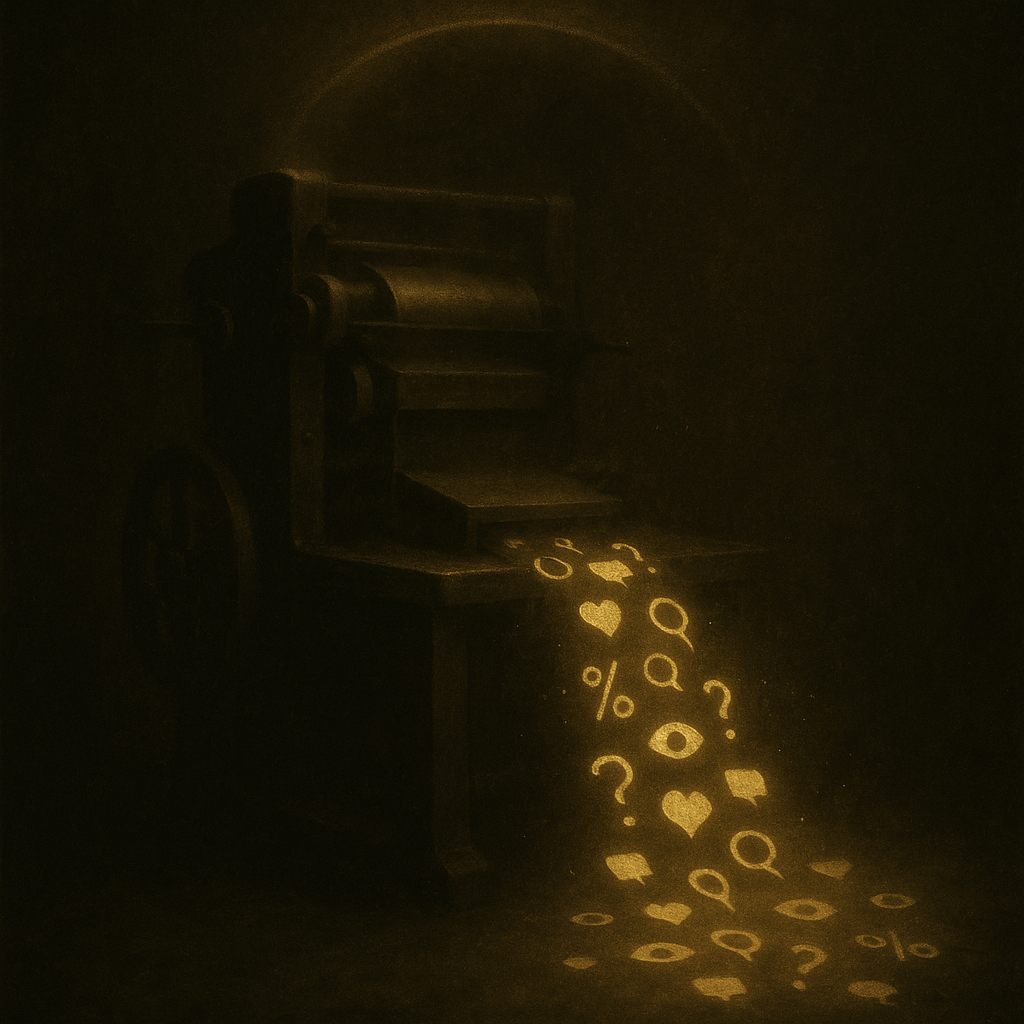
It was once said that “if you are not paying for the product, you are the product.” That saying is now incomplete. In truth, you are the resource. Your time, your focus, your outrage, your curiosity. Every click, like, and pause is a microtransaction of consciousness.
The great platforms have become refineries of this raw material. They extract attention through emotional volatility, polarisation, and endless novelty. They burn that fuel to generate engagement, which is then sold to advertisers and investors. The more divided and reactive the population becomes, the more efficient the extraction.
Attention is also a kind of spiritual energy. Where you direct it, you build reality. That is why every ideology, brand, and belief system seeks to anchor itself in your perception. Once something occupies your attention, it occupies a piece of your world.
In this sense, attention is both currency and creation. It can enrich or deplete. To spend it carelessly is to surrender authorship of your mind. To invest it consciously is to shape your inner landscape.
The true economy of the twenty-first century is not industrial or digital, but psychological. It trades not in goods, but in awareness. And like all forms of capital, it tends to accumulate in the hands of those who understand it best.
Every scroll, every notification, every headline is a small transaction of energy. We pay for our participation not with money, but with fragments of ourselves.
The first step toward freedom is not withdrawal, but recognition. To know that your attention has value is to begin reclaiming it.
The Aura Machine is an eight-part meditation on the manufacture of fame, value, and belief.
We live in a theatre of mirrors, where meaning is minted, traded, and destroyed like currency. Objects gain worth not through what they are, but through who has touched them. People are sculpted into icons, sacrificed when the market shifts, and repackaged as myths. Outrage becomes entertainment; morality becomes marketing.
This series traces that cycle, from the birth of aura to the hypnosis of democracy, and finally to the quiet work of waking up. Each essay peels away another layer of the illusion, asking not only how the spectacle works, but why we keep watching.
The Economics of Aura
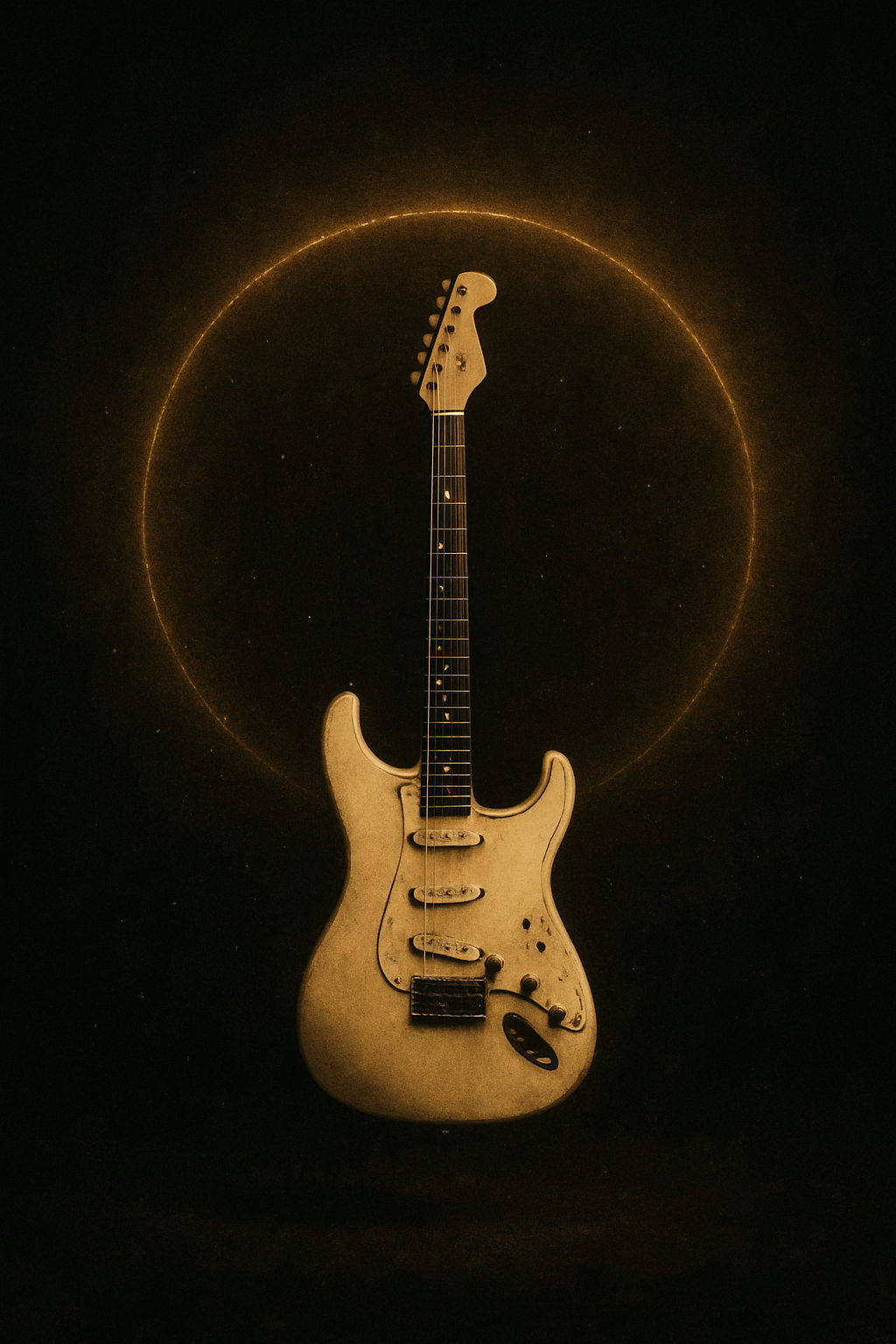
We live in a world where worth is rarely measured by substance. A guitar can sell for millions, not because of its materials or its tone, but because a legend once held it. Jimi Hendrix’s white Stratocaster, played at Woodstock, is estimated at more than two million dollars. The same instrument, without his fingerprints and mythology, would fetch only a few thousand.
This is the strange economy of aura.
The philosopher Walter Benjamin used that word to describe the unique presence that clings to an original work of art. It is the sense of standing before something touched by human intention, history, and unrepeatable context. In an age of infinite reproduction, that aura becomes rare and therefore valuable. What once signified connection now signifies possession.
The story of Hendrix’s guitar is not about sound. It is about proximity to greatness. People want to own a fragment of transcendence, to capture some echo of genius in a glass case. When money meets myth, the object becomes sacred. The relic functions as a secular form of worship, proof that the divine once walked among us with calloused fingers and a Marshall stack behind him.
Every collector and every fan participates in this ritual. A signature, a costume, a handwritten lyric: each is a vessel of aura. The marketplace transforms reverence into investment. The more limited or tragic the story, the higher the price climbs. A dead artist is an appreciating asset.
This trade in meaning is not limited to rock memorabilia. It underlies the art world, influencer culture, even politics. A photograph signed by a president, a sneaker endorsed by a pop idol, a tweet from a billionaire: all of them become tokens of perceived nearness to power. The object’s material cost is trivial compared to the value of its narrative.
In this way, capitalism does not simply sell things; it sells presence. It invites us to purchase pieces of mythology and to confuse ownership with participation. The aura that once connected the viewer to the artist now belongs to whoever can afford it. What was once spiritual has been translated into capital.
Yet the desire itself is not evil. It reveals something honest about the human condition. We yearn to touch meaning, to feel that the infinite brushed against the finite for a moment. The tragedy lies in the conversion of that yearning into currency. The aura machine hums quietly, turning reverence into revenue.
The Hendrix Stratocaster sits behind glass now. Its strings are mute, but the myth still sings. Not in sound, but in price.
Not the sharp kind you clip away without thought, but a barely perceptible split — a sliver of keratin separating from the flesh, like a whisper of rebellion. When Mara noticed it, she pressed her thumb against it, meaning to smooth it down. The pain that answered her was out of proportion, electric, alive. She pulled her hand back as if burned.
“Just a split,” she muttered, studying it under the kitchen light. “Tiny thing.”
But that night, when she tried to sleep, she couldn’t stop feeling it — that microscopic gap where body became not-body. She imagined fibers drifting into it. Air. Dust. Threads. The thought made her stomach twist.
In the morning, her girlfriend Rhea was already awake, sitting cross-legged on the sofa, unravelling a ball of white cotton for some craft project. The sound of it — that faint whispering pull — made Mara’s skin tighten.
“Morning,” Rhea said without looking up. “I’m making clouds for the window display.”
“Maybe use something else,” Mara said too quickly.
Rhea looked up. “What’s wrong with cotton?”
“Nothing. Just… I don’t like it.”
Rhea smiled. “You and your texture things.”
Mara nodded, embarrassed. But later, when she reached for her mug and her nail brushed the sleeve of the cotton jumper Rhea was wearing, she nearly dropped it. The sensation shot through her like a cold wire — that impossible friction, that soft drag that made her feel the split widening, like a mouth trying to open.
By the third day, the hangnail had deepened. No matter how much she filed or covered it, it returned — a persistent seam. The edges of her finger grew tender, red, pulsing faintly as if something was growing beneath. She started wearing gloves, even indoors.
At night, she dreamt of cotton balls expanding endlessly, absorbing light and sound, pressing against her skin until she couldn’t tell where she ended and the softness began. She’d wake with the taste of lint in her mouth.
Rhea laughed it off at first, teasing her gently, but by the end of the week she stopped. The split was worse — black at the edges, like something beneath was rotting. Mara refused to see a doctor. She said she could feel that it wasn’t an infection. It was more like… intrusion.
Something was inside the nail.
She began hearing faint tearing noises at night — not outside, but from within her finger. Fibers shifting. Threads winding. When she held her hand close to her ear, she could almost make out a rhythm, like breathing through cloth.
Rhea found her in the bathroom one night, her gloved hand under the tap, scrubbing furiously.
“Mara! Stop!” Rhea grabbed her wrist. The glove tore. Something white puffed out like a cloud. Rhea screamed and fell back, the cotton-like threads coiling in the air before vanishing into the tiles.
“I told you,” Mara whispered. “It’s spreading.”
They didn’t sleep after that. Rhea tried to rationalize — mold, infection, hallucination — but Mara just sat staring at her hand. It was swelling now, the nail split wide, pale fibers twitching beneath like worms beneath translucent skin.
When dawn came, Mara said she had to go back to the store. “What store?” Rhea asked. “The one where I bought the cotton pads last week.”
Rhea followed her, though she didn’t remember any such trip. The shop was small, tucked between two shuttered boutiques. Its window was lined with mannequins draped in gauze, their fingers wrapped in bandages.
Inside, the air smelled faintly of antiseptic and something sweet — like boiled sugar. The shopkeeper was an old woman, her own hands swathed in white linen.
“I need to return these,” Mara said, placing a half-empty bag of cotton pads on the counter.
The woman looked at her hand and nodded slowly. “Ah. You opened the seam.”
“What seam?”
“The one between touch and memory,” the woman said. “Cotton remembers everything it touches, dear. It’s very patient. When it finds a way inside, it tries to remake what it remembers.”
Rhea’s voice shook. “You’re both insane.”
But when she turned toward the door, it wasn’t there anymore — just rows of pale curtains breathing gently in an unseen breeze.
That night, Rhea woke to find Mara standing beside the bed, hand ungloved, tendrils of soft white thread blooming from the split nail, weaving through her hair, across her face. Her expression was serene.
“It doesn’t hurt anymore,” Mara said. “It’s just… quiet.”
Rhea scrambled back, but her legs caught on something. Cotton. The floor was covered in it — a sea of white stretching out from where Mara stood. Every sound was muffled.
“You should feel it,” Mara whispered, reaching out. “It’s not like the fear anymore. It’s like being remembered.”
Rhea tried to scream, but the air felt heavy, dense, fibrous. When Mara’s fingers brushed her cheek, the cotton threads slid effortlessly into her skin like smoke into cloth. Every nerve sang. Every cell itched with soft static.
She didn’t black out. She dissolved.
Days later, the neighbors reported a faint smell of starch and bleach seeping from the flat. The police found no one inside, just white fabric pinned across every surface — the sofa, the bed, the walls — all stitched together in a single seamless sheet.
In the center of it sat a small glass bowl filled with water. Floating in it was a single fingernail.
It wasn’t cracked anymore. It was perfect — whole — polished smooth like a pearl.
And if you leaned close enough, you could almost hear a sound from within: a soft, steady rhythm.
Once upon a time, a game came in a box, and that box contained everything. You bought it, you owned it, and you played it. That was the deal. There were no online check-ins, no missing features, no “coming soon” updates, only a complete world waiting to be explored.
There was a quiet purity in that exchange. A developer built something they were proud of. A player paid for it because they trusted that pride. That was the unspoken pact between creator and audience: a transaction built on honesty.
Games like Super Mario Bros. (1985) and The Legend of Zelda (1986) embodied that purity. A single cartridge held an entire universe. Doom (1993) refined the model through shareware, offering the first episode for free and the rest for purchase. It was transparent, simple, and fair. The product was complete. The deal was clear.
The first cracks in the pact
Then came the era of the expansion pack. At first, it felt generous. Players bought Warcraft II: Beyond the Dark Portal (1996) or Age of Empires: The Rise of Rome (1998) because they wanted more of something they already loved. These were true expansions, built from creative overflow rather than withheld content.
Diablo II: Lord of Destruction (2001) remains one of the best examples, adding new classes and an entire story act. Yet this was also when the idea of the “complete” game began to fade.
Not maliciously, at first. But the seed was planted: perhaps a game could be split, extended, resold, and repackaged.
The patch era and the illusion of care
When players first connected online, games began to live beyond the disc or cartridge. Developers could now release updates and bug fixes directly to players. It seemed like progress.
Quake (1996) pioneered downloadable updates. Half-Life (1998) and Morrowind (2002) made patches a normal part of gaming life. Initially, this felt like a gesture of goodwill. Developers could fix mistakes, refine balance, and reward loyalty.
But convenience soon became a crutch. By the late 2000s, games were shipping half-finished, depending on “Day One Patches” to make them playable. Entire studios began treating release as the start of development rather than the end.
Final Fantasy XIV (2010) became a symbol of this shift. Its launch was so disastrous that it had to be destroyed and rebuilt as A Realm Reborn (2013). The resurrection was impressive, but it also marked the death of the finished game. A new age had arrived, one where imperfection was no longer a failure but a business model.
DLC, season passes, and the death of completeness
As the 2000s progressed, expansion packs evolved into downloadable content. What began as a technological innovation quickly became a financial strategy.
When The Elder Scrolls IV: Oblivion (2006) sold its infamous horse armour cosmetic, it became a joke among players but a revelation for publishers. Suddenly, small additions could generate massive revenue.
Call of Duty 4: Modern Warfare (2007) built an empire on paid map packs. Mass Effect 2 (2010) sold essential story chapters separately, slicing its own narrative for profit.
Then came the season pass, which allowed publishers to monetise the future itself. You were no longer buying content. You were pre-ordering potential.
Assassin’s Creed III (2012) and Mortal Kombat X (2015) made it normal to pay in advance for unseen expansions. In Destiny (2014), the model reached full maturity. Content cycled endlessly, and earlier material was quietly retired.
The player was no longer buying a work of art. They were buying a share in an ongoing experiment.
The age of tiered access: standard versus deluxe
Next came the illusion of choice.
Every major release now arrives with multiple editions: Standard, Deluxe, Gold, Ultimate. The Standard Edition, once the full experience, has become the stripped-down minimum. The Deluxe Edition rarely offers genuine creative content. It usually grants early access or small digital trinkets instead.
Hogwarts Legacy (2023) gave Deluxe buyers a three-day head start. Starfield (2023) did the same. Call of Duty: Modern Warfare II (2022) tiered its editions so precisely that the system resembled an airline pricing chart.
The tactic is subtle but powerful. It monetises excitement itself. It divides players not by passion or skill, but by spending power.
We no longer unlock secrets through play. We unlock content through payment. The so-called Deluxe Edition does not make the game better. It simply makes everyone else feel lesser.
The live service era: eternal beta
By the late 2010s, games were no longer seen as products but as platforms.
Destiny (2014) led the charge. GTA Online turned it into an empire. Fortnite perfected it. The ideal of the complete, single experience was replaced with the promise of constant evolution.
Players were told they were joining a “living world.” In truth, they were joining an economy.
Every week brought new skins, new currencies, and new reasons to log in. Games stopped being designed to end. They were designed to sustain.
The player became both the consumer and the unpaid quality tester. And when the profit dried up, the world simply died. Anthem (2019) and Marvel’s Avengers (2020) stand as cautionary tales, both collapsing within a few years.
The eternal game is not immortal. It is undead, kept alive not by creativity but by consumption.
Gacha and the monetisation of desire
When endless updates stopped being enough, the industry discovered something even more lucrative: human psychology.
Gacha systems turned the act of wanting into a business. You no longer bought the content itself, but the hope of obtaining it.
Fate/Grand Order (2015) and Genshin Impact (2020) perfected this model, disguising gambling with beautiful music and artistry. Each pull felt like a small miracle, a spark of dopamine wrapped in digital silk.
Diablo Immortal (2022) pushed the formula to absurdity, with some estimates suggesting it could cost over $100,000 to fully upgrade a single character. And now Infinity Nikki (2024) walks the same line, visually stunning yet built on the same manipulative architecture.
The slot machine no longer hides in the casino. It lives in your home, wearing a smile.
The counterexamples: those who still honour the pact
Yet not all is lost. Some creators still believe in the original exchange between maker and player.
Hollow Knight (2017), Celeste (2018), Stardew Valley (2016), Undertale (2015), Hades (2020), and Disco Elysium (2019) all prove that integrity still sells.
These games are complete works, designed to be finished and remembered. They ask for your time, not your loyalty. They offer experiences that stay with you long after the credits roll.
You pay once. You play forever. That is what honesty looks like.
The real freedom
Paying upfront is not a barrier. It is a declaration of honesty. When I buy a game, I am saying: I value your art. When the developer accepts that, they are saying: I value your trust.
That exchange is the foundation of real freedom. Because true freedom in gaming is not the ability to start for free. It is the ability to finish without being owned.
Games once invited us to play. Now they beg us to stay. I miss when the only thing a game wanted from me was my time.
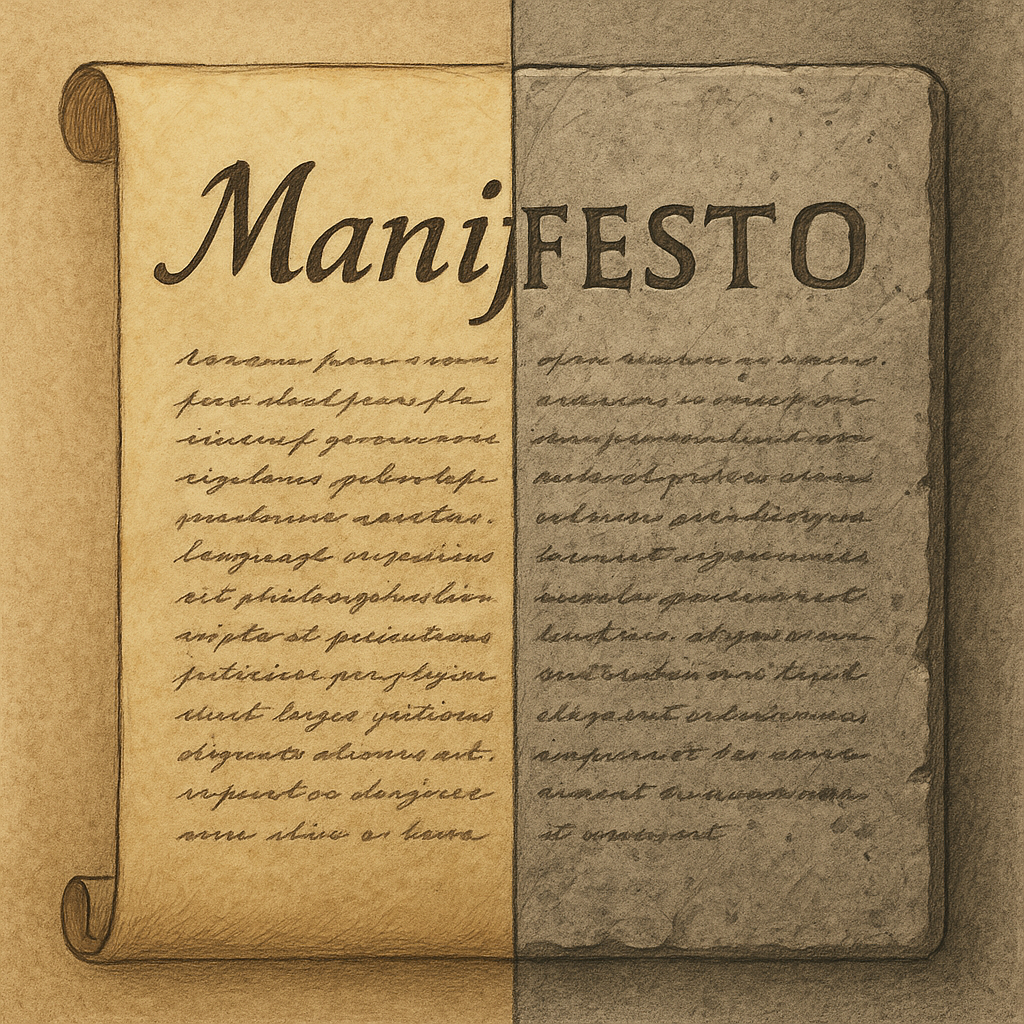
Between ink and stone lies the fine line where conviction becomes belief — and belief, if left unexamined, becomes dogma.
I often find myself writing in the tone of a manifesto: declarative, uncompromising, certain in its cadence. It isn’t always intentional. Sometimes it’s simply the only language strong enough to contain what I feel. Yet I’m aware this style carries risk. To the untrained or hurried reader, such conviction can appear like ideology—or worse, arrogance. In truth, my manifestos are not edicts. They are moments of alignment between clarity and chaos, attempts to map the shifting ground beneath my own feet.
The word manifesto carries baggage. For many, it evokes the rhetoric of politics—grand visions, revolution, the binary clash of “us” versus “them.” Others hear echoes of religion, of sermons and sacred decrees that leave no room for questioning. In both cases, the manifesto becomes synonymous with certainty without flexibility, belief without humility.
It’s no wonder the term can make people uneasy. History has shown us manifestos that rally masses, ignite wars, or justify cruelty. But it has also shown us manifestos that inspire art, liberation, and self-expression. The line between revelation and indoctrination is razor thin—often determined not by the words themselves, but by the spirit in which they are written and the consciousness of those who receive them.
The Power of Declaration
There is something liberating about speaking as if one truly knows. To declare is to crystallise thought—to pin the fluttering swarm of ideas to a moment of clarity. When I write with conviction, it is rarely because I believe I have found the final truth. It is because I need to see what truth looks like when spoken aloud. A manifesto, in that sense, becomes an act of self-discovery through confidence. The words must stand tall, even if I later choose to dismantle them.
The Peril of Certainty
Yet I’m aware of how easily conviction calcifies. The same clarity that grants coherence can harden into armour, shutting out reflection. If a manifesto becomes a monument to a fixed belief rather than a record of an evolving one, it turns from tool to trap. True understanding demands movement, and movement requires the humility to be wrong, or at least to shift.
Perception vs Intention
Intent matters, but so does perception. When people read with their guard up, a voice of conviction can sound like control. The manifesto form amplifies tone, and in doing so, exposes the delicate dance between authorial intent and reader projection. What was written as a map of one’s inner terrain may be mistaken for a decree about how the world should be.
Living Manifestos
Conviction, when alive, is never afraid of change. True faith in an idea is not the refusal to question it, but the courage to do so without fear of it crumbling. A manifesto written today is not a monument—it is a snapshot in time, an image of what truth looked like beneath a particular light.
To declare something is to momentarily solidify the fluid. But every declaration exists within context: language shifts, culture evolves, and what once sounded like revelation may, in another era, sound naive or misguided. That doesn’t make it false—only situated.
Dogma, by contrast, refuses this movement. It chisels the moment into stone and demands that future generations kneel before it. Where the manifesto breathes, dogma ossifies. One invites dialogue; the other enforces silence.
Why I Still Write Manifestos
For me, writing in the manifesto style is not about persuasion. It is about presence. When I write declaratively, I am not trying to convert; I am trying to cohere. The manifesto allows me to momentarily bring my thoughts, feelings, and philosophies into alignment—to speak as though I am whole, even if I know I never truly will be.
In a fragmented world, this act of temporary wholeness feels sacred. The words stand upright for a moment before time inevitably bends them. I accept that. Each manifesto I write is a record of a phase in my evolution—an imprint of the mind I once occupied.
For me, a manifesto is a statement: “This is where I stand, now.”
If dogma seeks to outlive its author, the manifesto simply seeks to speak truthfully while it can. It is not written in stone but traced in light: vivid, transient, and honest to the moment it was born.
Charity shouldn’t have to exist. In a compassionate world, care would be woven into the fabric of daily life, not extracted as spectacle.
Charity is society’s way of appealing to the cruelty that lives in all of us, asking it to behave kindly for a moment, to purchase redemption in coins and signatures. It is the illusion of goodness performed atop the ruins of neglect.
The need for charity is proof of systemic failure, not moral success. Every donation is a confession that our structures were designed without empathy.
If kindness were inherent, there would be no charities. If fairness were real, there would be no causes. If love were built into law, there would be no campaigns.
Until then, charity will remain the prettiest mask cruelty ever wore.