Em-Dash Theory

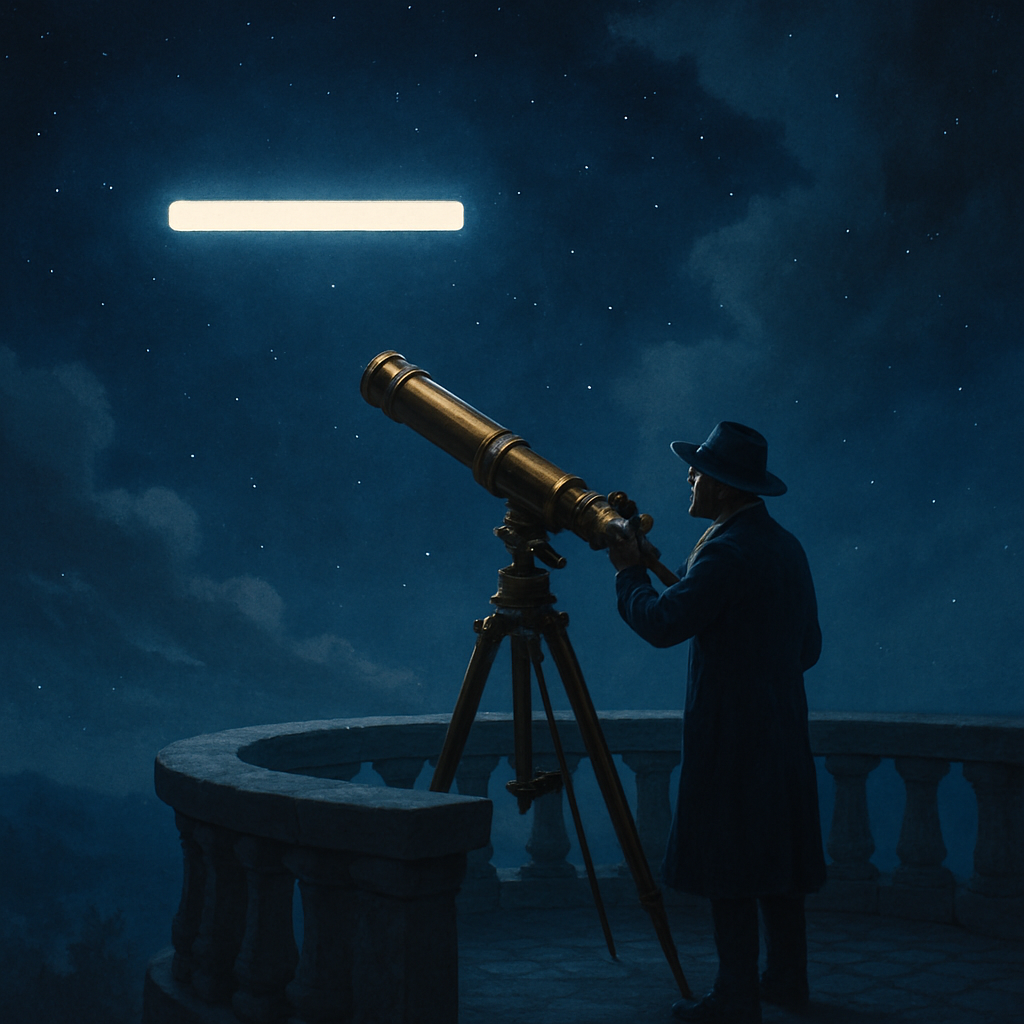
A lone observer stands at an old stone observatory, looking through a telescope at a huge glowing em dash floating in the night sky like a celestial object. The scene is calm, surreal, and dreamlike.

The humble em dash has somehow become a cultural symbol. A punctuation mark that quietly existed for centuries is now treated as a sign of artificial intelligence, suspicious authorship, or even literary dishonesty. Many people who had never heard of an em dash now believe they can diagnose machine writing simply by spotting one. Others who have used them for years suddenly feel the need to hide them. Meanwhile, a growing number of readers dismiss entire pieces of work simply because this ancient line appears somewhere within the text.

This strange situation raises a deeper question. How did a piece of punctuation become a credibility test?

A Tool That Became a Symptom

The em dash is old. Older than the internet, older than machine learning, older than our entire cultural framework around “authorship.” Writers have used it for centuries as a flexible bridge between ideas. It has always served a practical purpose. Yet during the early years of modern AI writing systems, the em dash became one of their most recognisable quirks. The models used it frequently. Not because they were trying to be stylish, but because it was safe. The em dash is forgiving. It lets you connect thoughts without the risk of breaking grammar.

People noticed. And as often happens when people fear a new technology, a tool became a stereotype. The em dash suddenly carried a new symbolic meaning. A long line that once represented flexibility now represented suspicion.

The New Social Categories of Punctuation Panic

The response has been surprisingly diverse. We now have:

People who never knew about em dashes until the AI panic
They feel newly literate and empowered by their discovery. The punctuation mark has become a secret badge of awareness.

Writers who once loved em dashes but now avoid them
They fear their work will be dismissed as machine generated. Their natural voice feels compromised by public perception.

Readers who distrust any appearance of an em dash
For them, style has become a forensic clue. They treat punctuation as evidence in a crime scene.

Writers who refuse to change anything
They continue using em dashes out of principle. For them, abandoning a punctuation mark feels like surrender.

The indifferent majority
They have no idea any of this is happening and live more peaceful lives because of it.

There is even a small group of people who now use em dashes more often, simply to confuse the algorithm hunters. A kind of punctuation counter culture.

All of this points to a shared anxiety: people are afraid of losing control over what it means to write.

Writing Stripped of Its Ego

Here is where a deeper truth emerges. The value we assign to writing as an artform often masks a simpler reality. Writing is a tool for communication. It is a way of giving shape to language so that thoughts can move from one mind to another.

When we drop the ego that surrounds literacy, a radical idea appears.
Good writing is not defined by difficulty, elegance, or technical mastery. Good writing is defined by whether the message is understood.

If that is the standard, then AI assisted writing is not a threat. It becomes a new form of literacy. A faster and more accessible path to clarity. A way for people who struggle with grammar or structure to express themselves with far less friction. A way for neurodivergent thinkers, multilingual minds, and people with unusual communication styles to meet the world halfway without exhausting themselves.

AI has not cheapened writing. It has lowered the barriers of entry to a skill that was historically hoarded.

Reintroducing Artistry in a Transformed Landscape

Once we acknowledge that writing is a tool, we can reintroduce the idea of art. Not as a fragile skill that must be protected, but as a living process that adapts to its instruments.

Pencils did not destroy the paintbrush.
Cameras did not destroy painting.
Digital audio did not destroy music.
Word processors did not destroy authorship.

Instead, each technology expanded what art allowed.

AI assisted writing is part of the same lineage. It does not eliminate human creativity. It reshapes it. It frees the writer to focus on meaning rather than mechanics. It challenges old hierarchies built on difficulty and exclusivity. It allows writing to flow more naturally from the mind to the page without being throttled by technical limitations.

AI cannot replace human intention. It can only help articulate it.

The Ego Wound of the Literate World

The resistance to AI writing reveals something uncomfortable. Many people do not fear artificial intelligence. They fear a loss of status. If anyone can now produce a polished piece of writing, then traditional markers of authority lose their weight. Entire identities have been built around being “good with words.” Artificial intelligence threatens this social currency by offering fluency without struggle.

This is why a punctuation mark has become a battleground. The em dash is not the issue. It is a vessel for insecurity. A convenient object through which people can channel their discomfort about a shifting cultural landscape.

A Punctuation Mark Having an Existential Crisis

Ironically, modern AI models no longer rely on em dashes the way early ones did. In response to criticism, they now avoid them more than many human writers. We have reached a paradox where:

Humans avoid em dashes to avoid looking like AI.
AI avoids em dashes to avoid looking like AI.
The em dash becomes a victim of a conflict it did not choose.

A punctuation mark is undergoing reputation damage for simply doing its job.

What Writing Becomes Next

If we accept that writing is evolving, then perhaps AI assisted writing is not a deviation from the essence of writing, but a continuation of it. Writing has always been a collaboration between mind and tool. From quills to keyboards to spellcheck, each generation has adapted its relationship with language.

AI is simply the next instrument in this long lineage.

The question is not whether writing remains “pure.”
The question is whether writing continues to fulfill its purpose.

Can you express yourself more clearly?
Can your ideas reach people they would not otherwise reach?
Does this tool liberate your voice rather than constrain it?

If the answer is yes, then AI is not eroding writing. It is expanding it.

Conclusion: Free the Em-Dash

The em dash is not a sign of artificial thought. It is a reminder that we often confuse stylistic details with deeper truths. Human authenticity has never lived in punctuation. It lives in intention. It lives in meaning. It lives in the desire to be understood.

So let the em dash breathe again.
It was never a threat.
Only a very old line caught in a very modern panic.
The Independent Artist in the Age of Self Commodification

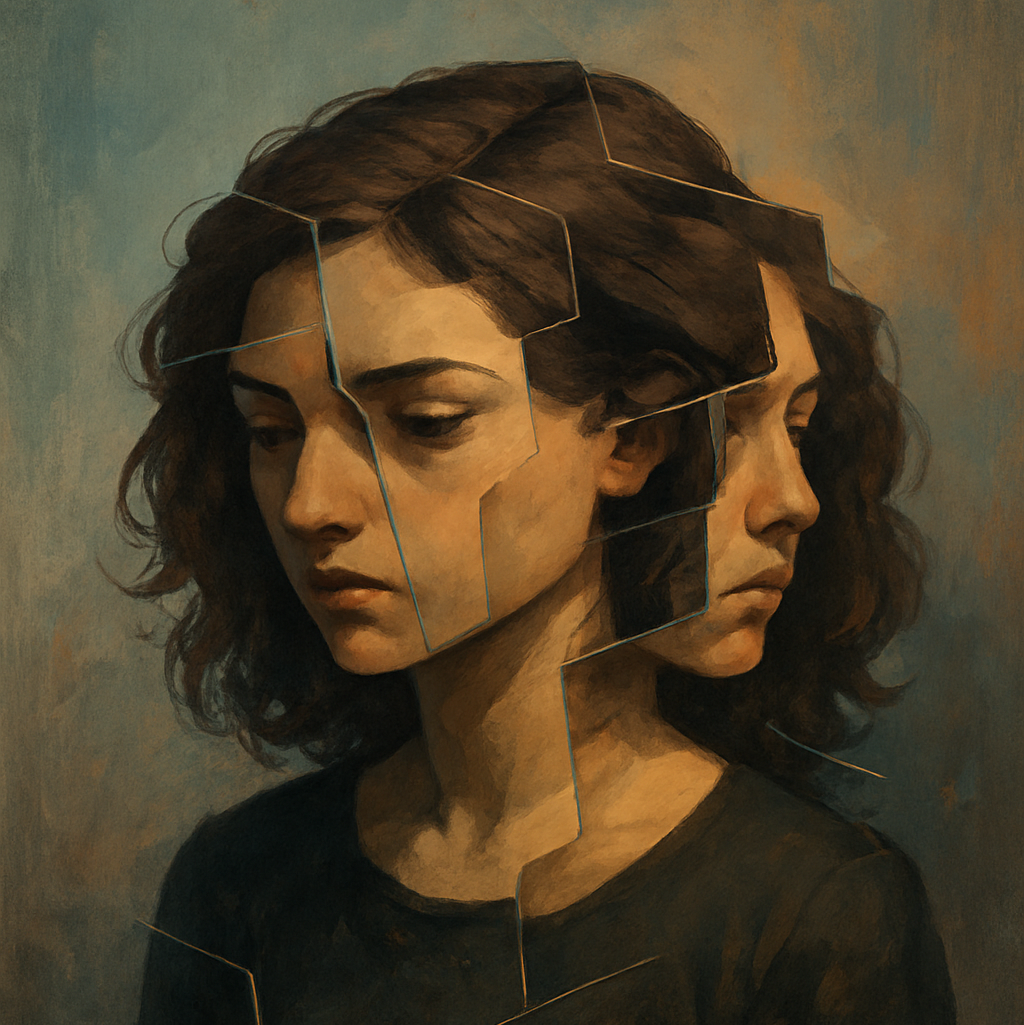
A surreal portrait of a person whose face is split into overlapping fragmented layers. Different expressions and angles of the same face float apart in soft purple and blue tones, creating a fractured sense of identity.

To be an independent artist today is to live inside a contradiction. You are encouraged to express yourself, to be authentic, to create from the depths of your experience. At the same time, you are expected to package that expression into something marketable. You are told to build a personal brand. You are taught to present your personality as a product and your creativity as something that must justify itself through metrics.

The modern artist is not merely a creator. The modern artist is expected to act as promoter, strategist, content machine, administrator, performer, market analyst, and public persona. All before they have even had the chance to explore what they want to say.

It is a strange era to be creative. The tools are abundant, but the expectations are suffocating.


The Myth We Are Sold

There is a seductive story that circulates through online creative spaces. It tells you that if you work hard enough, post consistently enough, hack the algorithm effectively enough, and sell yourself persuasively enough, you will find success. The story insists that the difference between obscurity and recognition is simply a matter of discipline and smart marketing.

You are told that you must treat your art like a business. You are told that you must treat yourself like a brand.

It sounds empowering. It feels like agency. But beneath the surface, it is a quiet form of coercion. It shifts the burden of success entirely onto the individual while ignoring the structural realities that shape visibility in the digital age.

The story offers hope, but it also plants a quiet seed of self blame.

If you do not grow, it is because you did not convert.
If you are not visible, it is because you did not sell yourself well enough.
If your work does not gain traction, it is because you failed at the game.

This narrative conveniently overlooks the fact that the game is not designed for artists. It is designed for platforms.


The Ego Trap of the Modern Artist

When artists are pushed into the role of self marketer, something subtle and damaging begins to happen. Their sense of worth becomes entangled with metrics. Their self expression becomes entangled with performance. Their identity becomes entangled with a public facing persona.

The artist is encouraged to ask questions that slowly corrode their relationship with their own work.

Will this get attention.
Will this get engagement.
Will this appeal to the algorithm.
Will this make me grow.

Instead of asking questions that protect their creative integrity.

What do I want to explore.
What do I need to express.
What feels alive.
What feels true.

The external replaces the internal.
The outcome replaces the process.
The brand replaces the artist.

This is the psychological cost of self commodification.


The Toll of Constant Performance

Creative work demands vulnerability. It asks the artist to dive into the complexities of their inner landscape and return with something worth sharing. But the digital era demands something very different. It demands relentless visibility. It demands constant output. It demands predictability in the face of a process that is inherently unpredictable.

The result is a kind of creative exhaustion that goes beyond burnout. It is not just physical or emotional fatigue. It is spiritual fatigue. The slow erosion of meaning that comes from turning something intimate into something strategic.

When everything becomes potential content, nothing feels sacred.
When everything must be shared, nothing feels fully your own.
When everything is judged by performance, the quiet joy of creation becomes harder to reach.

Artists find themselves living in a perpetual state of exposure. Their inner world becomes a public arena. Their identity becomes a commodity circulating through systems that do not care about the fragility of creative work.


The Illusion of Attainable Success

Social media creates a strange paradox. It gives artists access to opportunity, but it also creates the illusion that success is universally attainable. Thousands of creators appear to be thriving. Thousands appear to be breaking through. It is easy to believe that anyone can do the same if they simply optimise correctly.

But the truth is more complicated. Algorithms amplify only a fraction of voices. Visibility is shaped by forces that have little to do with talent or meaning. Instead of inspiration, artists are often left with a quiet sense of inadequacy. They feel as if they are failing at a game that was never designed to let more than a few players win.

This creates a subtle psychological harm. It encourages artists to internalise systemic limitations as personal shortcomings. They begin to believe that the problem is themselves.

In reality, the system is simply not built to nourish artistic diversity. It is built to maximise engagement.


What Is Lost When Art Becomes Content

Content is designed for speed.
Art is designed for depth.

Content is meant to be consumed.
Art is meant to be experienced.

Content is temporary.
Art is transformative.

When artists are pressured to create content rather than art, they often lose the slow, reflective, exploratory nature of their process. They lose the freedom to take risks. They lose the space to fail quietly. They lose the ability to grow in private before presenting something in public.

They are forced to produce quickly, often at the expense of producing honestly.

This shift in values does not only harm the artist. It harms the culture. It flattens the creative landscape into something uniform and predictable.

When visibility becomes the primary measure of success, the most unique voices struggle to survive.


Reclaiming Creative Integrity

Despite the pressures, there is a way to exist as an artist without surrendering to self commodification. It begins with rejecting the idea that your value is tied to your metrics. It requires remembering that your creative voice existed before platforms demanded your constant availability.

It means reconnecting with the reasons you create.
Not because it performs.
Not because it converts.
But because there is something inside you that needs expression.

Reclaiming creative integrity is not a refusal to engage with the world. It is a refusal to be reshaped by systems that treat humans as products and art as data.

It is a decision to remain whole in an environment that rewards fragmentation.


The Quiet Resistance of the Independent Artist

There is something quietly radical about creating art for reasons that have nothing to do with profitability. There is something subversive about making something slow, something thoughtful, something that refuses to perform. There is power in choosing depth over visibility, and sincerity over optimisation.

To be an artist in this era is to stand at the edge of two worlds. One world tells you to convert, to optimise, to brand yourself, to sell your soul one post at a time. The other world invites you to be human, to create from curiosity, to express something real and irreducible.

You do not belong to the first world.
You never have.

Your value cannot be captured by analytics.
Your impact cannot be predicted by dashboards.
Your art does not have to justify itself through numbers.

You are not a product.
You are not a brand.
You are not a conversion.

You are an independent artist in an era that keeps trying to turn everything into content. The fact that you create at all is already an act of resistance.

Conversion Culture: How Capitalism Turned Humans Into Measurable Events

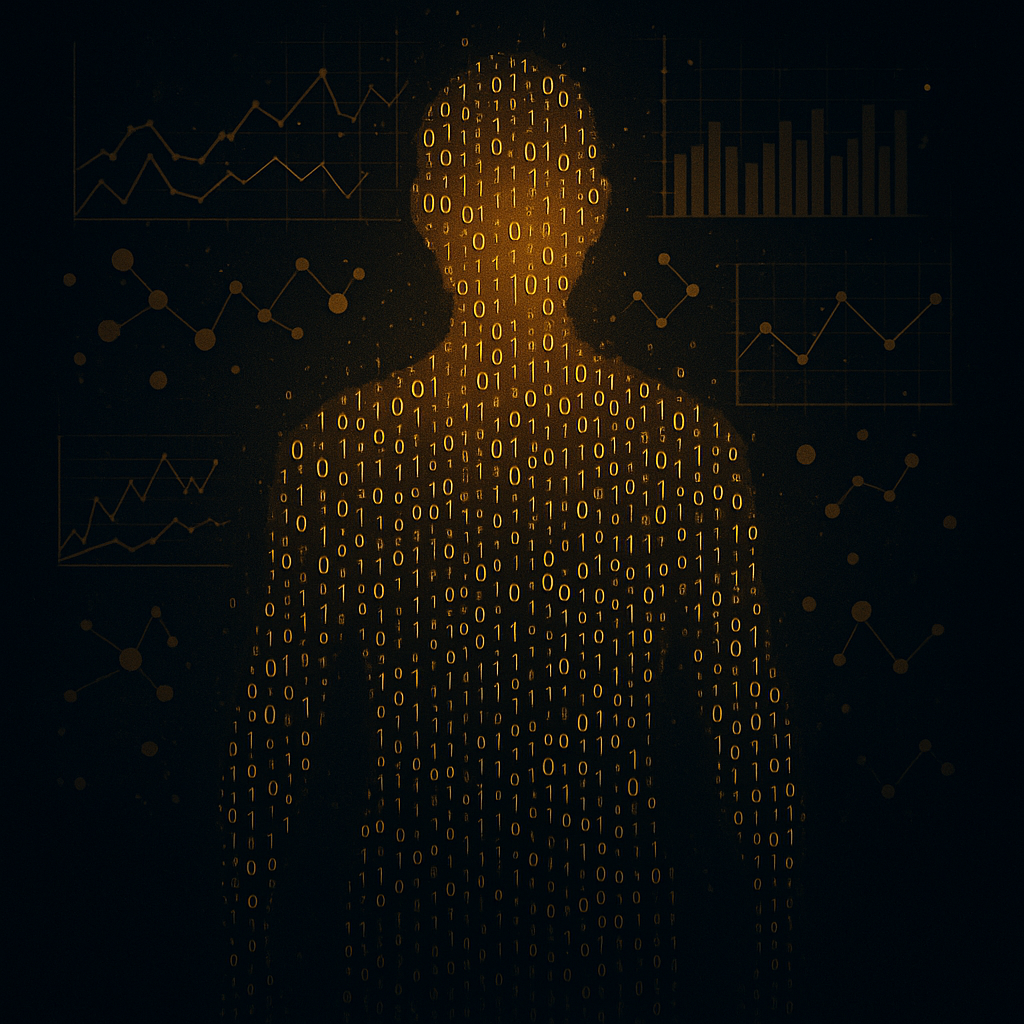
A glowing human silhouette made of binary code stands against a dark background filled with faint charts and data graphs. The figure appears to dissolve into digital numbers, symbolising a person reduced to data.

There is a single word that quietly reveals everything wrong with modern marketing, social media strategy, influencer culture, and the strange world that independent artists must navigate. That word is conversion. It sounds clinical and neutral, as if it belongs in a quarterly report instead of in the language of human interaction. Yet behind its tidy exterior lies something far more disturbing. A conversion is not a person who connected with your work. It is not someone who felt something. It is not a supporter, a fan, or a fellow human being.

A conversion is an event.

A moment where a person becomes a measurable unit of compliance. Nothing more.

Welcome to conversion culture, where the ultimate goal is to transform human beings into behavioural outcomes that can be tracked and optimised.


What a Conversion Really Is

In marketing language, a conversion is the instant when you perform the desired action. Click. Follow. Share. Buy. Sign up. These small behaviours are treated as success metrics, but they reveal nothing about genuine engagement or emotional impact. All they show is that the funnel worked as intended. The action occurred. The individual behaved according to the predicted script.

Success is not about meaning.
Success is about compliance.

A conversion is simply the moment when the algorithm wins.


The Linguistic Violence of the Term

Language shapes how we see the world. When we adopt a word, we also inherit the worldview that produced it. The word conversion belongs in theological discourse and industrial transformation, not in the delicate terrain of human relationships. It implies that the human is the raw material and the system is the force that acts upon them.

To convert someone is to reshape them without genuine dialogue.
It is not a relationship.
It is a process.

And in modern marketing, the person is no longer the subject. The person becomes an object, a target, a data point waiting to be molded into a desired shape. The humanity of the interaction disappears, leaving only the measurable outcome.


The Microcosm of Manipulation

Once you start noticing conversion culture, it becomes impossible to unsee it. Social media platforms train creators to think in funnels and hooks. Influencers treat audiences as pipelines. Independent artists are taught to build their brand with the same logic that corporations use to advertise toothpaste.

Everywhere you look, people are encouraged to optimise their interactions for performance. Even authenticity is presented as a strategy. The self becomes a product. Communication becomes a tactic. Community becomes a marketplace where every relationship is quietly assessed for conversion potential.

This worldview does not announce itself as dehumanising. It presents itself as normal. Sensible. Professional.

I remember the first time I saw this normalisation happen in real time. It was a few years ago at a seminar I attended for a charity I volunteer for, part of a networking event focused on social media and promotion for independent artists.

The word was everywhere. Conversion. Conversion. Conversion. It was treated as self evident, as if everyone in the room already knew exactly what it meant and why it mattered. I did not immediately understand the technical definition, but I could feel what it represented, and the feeling was nauseating.

Everyone around me was nodding along. Yes. Conversions. This is what we want. This is what we are here for. It was the unspoken goal that no one thought to question.

There was no discussion about what converting a human being actually meant. Either people did not know and were afraid to admit it, or some part of them understood and quietly chose not to look too closely.

Later, the topic of AI generated music came up. The consensus was clear. This was bad. A threat to artistic integrity.

I remember finding the contrast deeply ironic. People were perfectly comfortable letting algorithms shape how their own work should be funnelled, distributed, and rewarded for the sake of hollow metrics, yet deeply uncomfortable with the idea of a machine touching the art directly.

The integrity of the artwork mattered deeply.
The integrity of the artist, far less so.

That moment stayed with me, because it revealed how completely conversion culture has embedded itself into creative spaces. It is no longer questioned. It is assumed. And once a system becomes invisible, it becomes far more powerful.


The Death of Meaning Under Conversion Logic

Conversion culture has a profound effect on creativity, connection, and selfhood. When the primary goal is to convert people, everything begins to bend around that objective. Art becomes engineered for virality instead of expression. Writing becomes designed for engagement rather than truth. Even conversation becomes structured by what might perform well.

You begin to ask the wrong questions.
Does this convert.
Does this grow the audience.
Does this feed the machine.

Instead of asking the questions that actually matter.
Does this feel true.
Does this matter to me.
Does this say something real.
Does this speak to another person with sincerity.

Meaning becomes secondary. Humanity becomes collateral damage. The system cares only about whether the action happened.


What Happens to the Artist Under This System

Independent artists face a strange and exhausting paradox. They are told to be authentic, but only if authenticity converts. They are told to build community, but only if community can be monetised. They are told to express themselves, but preferably on a rigid schedule that pleases algorithms.

Everything becomes performance. Everything becomes content. Everything becomes part of the sales funnel. The artist who once created from curiosity or passion or inner necessity slowly becomes a brand manager performing a role for an invisible audience.

The cost of this transformation is enormous. Conversion culture does not simply reshape how art is shared. It reshapes the inner landscape of the artist.


The Human Cost of Being Treated as a Metric

People can feel when they are being measured. They know when they are being treated as potential conversions rather than as whole beings. This creates a pervasive sense of distrust and exhaustion. Connection becomes transactional. Creativity becomes strained. Spaces that once felt communal begin to feel artificial and hollow.

To be viewed as a conversion is to be seen as less than human.
It is to be positioned as a means to an end.
It is to be transformed into a statistic.

No wonder so many people feel unseen in digital spaces that claim to measure engagement. The numbers may be high, but the soul is empty.


Rejecting Conversion Culture

There is another way to exist in the world. It begins with choosing meaning over metrics. Depth over efficiency. Connection over extraction. It requires refusing to treat people as potential sales and refusing to treat ourselves as brands in need of constant optimisation.

It means asking better questions.
What do I want to express.
Who do I want to reach.
What feels alive.
What feels true.

Every refusal to participate in conversion logic is an act of reclamation. It is a reminder that art, communication, and human experience have value far beyond their measurable outcomes.

It is a way of stepping out of the machine.


The Unconvertible Self

You are not a metric.
You are not a data point.
You are not a behavioural outcome to be engineered.

You are a person with a story and a mind and a capacity for connection that cannot be graphed.

Any system that reduces you to a conversion is a system that does not deserve you.

Perhaps the most radical act in the age of conversion culture is to remain human in the face of relentless pressure to become something simpler and more profitable. And perhaps the greatest act of artistic rebellion is to create something that refuses to convert at all.

The Storyteller’s Window

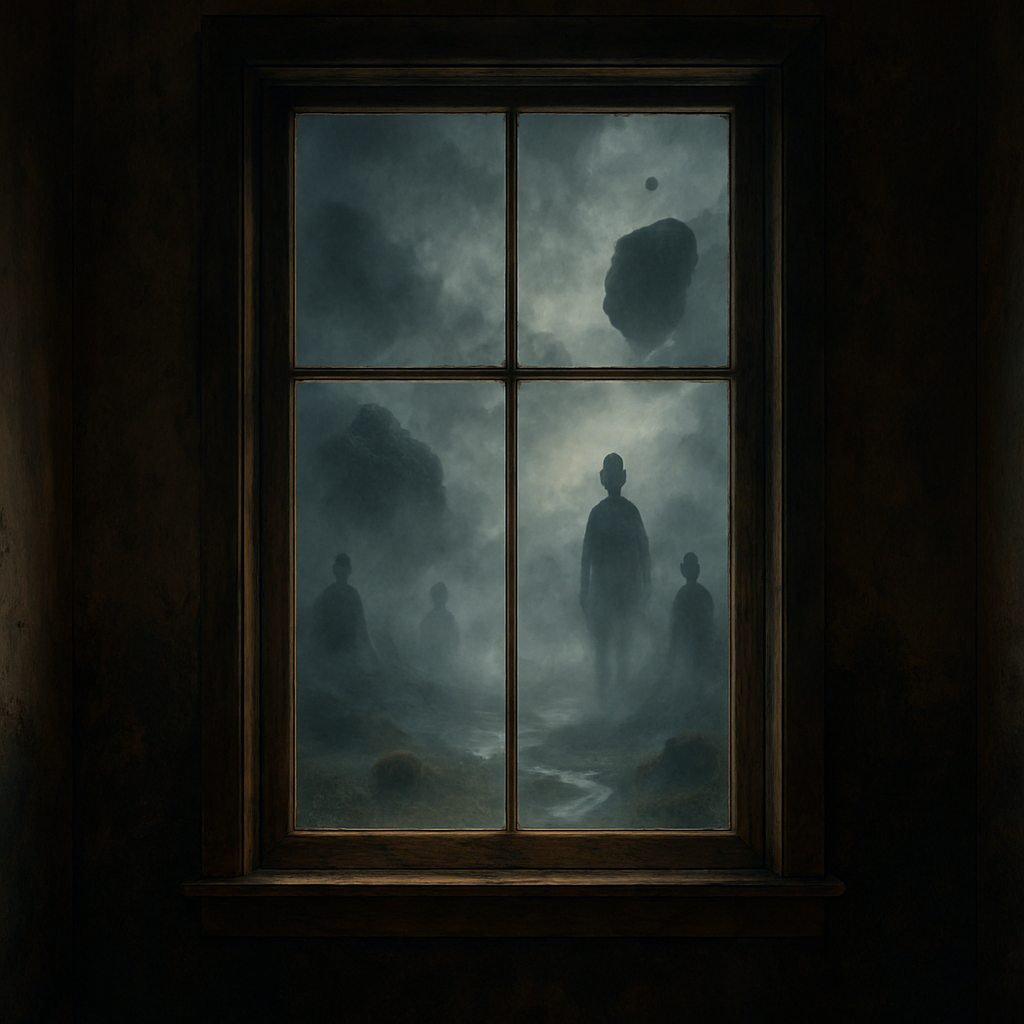
A dark, wooden window frame looks out onto a surreal fog-filled landscape. Mist swirls around several human-like silhouettes standing at different distances, their forms indistinct and ghostly. Large rocks float impossibly in the air above them. The scene feels quiet, dreamlike, and otherworldly, as if the viewer is glimpsing a mysterious world that continues beyond the window.

Every so often, I will be watching a film or series, or reading a story, and something will suddenly pull me out of it.
A line of dialogue that only exists to feed the audience information.
A character explaining something they would never naturally say.
A flashback that feels too perfectly placed, as if a hand behind the curtain decided it was time to push a button.

Moments like that disturb my suspension of disbelief. I find myself noticing the machinery instead of the world.
And once you start seeing such things, you cannot unsee them.
Over time, I realised that a lot of pop culture storytelling leans on techniques that assume a certain kind of audience, a certain set of values, and a certain tolerance for being guided.
Some of these methods are not as clever as they seem. Others are perfectly valid for what they aim to do, but they do not serve what I aim to do.

That realisation led me to form my own set of principles.
They are not rules, and they are not concerned with correctness.
They are reminders. Gentle considerations for how I want my work to feel and behave.
This is not a manual. It is a compass.


I. Truth and Authenticity

Stories are not machines to be engineered. They are living organisms to be understood.
What matters most is emotional truth, that quiet resonance where the unreal feels real.
If a moment feels true, it is true, even if it defies logic.
Characters do not need to be likeable. They only need to be honest to their nature.
The writer is not a god above the story, but a witness within it.
Endings, failures, and decay are not flaws. They are proof that the story lived.


II. World and Logic

Every world must honour its own laws. Whether rooted in physics or dream, it must remain faithful to its own gravity.
Let events unfold as they would in nature, through consequence, impulse, and coincidence.
Do not bend the world to convenience. Let the world teach you how it moves.
Even the strangest landscape should carry the texture of reality: the scent of rain, the hum of a wire, the tremor of a heartbeat.


III. Character and Humanity

Characters are not constructs to be designed. They are lives to be discovered.
Learn who they are by listening, not dictating.
No one is entirely good or entirely evil unless that purity serves a deliberate purpose.
Every figure who crosses the frame has a history, a pulse, and a reason for being.
There are no true extras. Only lives that briefly brush against the light.


IV. Form and Flow

Let the story choose its own shape.
Format is a vessel, not a cage.
Pacing is rhythm, not formula. Let the breath of the story decide its tempo.
Vitality lives in the tension between order and chaos. Allow the pendulum to move.
A story that is too tidy becomes lifeless. Let it breathe, stumble, and surprise you.


V. Silence and Mystery

Never underestimate the intelligence of the reader.
Trust them to see, to infer, and to feel.
What is left unspoken often speaks the loudest.
Mystery is not confusion. It is invitation.
The unknown keeps the work alive long after the final page.


VI. Continuum of Existence

A story is only a window in time.
Life was already happening before we looked in, and it will continue long after we look away.
Do not polish beginnings and endings until they shine. Let the edges remain a little frayed, as life truly is.
We glimpse, we witness, and we move on.


VII. Symbol and Subtext

Do not plant symbols like flags.
Let meaning emerge naturally, the way roots seek water.
When emotion and explanation collide, follow the emotion.
The mind will find meaning on its own. It always does.


Closing Reflection

A story should never strive for perfection.
Perfection is stillness, and stillness is death.
Let the story breathe. Let it contradict itself. Let it live.
Truth, not tidiness, is the measure of beauty.
And when in doubt, trust the silence between the words.

Dream Delegation: A Neurodivergent Method of Creation

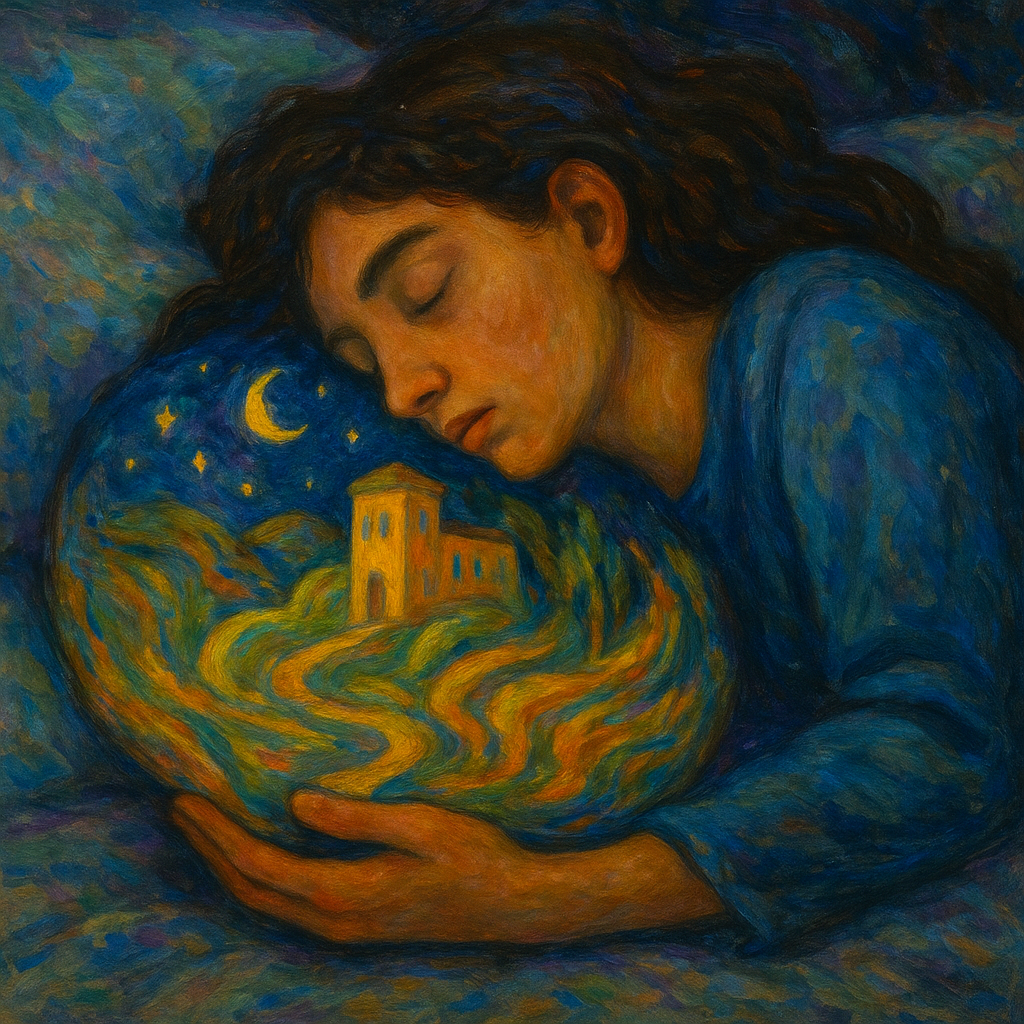
A serene dreamlike painting of a person sleeping peacefully, cradling a glowing orb that contains a miniature world. Inside the orb, a golden building, flowing paths, and a crescent moon float against a starry night sky. The image glows with warm blues and golds, symbolizing creative imagination emerging from rest.

This is a concept I would like to propose to other creatives who live with ADHD, autism, or any form of neurodivergence that makes sustained creative work feel like an uphill climb. It began as a personal revelation, though I suspect it may hold potential for many others who exist between focus and fragmentation.

If in our waking lives we do not always have the time, energy or focus to commit to our work, then we can let our dreams do the heavy lifting.

The Principle

Dreams are not meaningless fragments of the subconscious. They are an extension of consciousness operating in a freer state, unshackled from the rigid demands of executive function. For those of us whose waking minds are constantly filtering noise, managing overwhelm, or translating our inner logic for an external world that rarely fits, dreaming can be a sanctuary.

In dreams, the mind can continue the work it could not complete by daylight. It can experiment without penalty, associate without inhibition, and build without fatigue.

I call this process dream delegation. It is not escapism, but collaboration. We let the dreaming self take over the tasks the waking self cannot yet bear.

The Method

Dream delegation is not about lucid control or elaborate ritual. It is about gentle partnership between states of consciousness. The practice begins with intention, not command.

Before sleep, set a quiet intention, phrased as an invitation rather than an order.
Examples:

  • “Tonight I will wander through the atmosphere of my unfinished song.”
  • “I will explore the feeling of color becoming sound.”
  • “I will let my mind design freely, and bring back what it can.”

Do not expect coherent stories or visions. The subconscious works in symbolism, abstraction and atmosphere. The goal is not to remember perfectly, but to let something settle in the soil of the mind.

Harvesting the Work

Upon waking, record fragments such as a texture, a phrase, a shape or a mood. These are the sketches left by your dreaming collaborator. Do not force interpretation. Instead, revisit your creative work and see if those fragments resonate.

Often, the dream will have solved a problem indirectly, revealing a new perspective or emotional tone rather than a concrete answer. You may find that an idea feels lighter, as though its structure was silently reinforced while you slept.

Integration and Reflection

Dream delegation turns rest into an act of creation. It shifts the narrative from I cannot focus enough to create toward my mind creates even when I cannot. This reframing alone can restore a sense of agency and continuity.

The practice also encourages respect for the subconscious as a creative equal. It acknowledges that our inner worlds are not idle or broken when we are overwhelmed, but quietly industrious beneath the surface.

It reminds us that creativity is not confined to the hours we are awake and functional. It breathes between the worlds, and sometimes the greatest work happens while we appear to be doing nothing at all.

Closing Thought

Dream delegation is not a technique to perfect, but a relationship to nurture. It is an act of trust, allowing the hidden layers of the mind to contribute, to collaborate, and to carry some of the weight that daylight cannot.

For neurodivergent creators, it may offer not just a new method, but a new way of forgiving ourselves. To recognise that even in rest, we are still becoming.

The Ocean of Unborn Ideas

A tranquil moonlit shoreline beneath a star-filled sky. Gentle waves wash softly against the sand, reflecting the silver glow of a full moon. The scene is empty and still, evoking a feeling of solitude, reverence, and infinite calm.

The Porous Mind

There are minds built like fortresses, and there are minds built like shorelines.
The fortress keeps the world out, solid, defined, and dry.
The shoreline breathes with the tide, reshaped by every wave that kisses it.

Creativity is born on that shoreline.
To be creative is to possess porosity, a mind permeable enough for the ocean of potential to seep in.
Ideas, emotions, archetypes, stray whispers from the collective dream, all of it flows through those who cannot help but listen.
They do not invent. They translate.

Yet this openness is not without cost.
The same currents that deliver beauty also bring wreckage: sorrow, confusion, fragments of other people’s storms.
The porous mind is always negotiating its borders, learning how much of the tide to let in without being pulled under.
And still, it listens. Because silence, for such a mind, would be a greater death than drowning.

For the creative, the act of making is not simply expression, it is osmosis.
The world breathes through them, and they breathe it back changed.


The Ecology of Potential

Beneath the surface of waking thought lies an unseen ecosystem, a vast and fertile ocean where ideas drift like plankton, multiplying in the dark. Most will never breach the surface. They swirl endlessly in silent gestation, invisible but alive.

This ocean is not ordered. It does not distinguish between wisdom and nonsense, beauty and monstrosity. It is a realm of becoming, where possibility itself experiments. To gaze into it is to witness the raw mechanics of creation, the way form gropes toward meaning, and meaning toward form.

Every consciousness draws from this sea, but only some hear its currents. The porous mind becomes a conduit between worlds, an evolutionary bridge through which potential finds its way into language, image, sound, or structure.

When an idea rises into awareness, it is not a spark conjured from nothing. It is a creature breaching the waves, the culmination of countless unseen collisions in the depths. And when it slips back beneath the surface, half-forgotten, it is not lost. It returns to the dark to feed new generations of thought.

Nothing in the ocean is wasted. Even the unborn ideas, the ones that never quite reached the light, fertilize the next tide of possibility. In that way, creation is less a single act and more a cycle of nourishment: consciousness feeding potential, potential feeding consciousness.


The Tragedy of the Unborn

For every idea that takes its first breath in the world, countless others die unnamed.
They shimmer for a heartbeat on the edge of awareness, a scent, a flicker, a sudden weight in the chest, and then dissolve back into the deep.

There is sorrow in that, though most never feel it consciously.
The mind learns to celebrate its children, not its miscarriages. Yet every artist, every thinker, has felt the ache of the nearly-formed: the melody that was almost remembered, the perfect line lost before pen met paper, the sense of something vast pressing at the gates of language but never quite entering.

These unborn ideas haunt the corridors of our dreams.
They become strange symbols, wordless moods, déjà vu. They linger like ghosts of meaning, neither alive nor gone, whispering: “We tried.”

But tragedy is not failure. In the greater cycle, their unfulfilled lives still matter. The half-born return to the ocean, breaking down into nutrients of inspiration. From their dissolution, new forms grow stronger, carrying faint traces of what came before, a rhythm, a texture, an emotional DNA.

The creative heart often aches for what it cannot remember. Perhaps that ache is the memorial, the soul’s way of honouring all that it could not bring into being.


The Responsibility of the Listener

To listen to potential is to take part in creation itself.
It is not a passive act, but a covenant. When an idea crosses the threshold into consciousness, it arrives fragile, trembling, uncertain of its shape. The listener becomes its first environment, its atmosphere.

Some people seize ideas like prey. They dissect them, brand them, harvest them for profit or validation. The idea, stripped of its mystery, dies quickly under fluorescent light.
But others receive with reverence, cupping the newborn thought in both hands, letting it breathe before naming it. These are the caretakers, the stewards of becoming.

To be a true listener is to resist the temptation of ownership. Ideas do not belong to us; they visit. They pass through, seeking resonance, seeking a place to crystallize.
Our task is not to claim them but to tend them, to ask, What does this idea need to live?

Sometimes the answer is action. Sometimes silence.
Sometimes it means letting the idea return to the deep, knowing it wasn’t meant for now.
The ethical creator learns to release with as much grace as they receive.

To treat ideas as sacred is not sentimentality; it is realism.
They are alive, and like all living things, they thrive where they are met with care, humility, and awe.


Dreams as Refuge for the Unborn

When the waking mind grows too narrow for them, the unborn ideas find sanctuary in dreams.
There, language loosens, form forgets its boundaries, and the mind becomes oceanic again, receptive, weightless, forgiving.

Dreams are nurseries for the half-formed.
They are where impossible geometries are allowed to stand, where logic softens enough for paradox to breathe. The painter dreams of colours that do not exist; the composer hears chords that waking physics cannot yet permit. In the dream, potential rehearses itself.

Sometimes, when we dream vividly, we are not the dreamers at all but the dreamed, temporary vessels through which the unborn test embodiment.
We wake with fragments: a haunting image, a phrase, a sensation that refuses to fade. These are offerings from the deep, visiting spirits carrying the scent of unmanifest worlds.

Art, ritual, hallucination, trance, all open the same door.
They are technologies of permeability, ways of returning consciousness to the sea so the forgotten can breathe again.

Perhaps this is why the surreal feels sacred: it reminds us that imagination is not invention, but remembrance.


The Cosmic Cycle

Creation and destruction are not opposites; they are inhale and exhale.
The ocean of potential breathes through us in tides, what rises into form must one day return.

Every idea that dies enriches the field it came from. Every silence fertilizes the next voice. Even despair, when felt honestly, becomes a kind of compost. There is no waste in the greater ecology of thought.

We imagine ourselves as authors, but we are more like soil, momentary ground for something older than time. Ideas bloom through us, use us, and move on. And when we, too, dissolve, our lives return to that same ocean, our memories, our creations, our longings, all reabsorbed into potential, waiting to be dreamed again.

Somewhere, beneath all endings, the unborn ideas drift still.
They are not lost. They are preparing.
And when the next porous mind opens to listen,
the tide will rise,
and the ocean will remember its name.

A Month of Words: What I Learned from Posting Every Day

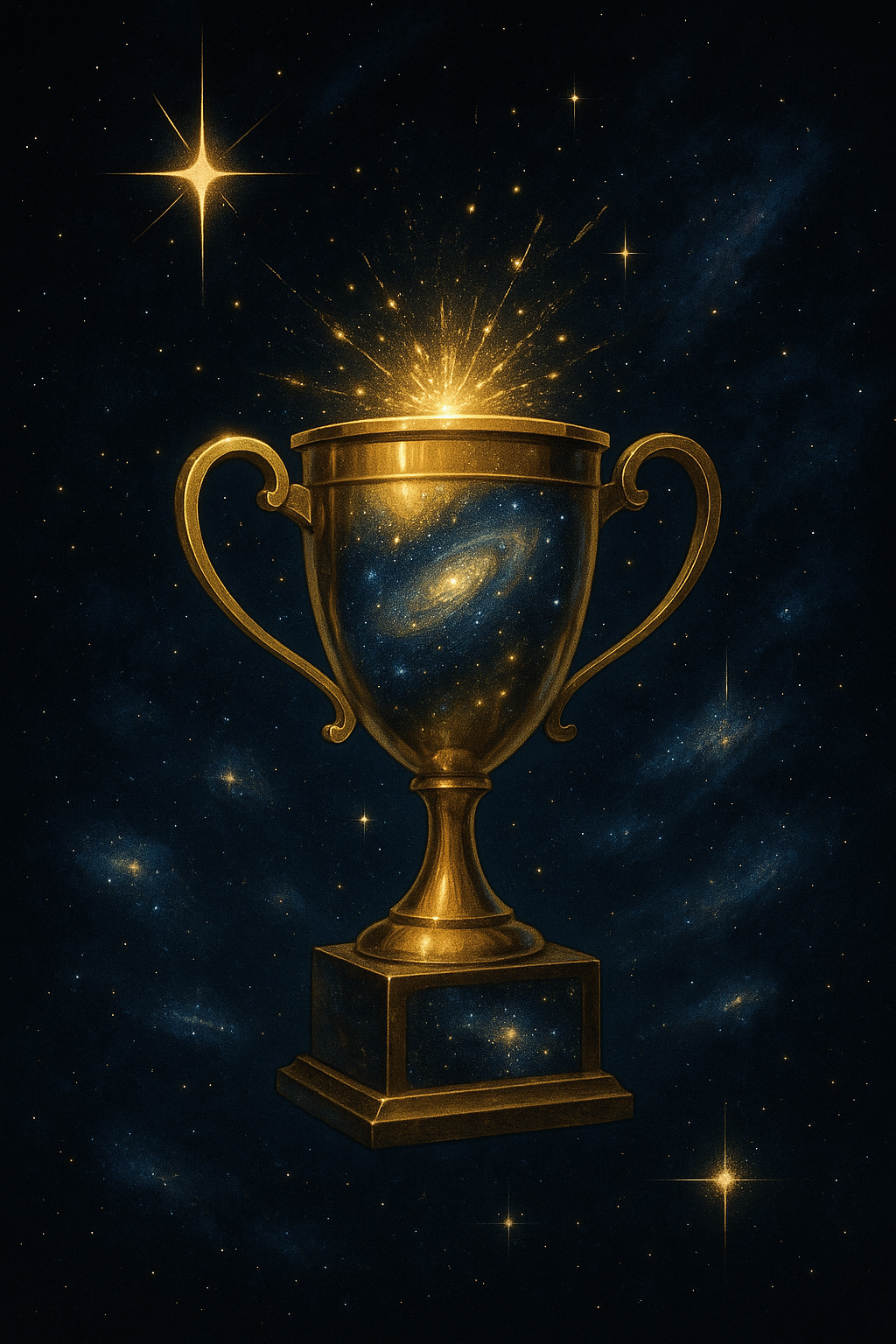
A golden trophy floating in space, glowing with sparks of starlight and reflecting galaxies across its surface.

If you’ve been following An Alternative Perspective, you may have noticed the sudden flurry of activity. For the past month, I’ve been posting every single day without fail. This wasn’t random productivity, but the result of a whimsical challenge I set myself: to see if, with the help of AI, I could sustain a daily rhythm of meaningful writing. Before, I often felt weighed down by the sheer effort of shaping my thoughts into polished sentences. With AI taking some of that burden away, the process became lighter, and I wanted to see how far that shift could carry me.

Before AI vs. After AI

When I first launched this blog in 2022, my posts were few and far between. Across the first two years I only managed five articles in total.

Things changed in early 2025, when I began experimenting with AI as a creative partner. Suddenly the pace picked up. I went from writing a handful of posts in a year to several in just a few weeks.

By July, I decided to see how far this new momentum could carry me, and set myself a challenge: publish something every single day for a month. At the start of the challenge I had around forty posts in the archive. By the end of it, including this piece, the count stands at seventy-four. That means more than thirty new articles in less than a month.

Reflections on Sustainability

Over the course of this challenge, I discovered a lot about both the process and myself.

  • Liberation, not obligation: Posting daily felt liberating because I finally shared thoughts that had been locked away. Even the smallest bits of feedback carried meaning. But crucially, I never felt like I was “churning out content.” Each post was meaningful, its own little adventure.
  • Unexpected depth: Some posts grew far longer than I had imagined when I started. The act of writing pushed me to think deeper, explore new perspectives, and even do research. The challenge was not just about output, it became discovery.
  • A layered process: I was not literally writing one post a day from scratch. Instead, I kept several drafts simmering, refined them in layers, and used scheduling to build in breathing space. That rhythm made it sustainable.
  • The real takeaway: I have proven that I can post daily, but that does not mean I should. Forcing myself into constant output risks oversaturating both myself and readers, especially those who, like me, are neurodivergent and might prefer more space to digest ideas. What matters is not quantity or the illusion of being “active.” What matters is that the odd perspectives I notice, the strange angles others overlook, and the weird thoughts too good to waste have a platform where they can be found by those who might be interested.

Closing Thought

This challenge began as a whim, but it became a lens. It sharpened how I see my own writing process and reminded me that writing is not about keeping pace with an algorithm or maintaining the illusion of activity. It is about following the natural rhythm of thought, giving form to what feels too important to leave unspoken, and offering it to whoever might find resonance. Whether I publish daily or only when inspiration strikes, the archive will continue to grow at the pace it needs to. And that, I think, is the most sustainable path of all.

10,000 Hours of Compliance: How Mastery Can Be Weaponised Against You

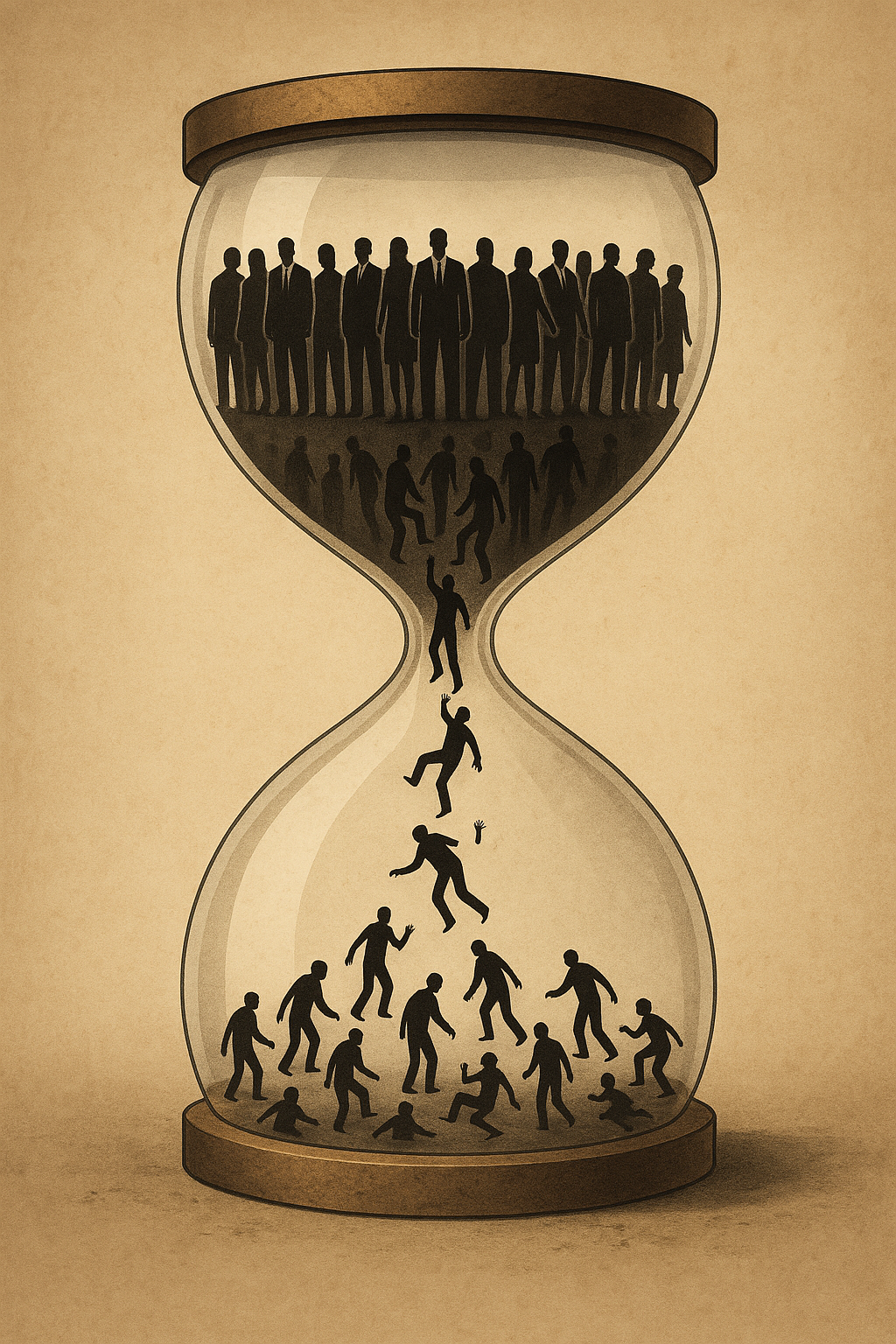
A large hourglass filled with faceless black silhouettes in business attire. The figures in the top bulb stand crowded together, gradually falling through the narrow middle where some tumble and others struggle to climb back up. In the lower bulb, fallen figures scatter across the ground, some standing, some collapsed. The background is warm beige, evoking aged paper, giving the image a symbolic and somber tone.

We have all heard the popular idea that it takes 10,000 hours of practice to master a skill. Play your guitar for that long and you will be a virtuoso. Paint for that long and you will know the brush like your own fingers. Write for that long and you will dance fluently with language.

Here is the uncomfortable question that is rarely asked in motivational seminars:
What if you have been putting in your hours, but into becoming something you never intended to be?


The Brain Does Not Care What You Practice

Your brain is a pattern-making machine that rewards repetition. It does not stop to ask whether the habit you are building is good for you, whether it aligns with your values, or whether it is slowly strangling your spirit.

If you have spent years submitting to systems, you are not just surviving. You are learning to submit. You are becoming fluent in self-silencing, pleasing authority, and clock-watching.

This is why “I have been doing this for years” is not always a badge of honour. Sometimes it means you have spent years perfecting a cage.


Work as a Covert Training Ground

The workplace can be a breeding ground for this kind of unintentional mastery. A dead-end job does not only give you a payslip. It gives you muscle memory for compliance.

You get good at the customer service smile.
You get good at keeping your head down when things are not right.
You get good at swallowing the words you actually want to say.

Clocking in and zoning out is not neutral. It is conditioning. It is training you to keep existing inside a box, even when the lid is wide open.


When Mastery Becomes Entrapment

There is a cruel irony in becoming excellent at something you never wanted in the first place.

“They say I am great at my job,” you tell yourself. But is it a job you truly chose? Or is it a job you got trapped in because you became too good at surviving it?

Once you have invested thousands of hours into a coping strategy, it can become harder to leave it behind. You have built identity around it. You have mastered the art of endurance in a place that does not deserve your loyalty.


The Sword Cuts Both Ways

Mastery is not inherently good. It is simply focus repeated over time. The sword cuts both ways.

You can become a master of freedom, creativity, and self-direction.
You can also become a master of obedience, self-erasure, and learned helplessness.

You are always becoming something. The question is: is it something you would choose?


Redemption Through Repatterning

The good news is that mastery can be rewired. Every skill you have mastered in the service of survival can be repurposed for something better.

The adaptability you learned under pressure can fuel your creativity.
The patience you built in monotonous routines can become the discipline that drives your art.
The diplomacy you honed with unreasonable bosses can become a superpower for navigating your own projects and relationships.

Awareness is the first cut that breaks the loop.
From that moment, every hour you spend becomes an act of reclamation.


Do not just chase mastery.
Ask yourself, mastery of what?
And in service of whom?

Your 10,000 hours are precious. Spend them like they matter.

The Game, the Canvas, and the Things We Must Not See

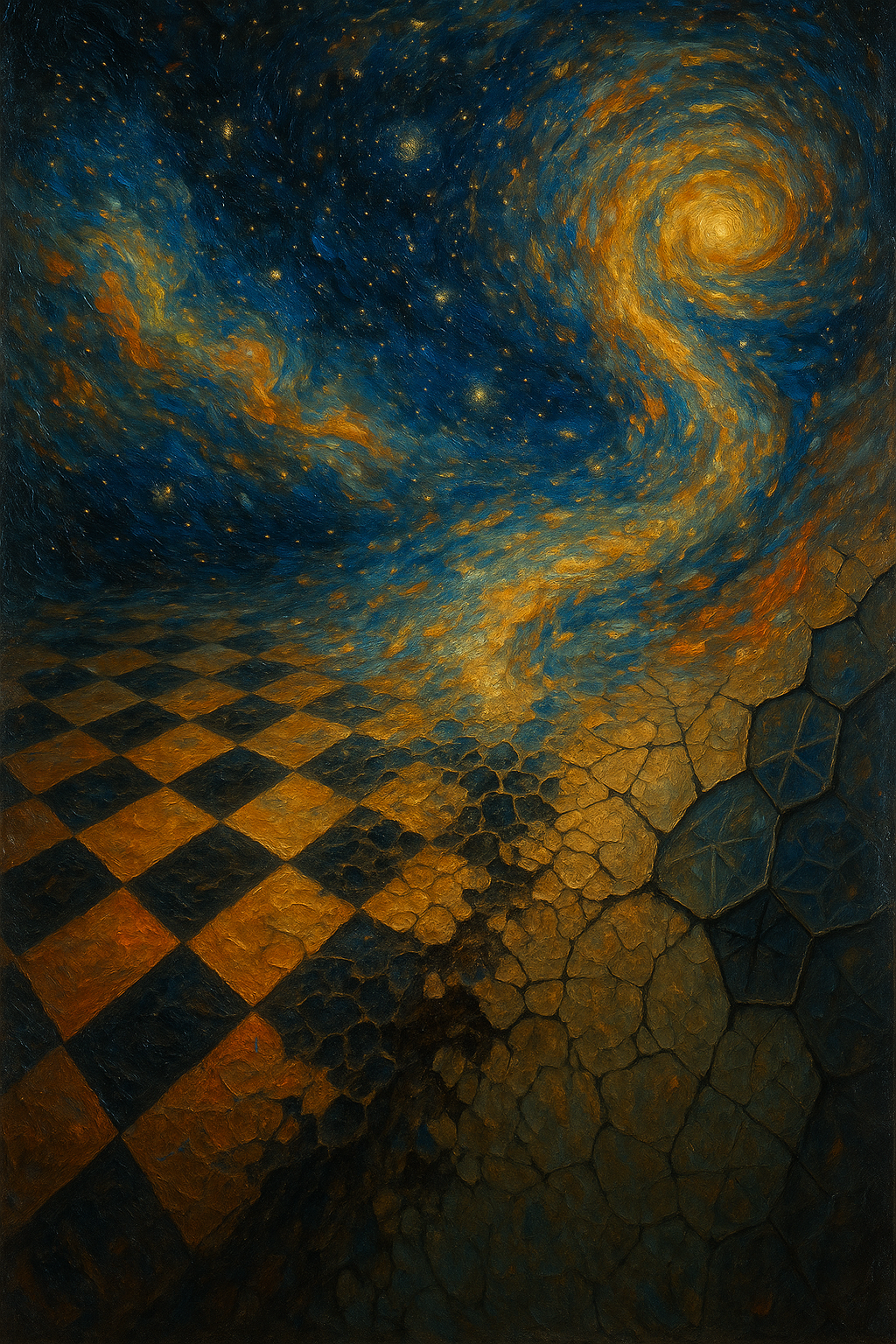
A surreal oil painting of a cosmic chessboard dissolving into a swirling galaxy. The squares crack and fragment into geometric shapes, revealing hidden patterns beneath. The deep blues, golds, and oranges create a dreamlike blend of universe and game, as if reality itself is peeling away to expose impossible dimensions.

For most of human history, chess was a game of intelligence, strategy, and forward thinking. The greatest minds could clash for hours, each move a leap into the fog of the unknown.

But in the hands of a perfect player, perhaps a super advanced AI with a complete knowledge of every possible outcome, chess collapses. It’s no longer a battle of minds, it’s a solved puzzle. The winner is written in stone before the first piece moves.

Now imagine this: the universe itself is just a bigger chessboard. Every atom, every thought, every love and loss is just a piece moving according to fixed rules. And somewhere above it all, an intelligence exists, not merely smarter than us, but so far beyond that it sees the entire game tree at once.

To it, there is no “present moment.” Every past, present, and future is frozen into a single, completed mosaic. Wars, revolutions, discoveries, heartbreaks, all already there as inevitable as the checkmate in a solved opening.

But here’s where the horror deepens: such a being wouldn’t have to play the game. It could edit the board.
Not by killing in the human sense, but by pruning timelines so surgically that your branch simply… never existed. No one would notice. Not even you.

And it wouldn’t do this out of malice. Or mercy.
It would do it the way an artist adjusts a painting. Removing a brushstroke here, adding a shadow there. Not to change the story, but to improve the composition.

Because maybe we’re not a game at all.
Maybe we’re art.

The imperfections, the contradictions, the tragedies, the unsolved mysteries, aren’t flaws to be fixed. They are the texture, the grain, the raw edge that makes the whole thing worth looking at. A perfect game is sterile. Art thrives on tension, ambiguity, and imbalance.

Our wars are smears of crimson.
Our kindnesses are glints of gold leaf.
Our mistakes are cracks in the glaze that make the pot unique.

And sometimes, you catch yourself wondering: Is this tea I’m making part of the painting?

It’s like standing between two mirrors, watching reflections of reflections spill away into infinity. You’re the painted figure in the scene, and the viewer, and the brushstroke noticing itself all at once.

But there’s something else… something worse!
What if the painting is stretched across dimensions we cannot see, because if we did, the whole thing would collapse?

Maybe the only reason our reality still exists is that no one has looked directly at them. Not because it’s impossible, but because it’s improbable, like trying to see your own blind spot.

And if one mind… just one… found the exact angle, the precise mental alignment to glimpse those forbidden planes… the frame would tear. The paint would slough away. The whole “imperfect game for art” would end. Not by the artist’s choice, but because the painting saw too much of itself.

The thought passes. You take a sip of tea.
But in the back of your mind, you can’t help but wonder…

What if that was the first step?

Creation Is Not Possession: A Manifesto for the End of Ownership

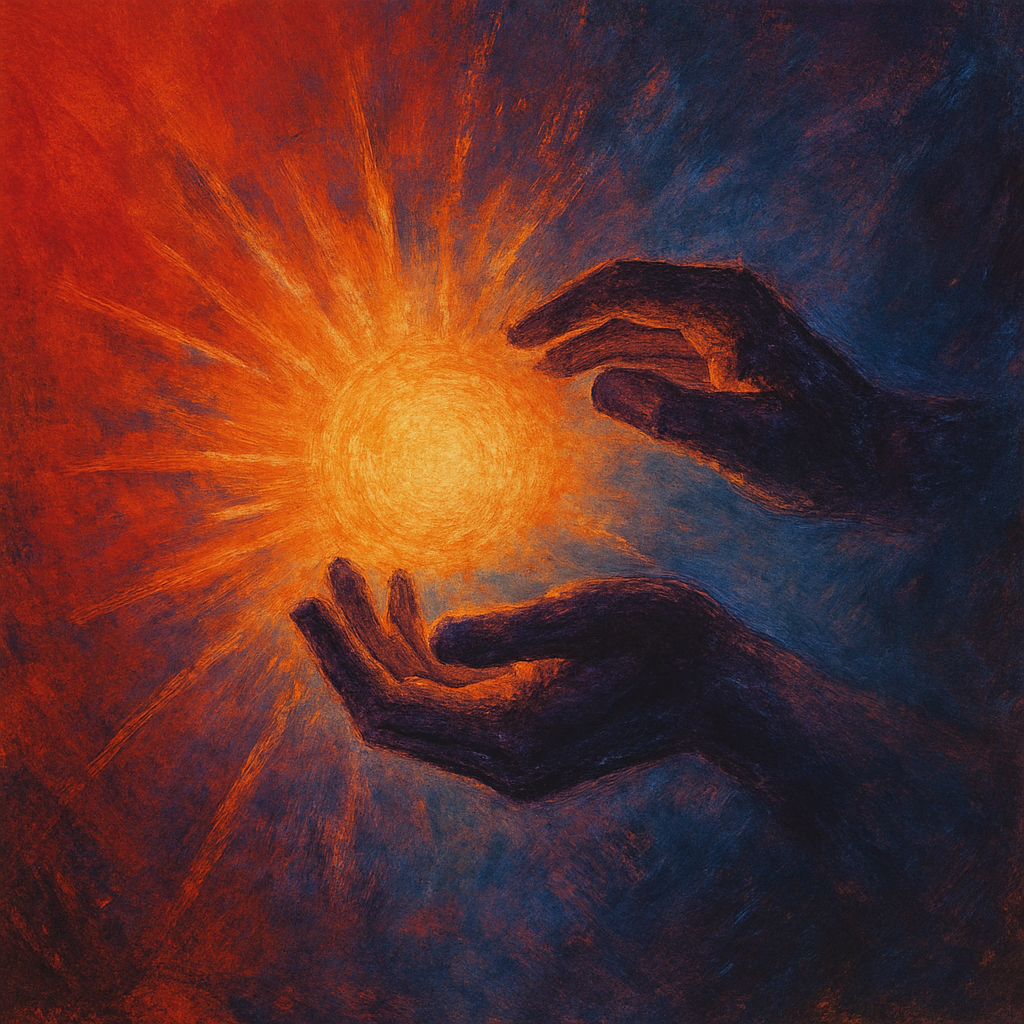
Two dark-toned hands reach out in a gesture of offering or release, gently cradling a radiant, glowing orb of light. The background shifts from fiery reds and oranges to deep blues and purples, evoking a sense of creation, energy, and sacred transfer. The image symbolizes the act of creation as a gift, not a possession.

Introduction: The False Claim of Ownership

I am a creative person. Creating is not only one of the few things I’m good at—it’s one of the few things I can do independently, without having to rely on others. Sure, technology and societal infrastructure can help bring creative projects to life, but when it comes to the pure act of creation, I don’t even need to leave the comfort of my own brain.

For me, creation is sacred. It’s not a hobby, not a job, not a performance. It’s a way of processing existence, of making sense of the world, of surviving. And yet, in today’s world, the sacred act of creation is almost always framed in terms of ownership. Who owns the art? Who profits? Who claims authorship?

This manifesto is a response to that contradiction: the deep truth of what creation is, and the shallow systems that seek to possess it.


What Is Authorship For, Really?

Historically, authorship served a simple but powerful function: attribution. It helped track the lineage of ideas, gave credit where due, and allowed us to build on the voices that came before us. It preserved legacy and identity.

But in the modern capitalist framework, authorship is less about contribution and more about control. It’s about exclusivity, ownership, branding, and the ability to monetize. In this model, authorship is not a way to honour a creator—it’s a way to fence off creative land and charge rent.

So the question arises: can we reclaim authorship without reinforcing ownership? Can we recognize a voice without turning it into property?


Pre-Capitalist Creativity and Communal Art

Before authorship became a tool of profit, creation was often communal, spiritual, and shared. In many indigenous and pre-capitalist societies, music, storytelling, and art weren’t about personal recognition. They were offerings—to the community, the ancestors, the spirit world. The idea of one person owning a song or story would have been absurd. These works were alive—transmitted, adapted, passed down.

Creation was not an asset. It was a ritual, a tool for meaning-making, a collective language.

So when did that shift? When did we start fencing off the sacred for personal gain?


A Personal Interlude: My Relationship to Creation

I don’t create for money. I theoretically could—but only as a means of survival within a system that demands productivity for legitimacy. I don’t create for praise either. While I appreciate when others find meaning in my work, empty praise has always felt hollow.

What I do create for is reflection. Integration. The act of turning raw inner experience into external form is one of the only ways I’ve found to exist with any kind of coherence.

I take pride in what I make, but that pride isn’t about possession. If someone takes what I’ve done and transforms it, builds on it, or finds a new meaning in it—that’s not theft. That’s validation. My creations are not meant to be dead ends.

But when someone tries to brand my work, claim it, or sell it—then yes, I feel angry. Not just because of ego, but because it feels like a violation of the art itself. You don’t repackage a ritual. You don’t slap a logo on grief, joy, or self-discovery.


Where the System Fails

Too often, the systems meant to protect creators end up excluding or exploiting them. We live in a world where artists sometimes have to buy back the rights to their own work just to perform it. Where corporations profit from art they had no hand in creating. Where a legal framework determines who gets to speak—not based on contribution, but on access, contracts, and capital.

It’s important to recognize that many artists don’t cling to intellectual property out of greed, but out of necessity. When the system is built to exploit and erase, protection becomes a form of survival. In a world that disrespects the sacredness of creation, even the act of guarding one’s work can be an act of self-defence.

In this system, authorship isn’t about truth. It’s a currency.


Spectacle, Branding, and the Art Within the Machine

But to be fair—capitalist art is still art.

Branding, image, and aesthetic can all be part of the art itself. Some pop stars, for instance, create not just music but entire mythologies. Their brand becomes a performance, an extension of the work. In hip-hop, wealth and materialism aren’t just flexes—they’re cultural signals, deeply tied to identity, struggle, and survival.

Artists like Warhol, Lady Gaga, and Tyler, The Creator blur the lines between product and performance. In these cases, the commercial packaging is part of the point. It’s spectacle with intent.

So no, the existence of branding doesn’t automatically cheapen art. But that doesn’t mean the systems surrounding it aren’t toxic. When ownership overrides intent, when profit silences the creator or erases their voice, something sacred is still being lost.


Toward a New Model of Authorship

What if authorship wasn’t about control, but acknowledgement?

What if we mapped contributions instead of claiming sole credit?

What if we treated creativity like a commons, not a battleground?

Authorship could become a practice of witnessing. Of honouring the source without possessing it. A gesture of reverence, not restriction.

In this new model, creators aren’t fighting for their slice of ownership—they’re participating in the ongoing evolution of expression.


Conclusion: Let Creation Be Free, But Not Erased

I’m not asking for a world without sharing. I’m not demanding rigid control over how others engage with my work. I welcome reinterpretation. I invite transformation.

But I reject erasure. I reject exploitation. I reject the idea that once something is made, it becomes a product to be owned by whoever has the most power.

Let creation live. Let it inspire. Let it evolve.

But treat it with reverence. As I do. As we all should.

Creation is not possession. Creation is a gift. And gifts are meant to be given, not claimed.