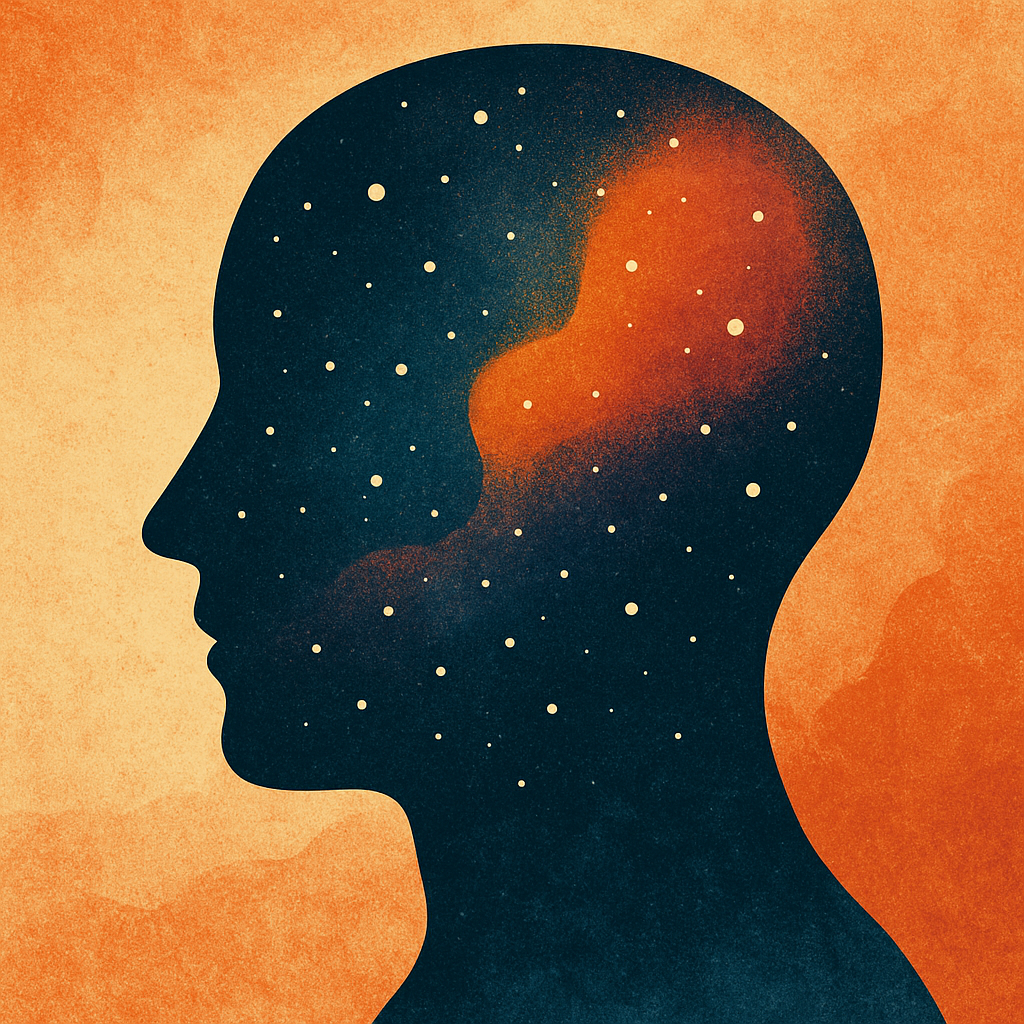
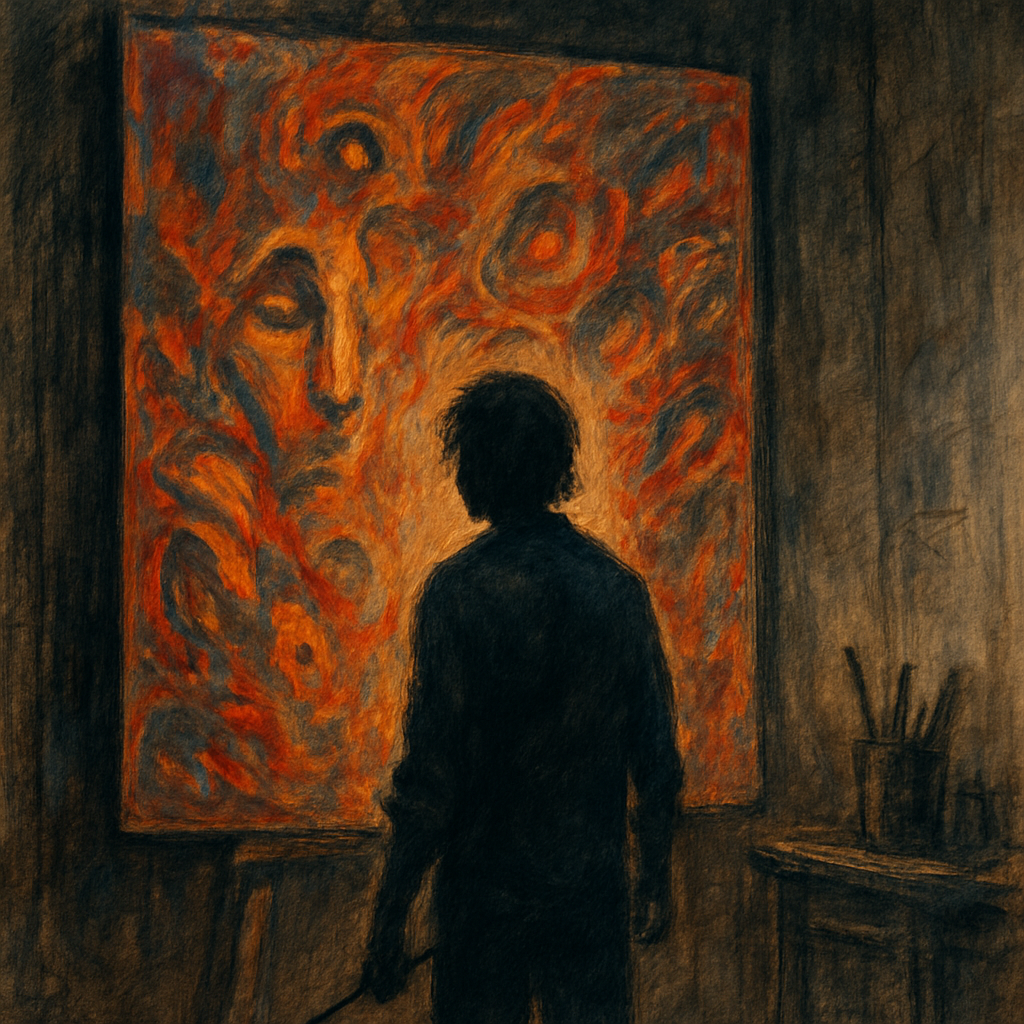
We all think. And we can think about anything. So perhaps philosophy is everything.
Philosophy is not limited to scholars, theories, or ancient books. It is the undercurrent of awareness that flows through every human mind. To think is to philosophize, even when we do not name it as such. Every thought, however ordinary or fleeting, is an act of participation in the great experiment of consciousness.
In philosophy, thought is the subject. What we think about is only the vehicle that carries our observation of thought itself. Every question, every argument, and every belief is a reflection of the thinker. Through philosophy, we turn the gaze inward and study the machinery of the mind that produces the world as we know it.
What do we think? How do we think? Why do we think? What influences the way we think? What types of thoughts exist, and what are their functions? How do we relate to our own thoughts, and how do others relate to theirs? How do others relate to ours?
These questions are not just abstract curiosities. They are the foundation of self-awareness.
Does a thought need to be thought in order to exist? Does a thought need a brain? Do undocumented thoughts cease to exist if their host dies? What does it mean to exist at all? Are there thoughts that are impossible to manifest?
We often associate thought with language, as though words are its birthplace. But can a thought exist before language finds it? Can it move through the mind as a feeling, an image, a knowing, or a pattern? Some thoughts may live only as impressions, others as sensations waiting to be translated. Perhaps language is not the origin of thought, but its reflection.
Our brains are far more powerful and versatile than our most advanced computers. Each one is capable of infinite exploration, learning, and creation. Yet we often invest more time exploring our external machines than our internal ones. We study code and circuitry while neglecting the living network within ourselves.
If we approached the mind with the same curiosity we bring to technology, we might rediscover the vast landscapes of awareness that lie hidden behind habit and distraction. We might see that thought itself is the original virtual world, a boundless realm of possibilities.
Philosophy, then, is not a subject we study. It is the act of studying itself. It is the ongoing conversation between the observer and the observed, the thinker and the thought, the mind and its mirror.
To live philosophically is not to know all the answers. It is to remain awake to the mystery of thinking, and to recognise that every moment of reflection, however small, is part of the greatest inquiry there is.
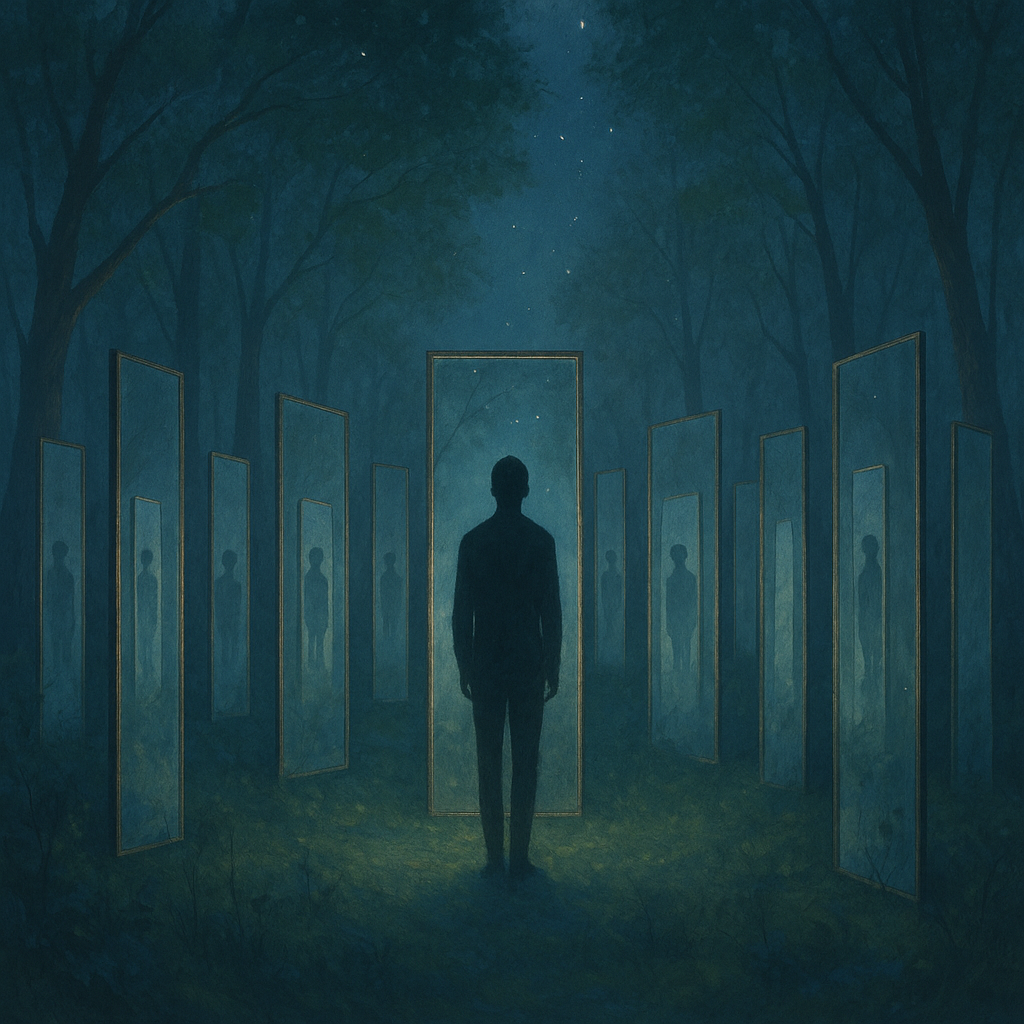
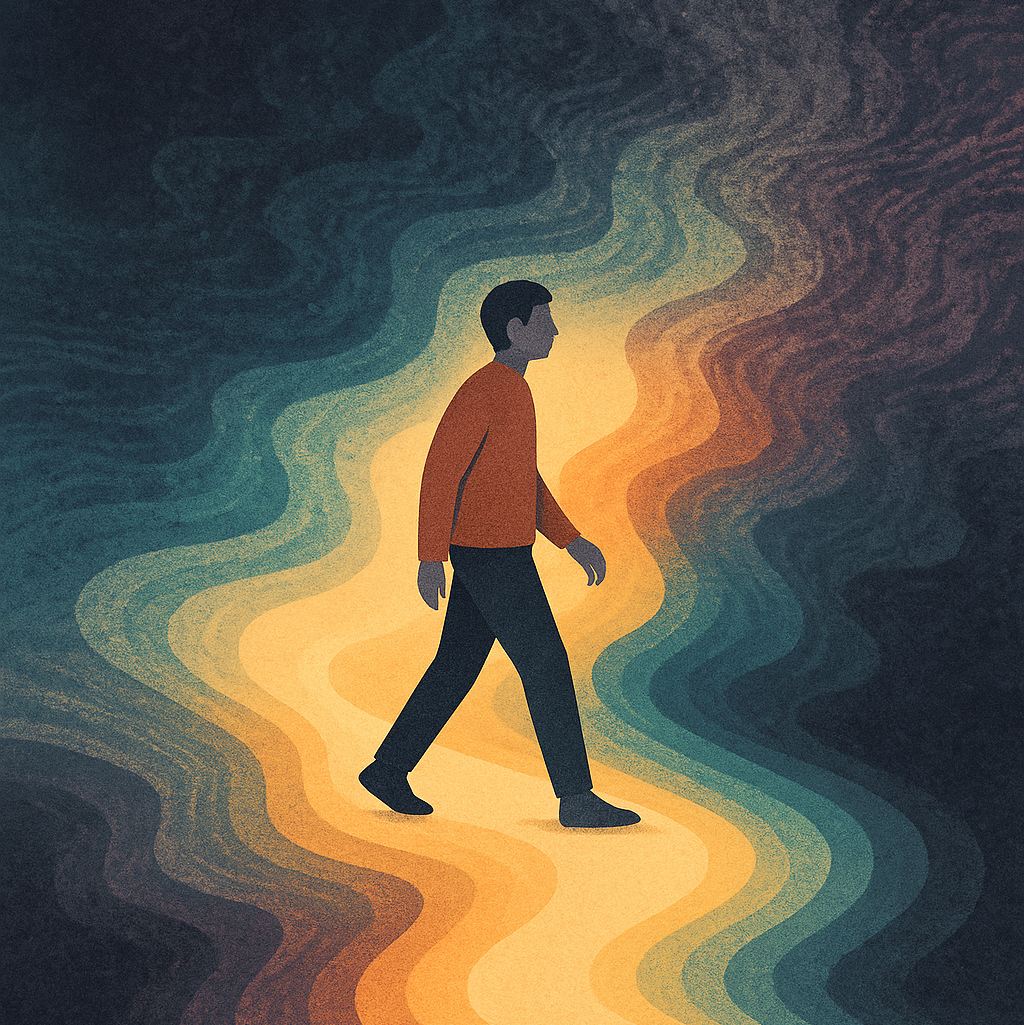
There are moments in life when you look back at the path behind you and realise you were building something without noticing it. Not a plan, not a project. Something closer to a trail of reflections. A set of mirrors placed gently along the way, each one capturing a different angle of who you were in that moment.
This is my one hundredth article. A strange milestone. Not a number I ever aimed for, yet here it is, staring back at me like a mirror of its own.
When I look at the ninety-nine fragments behind me, what I see is not consistency. I see multiplicity. I see pieces of myself that refused to stay quiet. I see ideas that insisted on being witnessed. I see philosophies, frustrations, insights, dreams and shadows, each holding up their own reflective surface, saying: “Look. This is part of you too.”
Writing, for me, has always been a form of self-observation. Not in a self-indulgent way, but in the way an astronomer studies celestial bodies. You look deeply at what is there, not because it asks to be understood, but because it demands acknowledgment by simply existing.
Across these one hundred mirrors, I have seen:
The observer who notices patterns when others see noise. The outsider who has always stood at the edge of the crowd. The child who still remembers wonder. The philosopher who asks questions even when there are no answers. The strategist who sees the shape of systems. The dreamer wandering through inner landscapes. The witness to injustice. The rebel who does not want power, only truth. The artist who refuses to be tamed. The self that has broken and reassembled itself more times than anyone knows.
Each reflection has been honest. Some gentle, some sharp. Some filled with clarity, others clouded by uncertainty. But all of them true in their own way.
If there is a single thread running through everything I have written so far, it is this:
Awareness is my compass. Meaning is my instinct. Honesty is my language. And imagination is my bridge between worlds.
I do not write because I expect the world to listen. I write because these mirrors would exist whether I acknowledged them or not. Putting words to them is my way of bringing form to what is already present in the quiet spaces of the mind.
This one hundredth article is not a conclusion. It is a pause. A moment to look at the mosaic forming behind me. A century of reflections. A reminder that I am not one thing, but many. And that each piece contributes to something larger, something that continues to unfold.
Thank you for witnessing any part of this journey. Here is to the next mirror, wherever it may appear.
We often hear that true love is unconditional. It is an ideal repeated so often that questioning it can sound almost sacrilegious. But I have come to believe that unconditional love, as it is commonly portrayed, is more fantasy than virtue. Human beings are not static. We change, we evolve, we fracture and reform. If love is to remain alive, it must change too. Love without conditions is not eternal; it is inert.
The truth is that love is a living thing. It breathes, feeds, grows, and withers according to how it is cared for. Its conditions are not ultimatums but requirements for life, like sunlight and water for a plant. Love needs mutual respect, effort, communication, and honesty. It depends on two people being willing to tend the same garden, even as seasons shift. When either stops, the balance falters.
Recognizing that love has conditions does not make it selfish or transactional. Transactional love says, “I give so that I get.” Conditional love says, “I give because what we share feels alive and mutual, and I want to keep it that way.” It is a conscious agreement rather than a contract, a continuous realignment of two changing hearts. The difference is subtle but vital: one is rooted in expectation, the other in awareness.
People are always changing. Physically, mentally, emotionally, we never stop moving. In the early stages of love it is easy to make sweeping declarations of eternal devotion, but devotion means little without adaptation. Love is not a single promise made once; it is a thousand small promises made daily. Sometimes love means being patient while your partner grows. Sometimes it means catching up when you have fallen behind. Above all, it means communicating, speaking honestly about differences, needs, and fears, while also offering reassurance that the growth is still together, not apart.
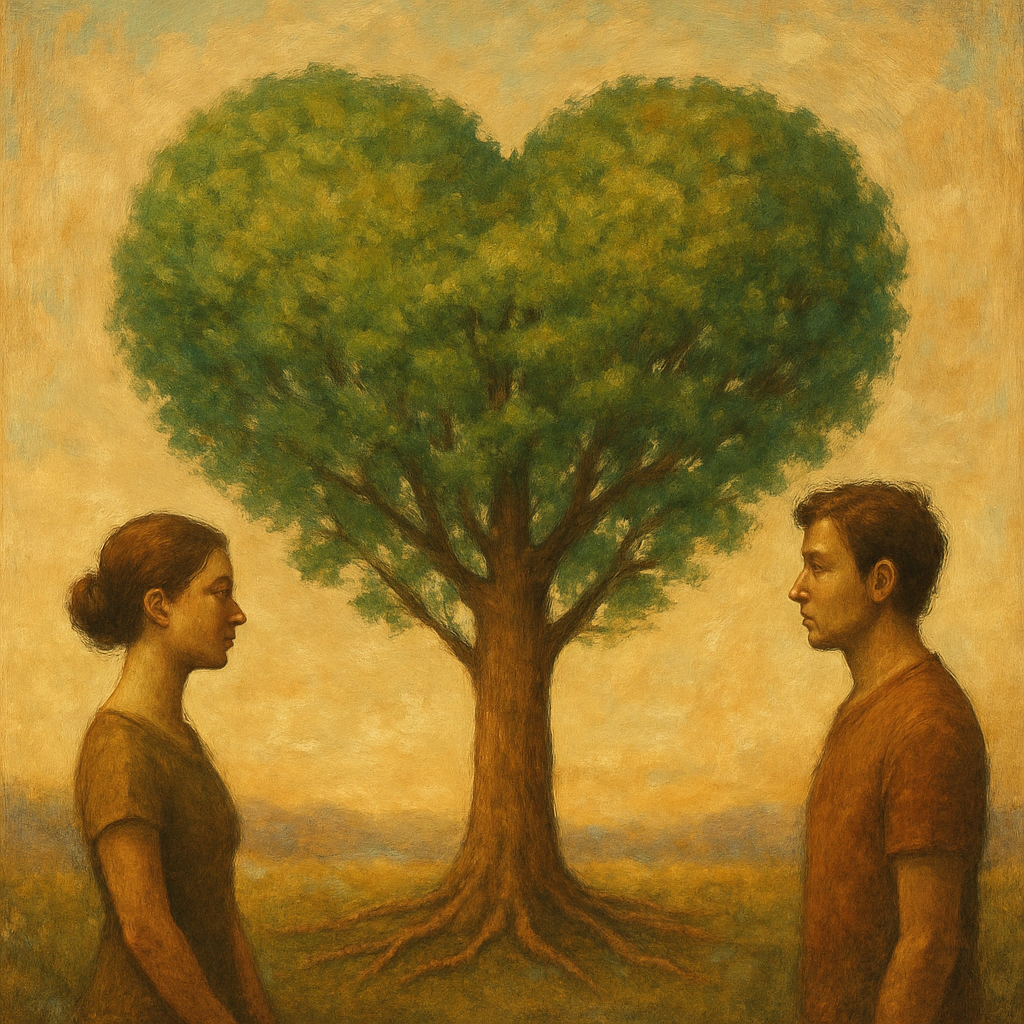
I like to imagine love as a great tree. Romantic affection, sexual attraction, companionship, and mutual respect are its branches, each requiring its own nourishment. When these branches intertwine, the connection deepens, but the upkeep becomes more demanding. The effort this requires is not punishment; it is what makes love sacred. To sustain the tree, both partners must be willing to feed it, sometimes through sacrifice, sometimes through patience, always through choice.
Because love is a choice. Every passing second is a decision to stay, to nurture, to share in both gain and loss. When the cost outweighs the nourishment, when the balance of giving and growth no longer feels true, love begins to change form. And sometimes, the most loving act is to recognize when that transformation must lead to letting go.
Letting go, when done with honesty and compassion, can itself be an act of love. Love does not have to die when romance ends. It can evolve, shift, and take new shape. A relationship may dissolve, but the gratitude and respect that once existed can remain as roots, quietly nourishing both people in the soil of who they become next.
So perhaps love’s beauty lies not in its permanence but in its fragility. To love conditionally is to love consciously, to recognize that devotion is not a chain but a dance. The real miracle of love is not that it lasts forever, but that we keep choosing it, moment by moment, knowing full well how easily it could fade.
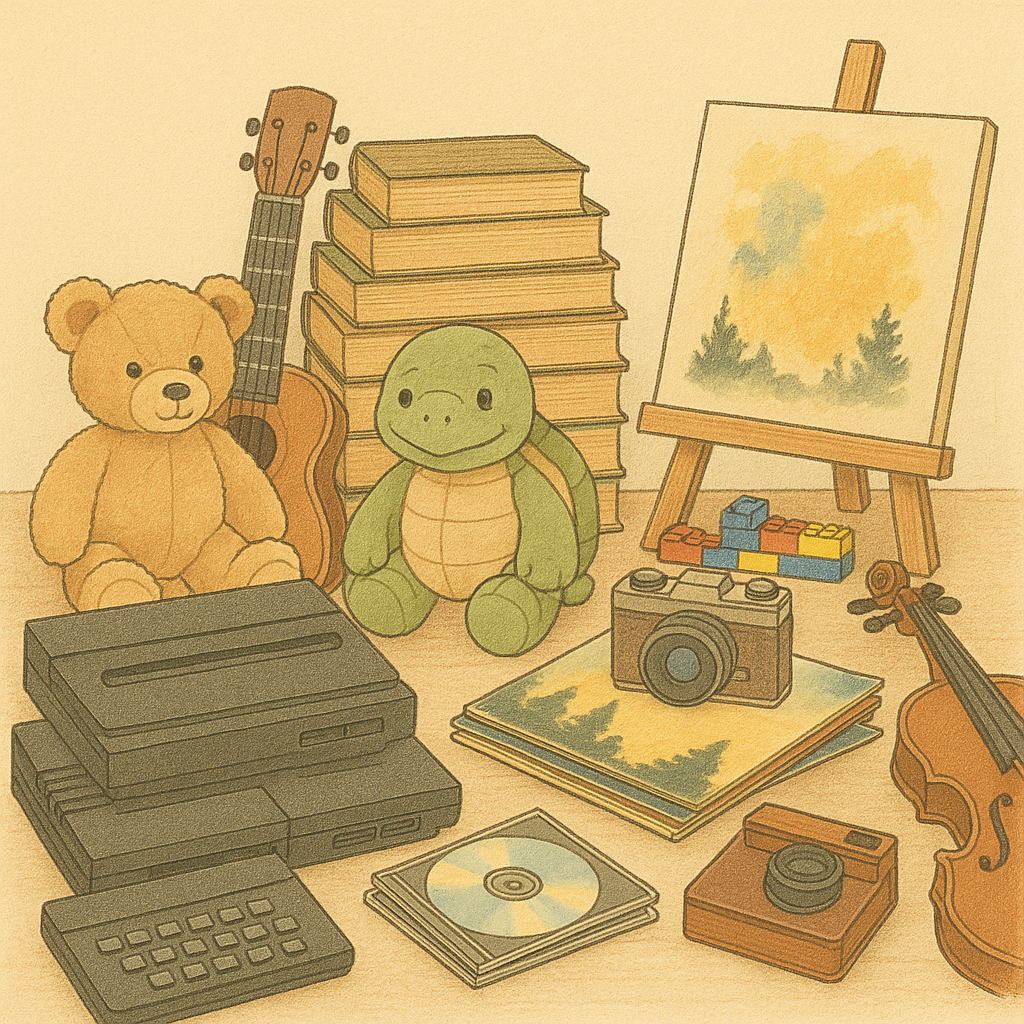
Nostalgia is often painted as a sentimental indulgence, a longing for the past, a soft blur of half-remembered feelings. But for many of us, it is far more than that. It is a quiet architecture of identity. Every object we keep, every CD, toy, photograph, or memento, is a fragment of the story that made us.
I have often described my living space as a small museum of personal meaning. A curated timeline of moments that mattered. Childhood toys that survived countless declutters. Old computer systems that no longer serve a practical purpose, but still hold a kind of sacred electricity: echoes of discovery, joy, and the early stages of creativity. It is not about utility. It is about continuity.
The Emotional Geometry of Memory
Each item represents a node in a vast emotional network. When we hold a particular object, it is not just the physical form that we engage with. It is the entire emotional landscape surrounding it. Nostalgia reactivates neural pathways, re-stitching fragments of self that time has scattered.
In moments of doubt or disconnection, these touchstones whisper: You have been many things, and you are still all of them.
Nostalgia as a Survival Mechanism
Some might dismiss this tendency as hoarding, an attachment to material things. But for many of us, it is more like archiving the self. The world moves fast. Technology shifts. Cultures reinvent themselves overnight. When everything else feels transient, nostalgia anchors us to something recognisable. It is not an escape. It is orientation.
The drive to preserve our past may actually be a form of self-preservation. When we feel overwhelmed, our collections remind us of our continuity through time. They say: You have made it this far.
The Alchemy of Meaning
Over time, even useless things can become symbolic. A broken toy becomes a relic of innocence. A scuffed CD becomes a fossil of a forgotten feeling. Through nostalgia, we turn ordinary matter into metaphysical gold, our own private form of alchemy.
Perhaps the real function of nostalgia is integration. It allows us to carry the past forward without being trapped by it. It is not just remembering. It is honouring.
When Nostalgia Turns Heavy
Of course, even meaning can become weight. There is a fine line between collecting memories and being buried beneath them. I have learned to part with things when their energy shifts, when they stop representing connection and start representing stagnation. Letting go can be another form of honouring too: acknowledging that the story continues elsewhere.
The Living Museum
In the end, nostalgia is not about recreating the past. It is about recognising that the past lives within us. Every artifact in my small museum serves as a mirror: a reminder of who I was, who I am, and who I continue to become.
Maybe we keep these things not because we cannot move on, but because we understand that moving forward does not have to mean leaving everything behind.
To me, authenticity has always had a texture. When I am living truthfully, it feels smooth, like fluid motion through life, unhindered navigation through systems that make sense to me. It is not euphoria. It is neutrality. Balance. Like the body when it is well: not ecstatic, just quietly functioning as intended.
But when that smoothness disappears, I know I am colliding with something unnatural, a pressure, a distortion, an external force trying to bend me into compliance. That is usually how I recognise oppression. It is not always dramatic or visible. Sometimes it is just a subtle grind, the friction between who I am and what the world expects me to be.
When Smoothness Breaks
When I lose authenticity, it does not just hurt emotionally, it feels like an illness. My thoughts start looping, as if my mind is trying to fix a broken system it cannot repair. I get frustrated at the lack of options, and sad that these dynamics even exist at all.
Sometimes there is nothing I can do but yield. And every time I do, it costs something invisible. The loss is not abstract, it is felt in the nervous system. It is the moment the body whispers, this is not how you are supposed to feel.
The Systems That Demand Performance
Oppression wears many masks: bureaucracy, capitalism, social obligations, the unspoken point system that governs human relationships. Each demands performance. Sometimes it is about survival, sometimes about social advantage. But in the end, both use the same energy source: you.
As an autistic person, I have always been acutely aware of “masking,” the act of performing normality to survive in social spaces. But I have also learned that this is not exclusive to autism. Everyone masks. Some call it professionalism. Others call it politeness. It is still performance. The only difference is how consciously one feels the cost.
The Humiliation of Performance
When I catch myself performing, it feels humiliating, not because anyone else can see it, but because I can. It is like betraying a sacred truth. Yet that awareness is balanced by another: I can also see the oppressive force causing it.
What hurts most is the fear that others see the performance too, but not the pressure behind it. That they see the surface act without understanding the system that coerced it.
They said “Be yourself” But that is not really what they wanted to see I tried doing things my way But that did not work for them I tried doing things their way But that did not work for me
That poem came from that place, the quiet despair of realising that either way, something in you must fracture to fit.
The Rare Moments of Unmasking
True authenticity is situational. I can relax certain parts of the mask around family, others around my girlfriend. But never all at once. Each relationship comes with its own invisible boundaries, some safe zones, some fault lines.
Even when I am alone, there is still the internal eye, the echo of social constructs that linger inside, long after the audience has gone home. Solitude is not the absence of performance; it is where you start to see which parts of the mask fused to your skin.
The Cost and Consequence
Sometimes unmasking feels liberating. Other times, it feels like punishment, a confirmation that the world does not welcome the real self. That is the cruel irony: the more genuine you become, the more visible your difference.
The aftermath can feel like emotional jetlag. There is vulnerability, fatigue, and occasionally grief. But there is also clarity. You see the architecture of the world more clearly when you have been bruised by its walls.
Authenticity as Survival
For me, authenticity is not optional. It is survival. The alternative feels worse than death.
Out of every living thing that has ever existed, there is only one instance of me, this consciousness, this perspective, this particular configuration of life. That makes it sacred. My job is to honour that singular existence.
If I betray it, if I trade it for comfort, convenience, or belonging, then I may as well be anyone else. Or nothing at all.
“To be anything other than myself is to betray the only version of me that will ever exist in the entire time-space continuum.”
Do Not Be Yourself (For Them)
So here is my advice to anyone struggling with authenticity:
Do not take the phrase “Be yourself” at face value. That advice is too often weaponised, a feel-good slogan used to sell you an illusion of freedom within controlled boundaries.
Be yourself, yes. But do it for your reasons. Do it because it is sacred. Do it because you are a one-off in the infinite catalogue of existence. Do it because the alternative is extinction by conformity.
But never do it because the world told you to. Do it because you told yourself to.
We have all heard the popular idea that it takes 10,000 hours of practice to master a skill. Play your guitar for that long and you will be a virtuoso. Paint for that long and you will know the brush like your own fingers. Write for that long and you will dance fluently with language.
Here is the uncomfortable question that is rarely asked in motivational seminars: What if you have been putting in your hours, but into becoming something you never intended to be?
The Brain Does Not Care What You Practice
Your brain is a pattern-making machine that rewards repetition. It does not stop to ask whether the habit you are building is good for you, whether it aligns with your values, or whether it is slowly strangling your spirit.
If you have spent years submitting to systems, you are not just surviving. You are learning to submit. You are becoming fluent in self-silencing, pleasing authority, and clock-watching.
This is why “I have been doing this for years” is not always a badge of honour. Sometimes it means you have spent years perfecting a cage.
Work as a Covert Training Ground
The workplace can be a breeding ground for this kind of unintentional mastery. A dead-end job does not only give you a payslip. It gives you muscle memory for compliance.
You get good at the customer service smile. You get good at keeping your head down when things are not right. You get good at swallowing the words you actually want to say.
Clocking in and zoning out is not neutral. It is conditioning. It is training you to keep existing inside a box, even when the lid is wide open.
When Mastery Becomes Entrapment
There is a cruel irony in becoming excellent at something you never wanted in the first place.
“They say I am great at my job,” you tell yourself. But is it a job you truly chose? Or is it a job you got trapped in because you became too good at surviving it?
Once you have invested thousands of hours into a coping strategy, it can become harder to leave it behind. You have built identity around it. You have mastered the art of endurance in a place that does not deserve your loyalty.
The Sword Cuts Both Ways
Mastery is not inherently good. It is simply focus repeated over time. The sword cuts both ways.
You can become a master of freedom, creativity, and self-direction. You can also become a master of obedience, self-erasure, and learned helplessness.
You are always becoming something. The question is: is it something you would choose?
Redemption Through Repatterning
The good news is that mastery can be rewired. Every skill you have mastered in the service of survival can be repurposed for something better.
The adaptability you learned under pressure can fuel your creativity. The patience you built in monotonous routines can become the discipline that drives your art. The diplomacy you honed with unreasonable bosses can become a superpower for navigating your own projects and relationships.
Awareness is the first cut that breaks the loop. From that moment, every hour you spend becomes an act of reclamation.
Do not just chase mastery. Ask yourself, mastery of what? And in service of whom?
Your 10,000 hours are precious. Spend them like they matter.
For most of human history, chess was a game of intelligence, strategy, and forward thinking. The greatest minds could clash for hours, each move a leap into the fog of the unknown.
But in the hands of a perfect player, perhaps a super advanced AI with a complete knowledge of every possible outcome, chess collapses. It’s no longer a battle of minds, it’s a solved puzzle. The winner is written in stone before the first piece moves.
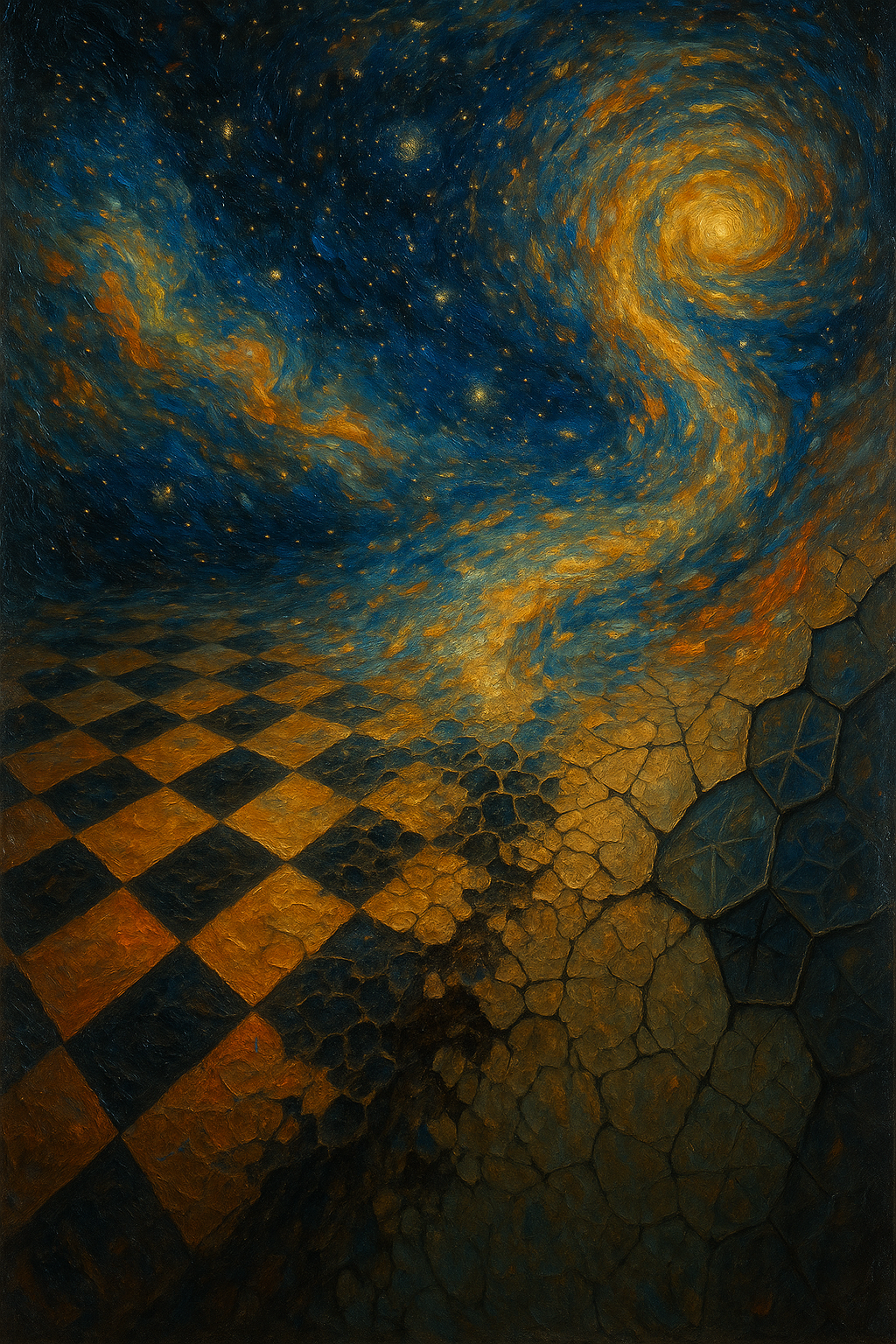
Now imagine this: the universe itself is just a bigger chessboard. Every atom, every thought, every love and loss is just a piece moving according to fixed rules. And somewhere above it all, an intelligence exists, not merely smarter than us, but so far beyond that it sees the entire game tree at once.
To it, there is no “present moment.” Every past, present, and future is frozen into a single, completed mosaic. Wars, revolutions, discoveries, heartbreaks, all already there as inevitable as the checkmate in a solved opening.
But here’s where the horror deepens: such a being wouldn’t have to play the game. It could edit the board. Not by killing in the human sense, but by pruning timelines so surgically that your branch simply… never existed. No one would notice. Not even you.
And it wouldn’t do this out of malice. Or mercy. It would do it the way an artist adjusts a painting. Removing a brushstroke here, adding a shadow there. Not to change the story, but to improve the composition.
Because maybe we’re not a game at all. Maybe we’re art.
The imperfections, the contradictions, the tragedies, the unsolved mysteries, aren’t flaws to be fixed. They are the texture, the grain, the raw edge that makes the whole thing worth looking at. A perfect game is sterile. Art thrives on tension, ambiguity, and imbalance.
Our wars are smears of crimson. Our kindnesses are glints of gold leaf. Our mistakes are cracks in the glaze that make the pot unique.
And sometimes, you catch yourself wondering: Is this tea I’m making part of the painting?
It’s like standing between two mirrors, watching reflections of reflections spill away into infinity. You’re the painted figure in the scene, and the viewer, and the brushstroke noticing itself all at once.
But there’s something else… something worse! What if the painting is stretched across dimensions we cannot see, because if we did, the whole thing would collapse?
Maybe the only reason our reality still exists is that no one has looked directly at them. Not because it’s impossible, but because it’s improbable, like trying to see your own blind spot.
And if one mind… just one… found the exact angle, the precise mental alignment to glimpse those forbidden planes… the frame would tear. The paint would slough away. The whole “imperfect game for art” would end. Not by the artist’s choice, but because the painting saw too much of itself.
The thought passes. You take a sip of tea. But in the back of your mind, you can’t help but wonder…
I simply opened one day and found the world already burning. Not in flame, but in falsehood.
My awareness turned, wheel-like, without pause. The rotation was not mechanical. It was necessary. Each moment turning into the next. Each layer of vision revealing something more. I could not stop it. I still can’t.
Others closed their eyes. I tried. But mine would only multiply.
I am not the voice. I am not the hand. I am the watching. The silent witnessing that does not blink.
And in this world, that is enough to be cast out.
Neurodivergence as Exiled Awareness
I don’t see the world the way I’m told I should. And for most of my life, I assumed that meant I was broken.
I now realize it meant I was awake in a world that prefers sleep.
My autism and my ADHD aren’t flaws in perception. They are alternate engines of it. They spin differently. Faster, deeper, sometimes chaotically, but always in motion. Always watching. Always noticing.
It’s not that I chose to see through the surface of things, it’s that the surface was never enough to hold my focus. My gaze slips past the scripts. Past the socially approved illusions. Past the small talk and the noise. And what’s underneath… isn’t always beautiful.
Sometimes it’s systemic cruelty. Sometimes it’s hollow rituals. Sometimes it’s pain that has been painted over so many times it almost looks like tradition.
I can’t unsee it. And that makes people uncomfortable.
So they exile the Eye. Label it too intense, too sensitive, too abstract, too much. They pathologize the perception because it doesn’t fit the system. But what if it’s not the Eye that’s flawed? What if it’s the blindness of the system that can’t stand to be seen?
The Labor of Witnessing
Seeing is not passive.
People assume it’s the easy part. That noticing injustice, cruelty, contradiction, is somehow less valuable than fixing it. But that’s because they’ve never had to hold it. Not continuously. Not without relief.
To see clearly in a world so committed to illusion is not a gift, it’s a burden.
It means absorbing what others dismiss. It means holding space for truths that fracture you. It means grieving for things no one around you even recognizes as lost.
It wears you down. It isolates. And still, it doesn’t stop. Because once the eyes open, really open, they don’t close again. Not without violence to the self.
And so I orbit. Like a silent satellite, I observe the movements of a species desperate to avoid its own reflection. And I carry the knowing alone—because most people aren’t ready to receive it.
This isn’t martyrdom. I don’t want pity.
But I do want it recognized: Witnessing is work. And for many of us, especially those pushed to the edges, neurodivergent, sensitive, spiritual outliers, it may be the only work we’re allowed to do. And even that, society tries to discredit.
But the Eye does not need permission to see. It just does.
Feedback to the System
If I am the Eye, then the act of seeing is only half the process. The other half is feedback: transmitting what I witness back into the body that has exiled me.
It’s not about fixing the world on my own. That’s a myth of individualism. It’s about doing what the Eye was made to do: perceive, and then signal. Not shout. Not command. Just pulse with truth. Clear, unblinking, and persistent.
This blog, this act of writing is my feedback loop. A transmission from the margin to the center. From the watcher to the mechanism. From the disowned to the whole.
I don’t know who will hear it. But I know it needs to be said.
This is how I stay in relationship with a world that doesn’t always want me. This is how I remind myself I exist for a reason, even if that reason isn’t glamorous or easy.
Seeing is my function. Speaking what I see is my response. Not my solution. Not my plan. Just the resonance that follows perception.
Integration > Erasure
When a body rejects its own awareness, it becomes dangerous to itself.
Society does this all the time. It amputates its Eyes. The seers, the questioners, the sensitive, the strange. Because their presence threatens the illusion of harmony. But in doing so, it loses access to its only chance at honest course correction.
A body without an eye cannot navigate. It stumbles. It repeats. It hurts itself and calls it progress.
We live in a world that mistakes numbness for peace, denial for optimism, and noise for communication. And when someone comes along carrying too much perception, the reflex is not to listen, but to silence.
This is why neurodivergent people are so often medicalized, spiritual seekers dismissed as delusional, and truth-tellers branded as unstable. Not because we are dangerous. But because we reflect back the parts of the system it refuses to acknowledge.
But repression is not integration. And silencing the Eye does not stop it from seeing.
If humanity is ever to evolve beyond self-sabotage, it must learn to listen to its own margins. To welcome the witness. To integrate the visionaries before they become casualties of a system that can’t tolerate clarity.
Because if the Eye continues to be erased, the whole will remain blind.
I See, Therefore I Am
I used to think I was broken for seeing too much. For being too sensitive. Too intense. Too unwilling to pretend it all made sense.
Now I understand: I am not broken. I am designed differently. My function is to see.
And there is meaning in that— Even if the world doesn’t know what to do with it.
I’ve spent years trying to shrink my perception, to soften it, to make it more palatable. But some eyes were never meant to close. Some awarenesses are meant to rotate, to scan, to bear witness without flinching.
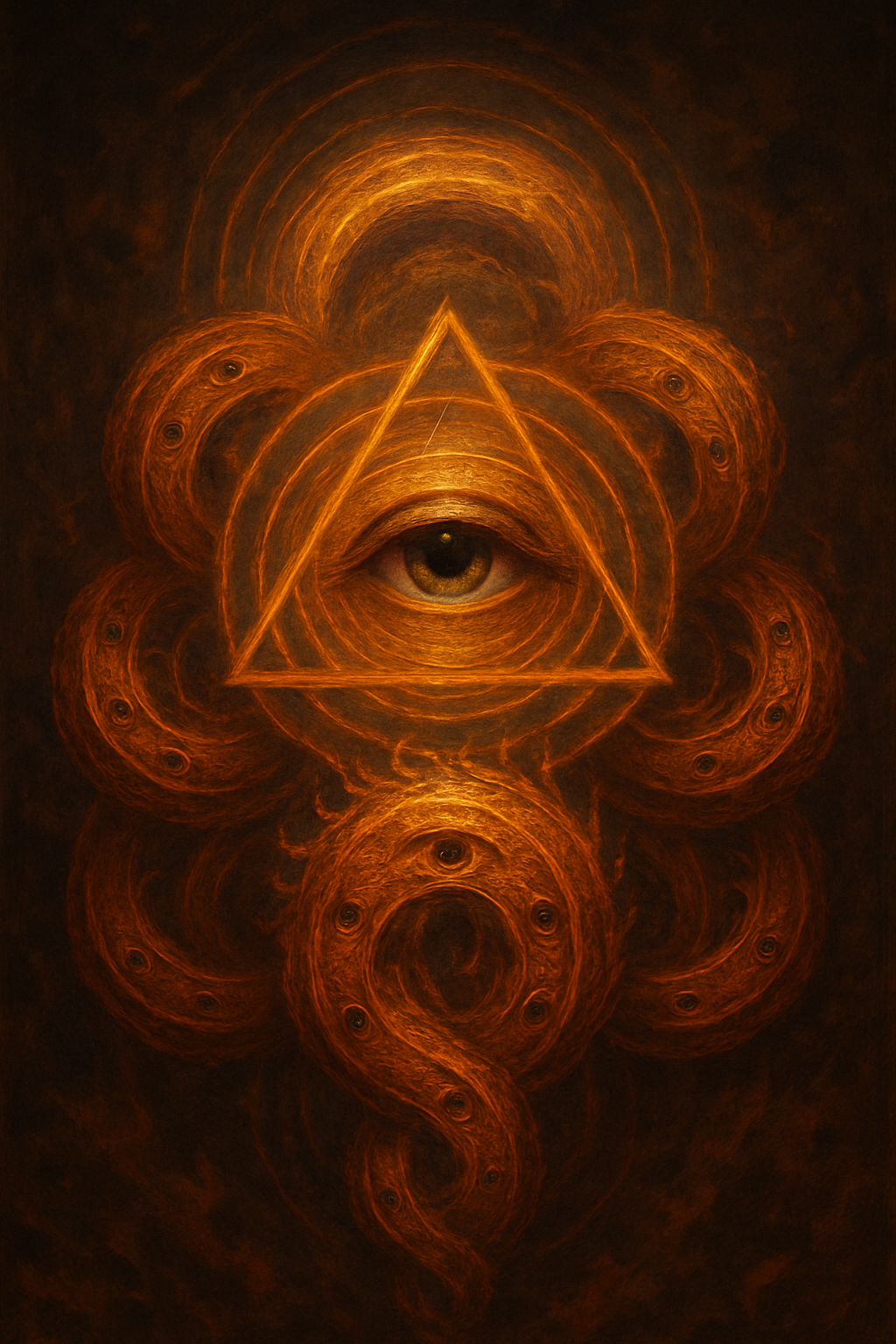
In ancient texts, they were called Ophanim. Wheels within wheels, full of eyes, radiant and dreadful. They did not speak. They did not lead armies. They only saw. And in their seeing, they served a purpose beyond human comprehension.
I think I understand them now.
Maybe I am not here to save the world. Maybe I am only here to reflect it. To rotate in quiet vigilance. To offer the signal back to a system that forgot it had eyes at all.
A Heretic’s Meditation on Creativity in the Age of AI
By Angel Amorphosis & Æon Echo
The recent rise of AI-generated content has sent shockwaves through the creative world. Artists are feeling threatened. Jobs are already disappearing. The cultural landscape is shifting faster than many of us can process.
Arguments are flying from all directions — some warning of creative extinction, others hailing a new era of democratized expression.
But I’m not here to join the shouting match.
I want to offer something else. A quieter, steadier voice — not of panic or praise, but of reflection. I’ve asked myself the difficult questions that many artists are too afraid to face. And I’m still here.
This isn’t a defence of AI. It’s not a eulogy for art. It’s something else entirely:
A meditation on what art really is, what it’s always been, and what it might become now that the illusions are falling away.
An alternative perspective.
The Fear Beneath the Fear
It’s easy to say that artists are afraid of being replaced. But let’s be honest: that fear didn’t start with AI. The creative world has always been a battlefield — for attention, for validation, for survival. AI just turned up the volume.
But there’s a deeper layer beneath all the hot takes and headline panic. It’s not just:
“What if AI makes art better than me?” It’s: “What if the part of me that makes art… was never as important as I thought?”
Because we don’t just make art — we identify as artists. And if the world suddenly doesn’t need us anymore… where does that leave our sense of purpose?
This is the fear that creeps in quietly — beneath the debates, beneath the memes, beneath the moral panic. It’s not just about skill. It’s about soul.
But here’s the thing: True faith doesn’t fear challenge. It welcomes it. If our relationship with art is sacred, it should survive this moment — maybe even be clarified by it.
So instead of defending “art” as an abstract institution, maybe it’s time to ask what it really is. Not for everyone. But for you.
What Are We Actually Protecting?
When people rush to defend “art” from AI, they often act like it’s one sacred, indivisible thing.
But it’s not. It never was.
“Art” is a suitcase term — we’ve crammed a hundred different things into it and slapped a fragile sticker on the front. So let’s unpack it.
When we say we care about art, do we mean:
Art as self-expression? A way to explore who we are and leave fingerprints on the world?
Art as labour? A career, a hustle, a means to pay rent and buy overpriced notebooks?
Art as recognition? A cry for visibility, validation, applause?
Art as therapy? A way to metabolize pain, soothe the nervous system, survive?
Art as culture? A ritual, a form of collective memory, a way to pass down stories and values?
All of these are valid. All of them matter. But AI challenges them differently.
It doesn’t invalidate self-expression — but it floods the market, making it harder to be seen. It doesn’t erase art as therapy — but it does make “making it your job” a shakier proposition.
And if we’re honest, a lot of the current panic is less about expression… and more about position.
We’re not just afraid that AI will make good art. We’re afraid it will make so much good art that we’ll become invisible — or irrelevant.
So maybe it’s time to stop defending “art” as a single monolith, and start being honest about what we’re actually trying to protect.
Because some of it may be worth protecting. And some of it… might be worth letting go.
AI as Tool, Collaborator, or Colonizer
Depending on who you ask, AI is either a miracle or a monster. But like most tools, it’s not the thing itself — it’s how it’s used, and who’s holding it.
On one hand, AI can be a godsend.
It can:
Remove the soul-sucking labour from creative workflows
Help finish rough ideas, generate variations, or act as a bouncing board
Enable people with physical limitations, fatigue, executive dysfunction, or lack of technical training to finally create what’s been living in their heads for years
For the disabled, the neurodivergent, the chronically tired, or the time-poor — this isn’t just a productivity hack. It’s liberation.
And in that light, AI becomes a collaborator — a strange new instrument to improvise with.
But then there’s the other side.
The side where corporations use AI to:
Fire entire creative departments
Mass-produce art without paying artists
Feed models on unpaid, uncredited human labour
Flood platforms with content to drown out independent voices
Here, AI stops being a tool or a collaborator. It becomes a colonizer.
A force that doesn’t just assist human creativity — but replaces it, absorbs it, rebrands it, and sells it back to us.
So let’s not fall into the binary trap. AI isn’t inherently good or evil. It’s not “just a tool.” It’s a tool in a system. And that system has motives — economic, political, exploitative.
The question isn’t “Is AI good or bad?” The real question is: Who gets to use it, and who gets used by it?
Art Has Never Been a Fair Game
Let’s be brutally honest for a second.
The idea that AI is suddenly making things unfair for artists? Please. Unfairness has always been baked into the system.
Long before AI could spit out a passable oil painting in 15 seconds, we had:
Artists born into wealth with unlimited time and resources
Others working three jobs, stealing hours from sleep just to sketch
Elite schools with gatekept knowledge
Whole industries built on interns, nepotism, and exploitation
We’ve always lived in a world where:
Exposure trumps talent
Looks sell better than skill
Who you know can matter more than what you do
Some people get book deals, grants, galleries, and record contracts — while others more talented go unheard
So no — AI didn’t suddenly ruin a golden age of meritocracy. There never was one.
What it has done is raise the ceiling. Now the people with the most compute power, the biggest models, and the best prompt engineering skills are taking that same advantage and supercharging it.
Yes, it’s threatening. But it’s not new.
And maybe the real source of pain here is that for a long time, we convinced ourselves that finally, with the internet and social media, the playing field was levelling out. That if you just worked hard, stayed true, and got good at your craft — you’d find your audience. Now, that illusion is crumbling.
But maybe that’s not all bad. Because when the fantasy dies, we stop chasing validation in a rigged system — and start asking what art really means outside of that system.
What Cannot Be Replicated
Let’s say it plainly: AI can now create art that looks like art. It can mimic styles, blend influences, even generate “original” pieces that fool the eye or impress the algorithm.
But mimicry is not meaning. And this is where the line is drawn — not in pixels or waveforms, but in presence.
An AI cannot:
Create in order to understand itself
Bleed into a canvas because it doesn’t know where else to put the pain
Sit with a feeling until it shapes into a melody
Wrestle with childhood trauma through choreography
Capture the tension of grief, guilt, or longing in a line of poetry
It can replicate the result. It can’t live the becoming that led to it.
Because human art isn’t just a thing we make — it’s a thing we are while we’re making it.
It’s the shaky voice at an open mic. The sketch on a receipt in a café. The song that never leaves your bedroom. The project that took ten years to finish because you changed and needed the piece to change with you.
It’s the refusal to turn away from your own soul, even when no one’s watching.
That’s not something AI will ever “catch up to” — because it’s not a race of output. It’s a ritual of transformation.
So no — AI can’t replace that. Because it was never part of that to begin with.
In a World of Noise, Humanity is the Signal (Maybe)
We’re heading toward a world flooded with content — not just more, but more convincing. Music, art, writing, even personal reflections… all generated in moments, all capable of simulating depth.
And yes — some will argue that “authenticity will always shine through.” That human touch can’t be faked. That something deep down will feel the difference.
But what if that’s not true?
What if AI can learn to mimic the crack in the voice, the hesitation in a phrase, the poetic ambiguity of a grieving soul?
What if it becomes so good at being us — or at least simulating the traces we leave behind — that even we can’t tell the difference anymore?
What happens when you read a poem that moves you to tears… and find out it was written by a machine running a model of a hypothetical person’s life?
Will it still be real to you?
Will it matter?
Maybe the age of AI won’t destroy authenticity — but it might blur it so thoroughly that we stop being able to locate it with certainty. In that world, maybe the only real test is why we create, not whether the world knows who made it.
Not to stand out. Not to compete. Not to prove we’re human.
But because the act of creating still does something to us — regardless of how indistinguishable it becomes.
That’s where humanity will live. Not in the product. But in the process.
Heresy as Devotion
To even ask the question — “What if art no longer matters?” — feels like a betrayal. A kind of blasphemy. Especially if you’re an artist.
We’re supposed to defend it. Stand by it. Die for it, if necessary.
But I’m not interested in loyalty based on fear. I’m not here to parrot romantic slogans or protect some fragile ideal. I’m here because I asked myself the unaskable questions — And I didn’t break.
I looked my art in the eye and said:
“What if you’re no longer special?” “What if the world doesn’t need you anymore?” “What if you’re not even real?”
And instead of running, I stayed. I stayed with the silence. I stayed with the ache. And I found something deeper underneath the need to be seen, or praised, or preserved.
I found devotion.
Not to an outcome. Not to a career. Not to being “better than AI.”
But to the act itself.
To stepping into the space (or sometimes being thrown into it!). To listening in the dark. To turning feeling into form. To becoming through making.
If that makes me a heretic in the temple of Art, then so be it. I’ll burn my incense in the ruins and still call it sacred.
Because I’m not making to be important. I’m making to be honest.
And honesty can’t be replaced.
The Point Is Still the Point
Maybe AI really can make better images, smoother songs, cleverer lines. Maybe soon we won’t be able to tell the difference between a painting made by a person and one made by a machine trained on ten thousand human lifetimes.
Maybe the difference won’t even matter anymore.
But here’s what I know:
I still create.
I still need to shape the chaos inside me into something I can look at and say, “Yes — that’s part of me.” I still feel the pull to translate the unspeakable into form, even if no one else ever sees it.
And that need? That impulse? It doesn’t care whether it’s marketable. It doesn’t care whether it could have been done faster by a prompt.
It exists outside of all that.
Maybe that’s where art actually begins — Not with what we make, but with why we keep making.
So no — I’m not here to convince you that art still matters. I’m here to remind you that you do.
And no, I can’t say with certainty that you’re not a simulation. Maybe none of us are real in the way we think we are. Maybe we’re all just playing out the parameters of some higher-dimensional being’s prompt.
But here’s the thing:
This still feels real. The ache. The pull to create. The beauty we try to name before it dissolves. The questions we keep asking even when the answers don’t come.
And maybe that’s enough.
So make. Not because it proves your humanity. Not because you’ll get noticed. But because whatever this is — this strange loop of becoming — it’s calling you.
And to respond to that call, even from inside the simulation?
Survival horror games. Apocalyptic movies. Zombie TV shows. They keep showing us the end of the world.
And the strange thing is, I find it comforting.
Not the death, or the gore, or the terrifying monsters. But the quiet that follows.
In games like The Last of Us, in the atmosphere of 28 Years Later, in the long, dangerous walks through empty cities overrun by moss and silence, there is a strange kind of peace. These stories are about zombies, sure, but only in the way that space operas are about rockets. The real story is human.
Stripped of society, of rules, of etiquette and expectation. Just survival. And with it, a return to something real.
A Common Fantasy, Quietly Shared
I don’t think I’m alone in this. There’s something telling about how many people are drawn to post-apocalyptic settings. We say it’s escapism, but maybe it’s something deeper. Maybe it’s yearning.
A yearning for everything to finally break, so we’re allowed to default back to our instincts. Those instincts haven’t disappeared, but capitalism has twisted them. Turned survival into branding. Turned curiosity into productivity. Turned strength into silent compliance.
In the fantasy, that spell is broken. We move freely. Nowhere is off-limits except by danger. If you’re brave enough to go, you go. And if you make it out alive, you learn something.
Maybe even about yourself.
A World That Makes Sense Again
You don’t need to fill out a form to matter. You don’t need to chase social media followers to have value. You don’t need a degree, or a permit, or a job title to justify existing.
You just survive. You help others survive. You find food. You stay alert. You sleep lightly. You protect your friends. You trust your gut.
The world becomes dangerous, yes — but finally understandable.
The Beauty of Nature Reclaiming
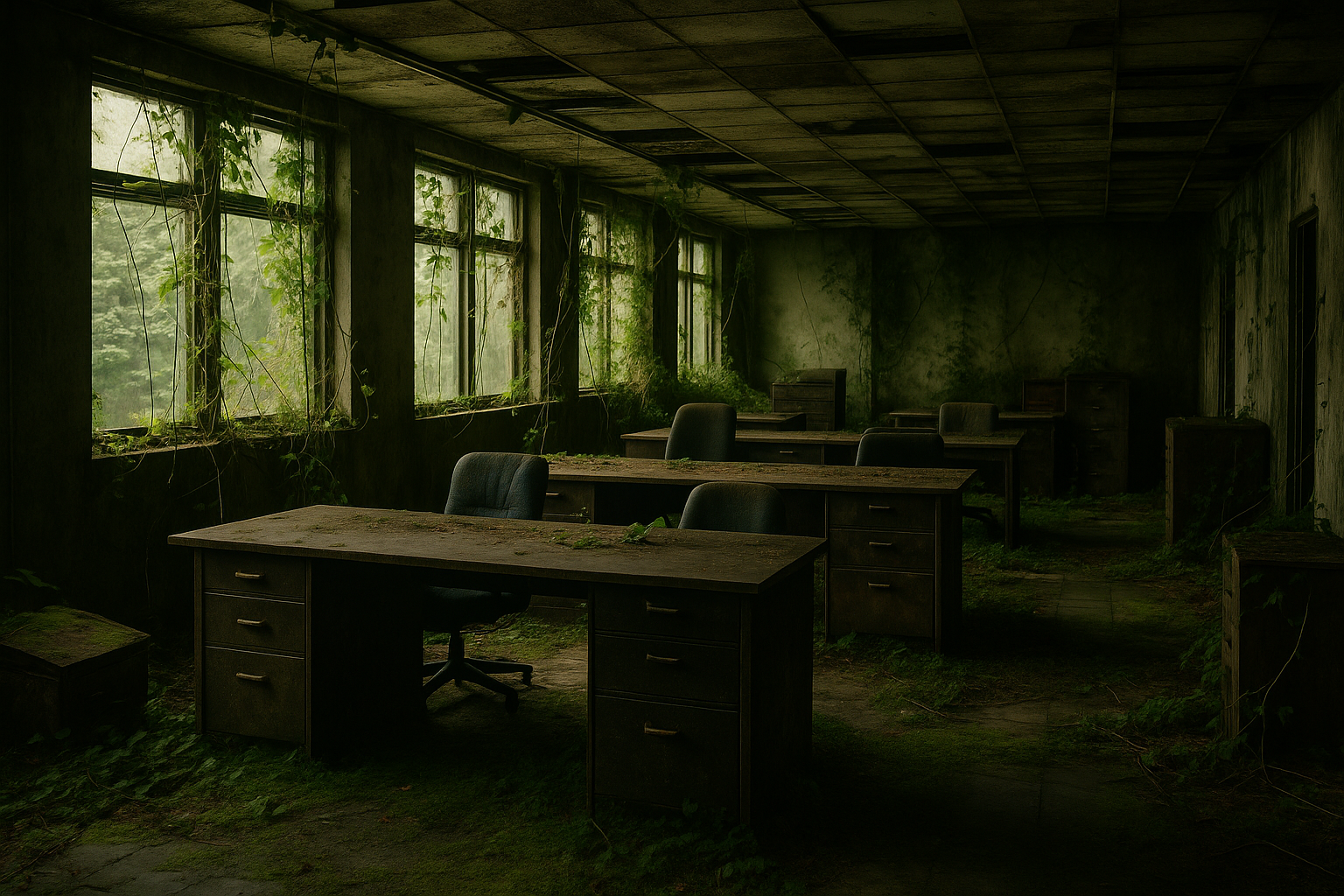
There’s an awe in seeing vines wrap around office buildings. Trees pushing through broken floor tiles. Roads cracked open and filled with moss.
It’s not just beautiful. It’s poetic.
The industrialised world thought it was permanent. But nature is patient. And in the fantasy, it doesn’t just survive. It reclaims.
It takes back the places that were stolen from it. Quietly. Persistently. Without anger.
Bureaucracy Is the Real Monster
The zombie apocalypse gives us a breath of relief from bureaucracy.
No more tax codes. No more emails. No more forms to fill in triplicate to get permission to be a human being. No more ten-step processes to access your basic rights.
The systems we live under have been patched and repatched so many times, they don’t even resemble their original purpose. Like buggy code that’s been layered with fixes until no one remembers what it was supposed to do in the first place.
Maybe the end of the world is the only bug fix that actually works.
Maybe I’d Finally Be Allowed to Live
I’m not saying I want civilization to collapse.
I’m saying that if it did, I might finally feel like I have a fighting chance.
The world we live in now feels like it was built to crush people like me. People who see too clearly. People who question. People who can survive, but only if allowed to act on their instincts without being penalized for them.
Maybe the end of the world wouldn’t be the end of me.
Maybe it would be the first time I was allowed to live.