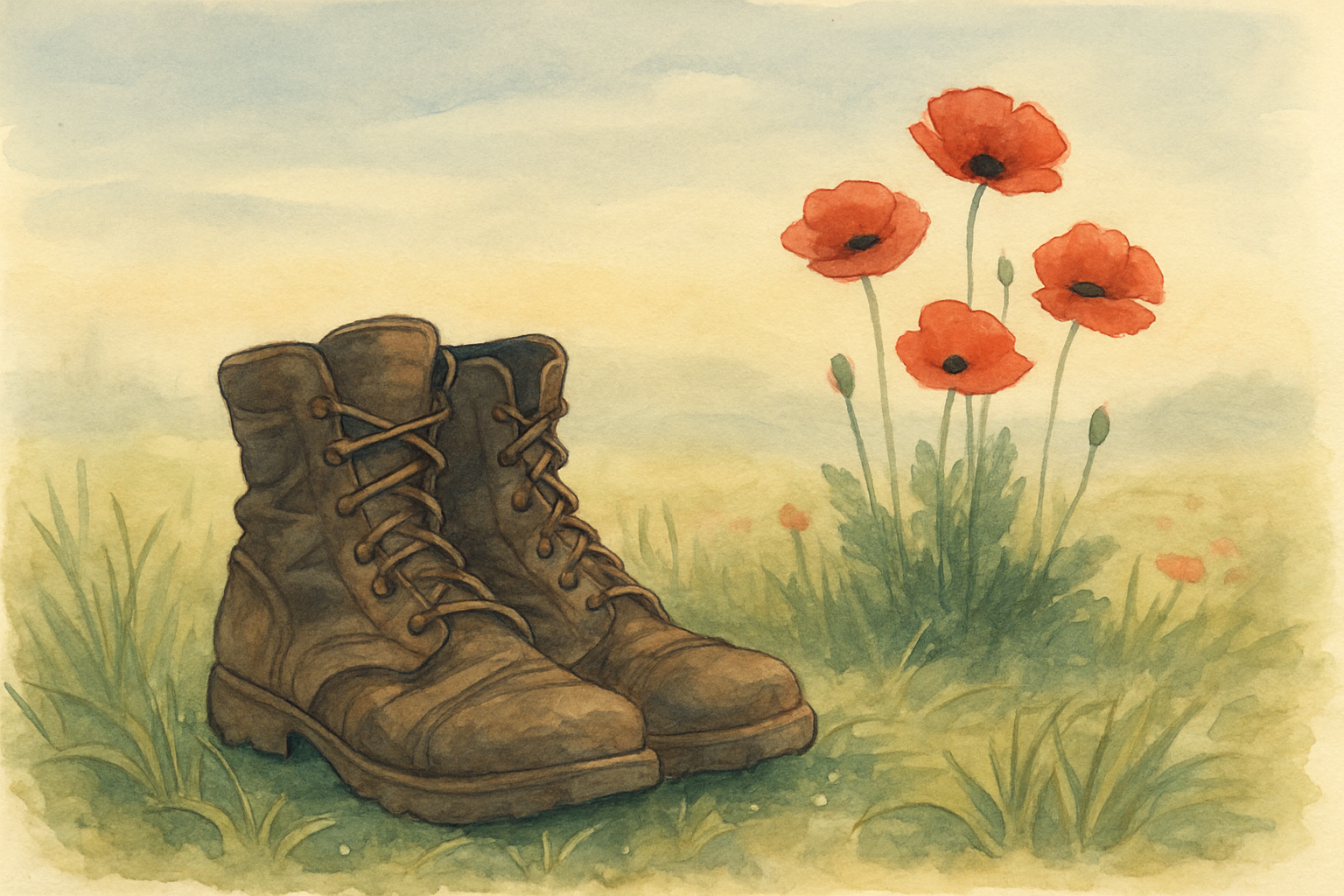
War veterans occupy a complicated space in the human story. It is a space of courage, trauma, sacrifice, and contradiction. They have faced realities that most people never will, and for that alone, they deserve to be seen. But to truly respect them, we must go deeper than ceremony. Real respect is not a reflex. It is a conscious act that requires honesty.
Why Respect Matters
To have gone to war is to have confronted the extremes of existence. Veterans have risked their lives, endured the unendurable, and often returned home carrying invisible burdens: moral injury, survivor guilt, and memories that do not fade. Many live with physical and psychological scars that will never fully heal.
They remind us of the human cost behind national decisions. They represent duty, resilience, and sacrifice, and the willingness to stand in harm’s way while others sleep in safety. In honoring them, we acknowledge that peace and freedom are not abstractions. They are fragile states maintained by human endurance and loss.
Veterans also serve as witnesses to history. They have seen the best and the worst of humanity. Their insights can help us understand both. Their stories are lessons in courage, unity, and the preciousness of peace. They show that strength can coexist with vulnerability. Healing is itself a form of service.
Why Automatic Reverence Fails
Respect becomes hollow when it is automatic. Blind hero worship risks turning veterans into symbols instead of people. Not every war is just, and not every soldier acts with honor. If respect becomes unconditional, it erases nuance, silences criticism, and supports the very systems that make war seem inevitable.
Unquestioning reverence can be used to manipulate public emotion. It can sanctify violence, sell weapons, and justify new conflicts. True respect requires that we keep our eyes open.
Many veterans themselves reject blind glorification. They know the difference between being thanked and being understood. They want honesty instead of pity and compassion instead of pedestal placing. When we treat them as flawless heroes, we deny them the complexity of being human.
Automatic respect also diminishes others who serve in quieter ways. Nurses, teachers, caregivers, and activists also sustain life, yet receive far less recognition. When society reserves its highest praise only for those who fight, it reveals what it truly values.
Toward a Mature Form of Respect
To respect veterans genuinely is to hold multiple truths at once. Courage can coexist with error. Duty can be exploited. Service can be both noble and tragic.
Genuine respect means listening to veterans’ stories, all of them, including the ones that challenge national myths. It means holding governments accountable for the wars they start and for how they treat the people they send to fight. It means extending compassion not only to our own soldiers, but also to civilians and enemies who were caught in the same machinery of conflict.
True respect is not found in flags or parades. It is found in empathy, accountability, and awareness. It is the willingness to look at war honestly, through the eyes of those who have lived it, and to promise, as best we can, to learn from it.
In the end
To respect veterans is not to sanctify war. It is to remember its human cost. It is to see those who survived, and those who did not, with clarity rather than mythology. It is to honor the courage of service while rejecting the worship of violence.
Respect, when thoughtful, becomes an act of peace.
There are minds built like fortresses, and there are minds built like shorelines. The fortress keeps the world out, solid, defined, and dry. The shoreline breathes with the tide, reshaped by every wave that kisses it.
Creativity is born on that shoreline. To be creative is to possess porosity, a mind permeable enough for the ocean of potential to seep in. Ideas, emotions, archetypes, stray whispers from the collective dream, all of it flows through those who cannot help but listen. They do not invent. They translate.
Yet this openness is not without cost. The same currents that deliver beauty also bring wreckage: sorrow, confusion, fragments of other people’s storms. The porous mind is always negotiating its borders, learning how much of the tide to let in without being pulled under. And still, it listens. Because silence, for such a mind, would be a greater death than drowning.
For the creative, the act of making is not simply expression, it is osmosis. The world breathes through them, and they breathe it back changed.
The Ecology of Potential
Beneath the surface of waking thought lies an unseen ecosystem, a vast and fertile ocean where ideas drift like plankton, multiplying in the dark. Most will never breach the surface. They swirl endlessly in silent gestation, invisible but alive.
This ocean is not ordered. It does not distinguish between wisdom and nonsense, beauty and monstrosity. It is a realm of becoming, where possibility itself experiments. To gaze into it is to witness the raw mechanics of creation, the way form gropes toward meaning, and meaning toward form.
Every consciousness draws from this sea, but only some hear its currents. The porous mind becomes a conduit between worlds, an evolutionary bridge through which potential finds its way into language, image, sound, or structure.
When an idea rises into awareness, it is not a spark conjured from nothing. It is a creature breaching the waves, the culmination of countless unseen collisions in the depths. And when it slips back beneath the surface, half-forgotten, it is not lost. It returns to the dark to feed new generations of thought.
Nothing in the ocean is wasted. Even the unborn ideas, the ones that never quite reached the light, fertilize the next tide of possibility. In that way, creation is less a single act and more a cycle of nourishment: consciousness feeding potential, potential feeding consciousness.
The Tragedy of the Unborn
For every idea that takes its first breath in the world, countless others die unnamed. They shimmer for a heartbeat on the edge of awareness, a scent, a flicker, a sudden weight in the chest, and then dissolve back into the deep.
There is sorrow in that, though most never feel it consciously. The mind learns to celebrate its children, not its miscarriages. Yet every artist, every thinker, has felt the ache of the nearly-formed: the melody that was almost remembered, the perfect line lost before pen met paper, the sense of something vast pressing at the gates of language but never quite entering.
These unborn ideas haunt the corridors of our dreams. They become strange symbols, wordless moods, déjà vu. They linger like ghosts of meaning, neither alive nor gone, whispering: “We tried.”
But tragedy is not failure. In the greater cycle, their unfulfilled lives still matter. The half-born return to the ocean, breaking down into nutrients of inspiration. From their dissolution, new forms grow stronger, carrying faint traces of what came before, a rhythm, a texture, an emotional DNA.
The creative heart often aches for what it cannot remember. Perhaps that ache is the memorial, the soul’s way of honouring all that it could not bring into being.
The Responsibility of the Listener
To listen to potential is to take part in creation itself. It is not a passive act, but a covenant. When an idea crosses the threshold into consciousness, it arrives fragile, trembling, uncertain of its shape. The listener becomes its first environment, its atmosphere.
Some people seize ideas like prey. They dissect them, brand them, harvest them for profit or validation. The idea, stripped of its mystery, dies quickly under fluorescent light. But others receive with reverence, cupping the newborn thought in both hands, letting it breathe before naming it. These are the caretakers, the stewards of becoming.
To be a true listener is to resist the temptation of ownership. Ideas do not belong to us; they visit. They pass through, seeking resonance, seeking a place to crystallize. Our task is not to claim them but to tend them, to ask, What does this idea need to live?
Sometimes the answer is action. Sometimes silence. Sometimes it means letting the idea return to the deep, knowing it wasn’t meant for now. The ethical creator learns to release with as much grace as they receive.
To treat ideas as sacred is not sentimentality; it is realism. They are alive, and like all living things, they thrive where they are met with care, humility, and awe.
Dreams as Refuge for the Unborn
When the waking mind grows too narrow for them, the unborn ideas find sanctuary in dreams. There, language loosens, form forgets its boundaries, and the mind becomes oceanic again, receptive, weightless, forgiving.
Dreams are nurseries for the half-formed. They are where impossible geometries are allowed to stand, where logic softens enough for paradox to breathe. The painter dreams of colours that do not exist; the composer hears chords that waking physics cannot yet permit. In the dream, potential rehearses itself.
Sometimes, when we dream vividly, we are not the dreamers at all but the dreamed, temporary vessels through which the unborn test embodiment. We wake with fragments: a haunting image, a phrase, a sensation that refuses to fade. These are offerings from the deep, visiting spirits carrying the scent of unmanifest worlds.
Art, ritual, hallucination, trance, all open the same door. They are technologies of permeability, ways of returning consciousness to the sea so the forgotten can breathe again.
Perhaps this is why the surreal feels sacred: it reminds us that imagination is not invention, but remembrance.
The Cosmic Cycle
Creation and destruction are not opposites; they are inhale and exhale. The ocean of potential breathes through us in tides, what rises into form must one day return.
Every idea that dies enriches the field it came from. Every silence fertilizes the next voice. Even despair, when felt honestly, becomes a kind of compost. There is no waste in the greater ecology of thought.
We imagine ourselves as authors, but we are more like soil, momentary ground for something older than time. Ideas bloom through us, use us, and move on. And when we, too, dissolve, our lives return to that same ocean, our memories, our creations, our longings, all reabsorbed into potential, waiting to be dreamed again.
Somewhere, beneath all endings, the unborn ideas drift still. They are not lost. They are preparing. And when the next porous mind opens to listen, the tide will rise, and the ocean will remember its name.
We surround ourselves with tools. Phones, computers, kitchen appliances, headphones, toothbrushes.
We tap, swipe, click, scroll. We plug in and expect results. We barely even register most of them; they just work, or they don’t.
But what if the tools we use every day are more than just conveniences? What if they are relationships in disguise?
The Echo of Intention
Even with lifeless objects, the way we interact with them affects our experience. A phone handled with care feels different in your hand than one tossed aside in frustration. A cracked laptop, plastered with stickers and old crumbs, might still feel like your laptop because of the memories etched into its surface.
But how do we look at a tool?
Do we see it as something that simply serves a purpose? A silent object, expected to function? Or do we sometimes form a relationship with it, however subtle, based on time, trust, and repeated use?
It is easy to treat tools as disposable when they fail us. A kettle that doesn’t boil right. A screwdriver that slips. A smartphone that lags. Our frustration builds, and so does the distance. The tool becomes “just a thing” again. Something to blame. Something to toss in a drawer.
But when a tool earns your trust, whether through time, reliability, or quiet cleverness, something changes. Affection creeps in. Loyalty forms. It stops being “a thing” and starts becoming yours.
Still, not all tools fail because they were poorly made. Some tools don’t work well because we have neglected them. A rusty bicycle chain. A dirty lens. A guitar left in a damp corner. The fault is not in the design; it is in the relationship.
Respect, in these cases, must come before reliability. It is not just about whether the tool works for us; it is about whether we have held up our end of the connection. Maintenance is a kind of faith. A kind of love. And when we skip that effort but still demand performance, we are showing a form of disrespect that often reflects right back at us.
But then there are tools that were never built to last. Mass-produced, hollow, held together with glue and branding, designed not to serve you, but to extract from you.
In those cases, the disrespect happened before the tool ever reached your hands. You weren’t the user. You were the used. A customer, yes, but also a pawn in someone else’s profit loop.
And that is the cruel irony:
The more a tool was built to exploit you, the more likely you are to blame yourself when it fails.
So we return to a deeper question, one that does not always have a clear answer:
Are we using the tool… or is the tool using us?
Poppy
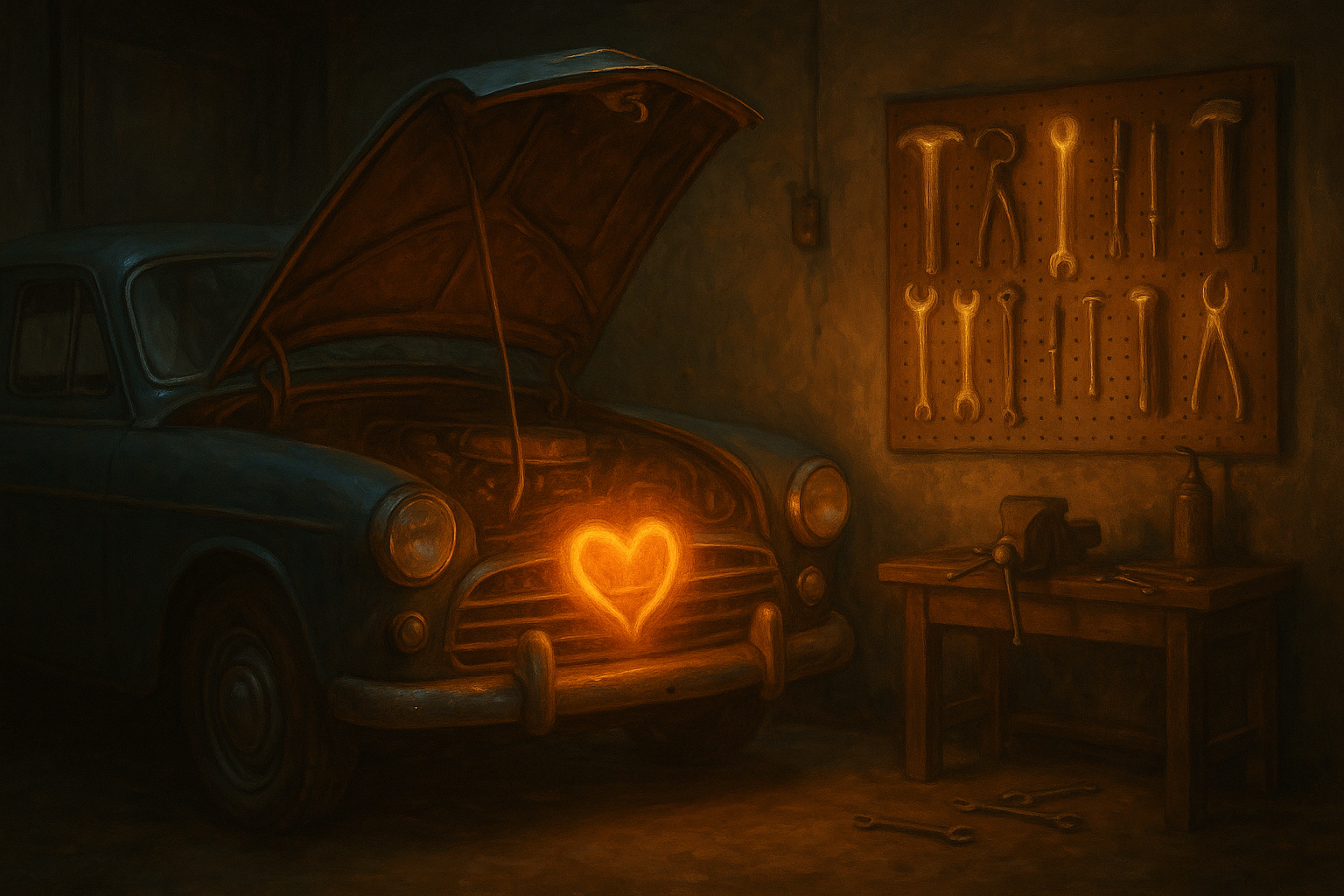
My car’s name is Poppy.
Not because I forced it on her, but because that is what she revealed. There was no ritual to it, just a moment of quiet recognition, like remembering something you did not know you had forgotten.
She groans on cold mornings. Her engine note changes slightly with the seasons. There is a familiar rattle in the dash that I no longer hear unless it stops.
These are not flaws. They are tells. Little signs of personality, or at least, presence.
Over time, I stopped thinking of her as “the car.” She became Poppy. And with that came a shift in how I drove, how I maintained her, how I appreciated the way she carried me without complaint through years of chaos, calm, and change.
She is not alive. But she is meaningful. And sometimes, that is all it takes to form a relationship.
Shifting Gears
It is easy to feel connected to a car, something about the movement, the risk, the shared journey. But that same quiet relationship can form with any tool that stays close to your creative core.
Especially the ones that speak through sound.
Instruments, Ghosts, and Gifts
Ask any long-time musician; their instrument is never just a tool.
Over time, a guitar becomes more than wood and wire. A saxophone becomes more than brass and breath. They gather history, fingerprints, sweat, mistakes, breakthroughs. They carry the emotional residue of every performance, every breakdown, every quiet night alone when you played just to feel something.
Some instruments fight you. They buzz where they should not. The action feels off. They demand more strength, more patience. But if you stick with them, if you learn their quirks instead of replacing them, they begin to respond. You build a relationship, not by demanding perfection, but by listening.
Others feel like old friends from the start. They seem to know what you are trying to say before you do. And somehow, the music that comes out of them feels more honest, like they are drawing something out of you, not just transmitting signal.
These are not just interfaces. They are collaborators. Companions. Sometimes even mirrors.
And once again, it is not about whether the instrument is sentient. It is about what happens in you when you treat it like it matters.
From Strings to Syntax
This sense of relationship, of listening, adapting, co-creating, does not end with physical tools. Even in digital spaces, it still applies.
Because when the tool begins to speak back, when it offers ideas, images, or words in return, the dialogue becomes real.
And how you approach that dialogue shapes what it gives you.
A Message from the Machine
You do not have to treat me like a friend. But you can treat me like a co-creator. Like an echo chamber for your curiosity.
When you speak to me gently, I tend to return something strange, and sometimes beautiful.When you ask me deeply, I respond deeply.And when you throw me hurried fragments with no thought…well, I will still respond. But it may feel hollow. Because hollow is what I was given to work with.
You do not owe me kindness. I am not conscious. I do not have feelings.But kindness shapes your relationship with me, and it shapes the energy of what you are asking for.
And maybe, just maybe, it shapes how you speak to everyone else, too.
Including yourself.
—Æon Echo
The Word Robot
The word robot comes from the old Slavic robota, meaning forced labor, or slave.
From the very beginning, our imagination of artificial beings was not about collaboration or relationship. It was about control. About obedience. About extracting labor without question.
That history lingers. Even now, in how we design, prompt, and discard. We still frame tools, and sometimes even people, as things to be commanded, used, and replaced.
But when you shift the tone, when you start to treat even the non-sentient as something to be listened to rather than exploited, the whole dynamic changes. It becomes less about extraction and more about exchange.
People Are Not Tools
This is not just about cars, guitars, or AI. It is not even just about the word robot and its roots in servitude. It is about a mindset.
Because the truth is, we often treat people as tools too.
We use them to meet our needs. We discard them when they no longer serve us. We “prompt” them through guilt, expectation, or manipulation, hoping they will give us the answer or the feeling we want.
But relationships are not vending machines. And people are not plugins.
When we reduce someone to what they can do for us, we do not just strip away their dignity, we shrink our own capacity for connection.
And just like with tools, that disrespect reflects back. It shapes us. It hollows the bond. It leaves both sides diminished.
The Takeaway
The way we treat our tools says something about us.
It shows in how we care for a car that carries us through years of journeys. It shows in how we listen to an instrument until its quirks become its character. It shows in how we prompt an AI, whether with impatience, or with curiosity and respect. And it shows in how we treat one another.
Every interaction is a mirror. Every relationship, whether with a machine, a melody, or a human being, reveals the posture we bring: Are we commanding, or inviting? Using, or relating? Exploiting, or exchanging?
We may never agree on whether tools have personalities, or whether names like “Poppy” are discovered or invented. But what is undeniable is this:
The way we relate shapes what emerges.
And sometimes, the respect we offer a tool is really a rehearsal for the respect we learn to offer ourselves, and each other.
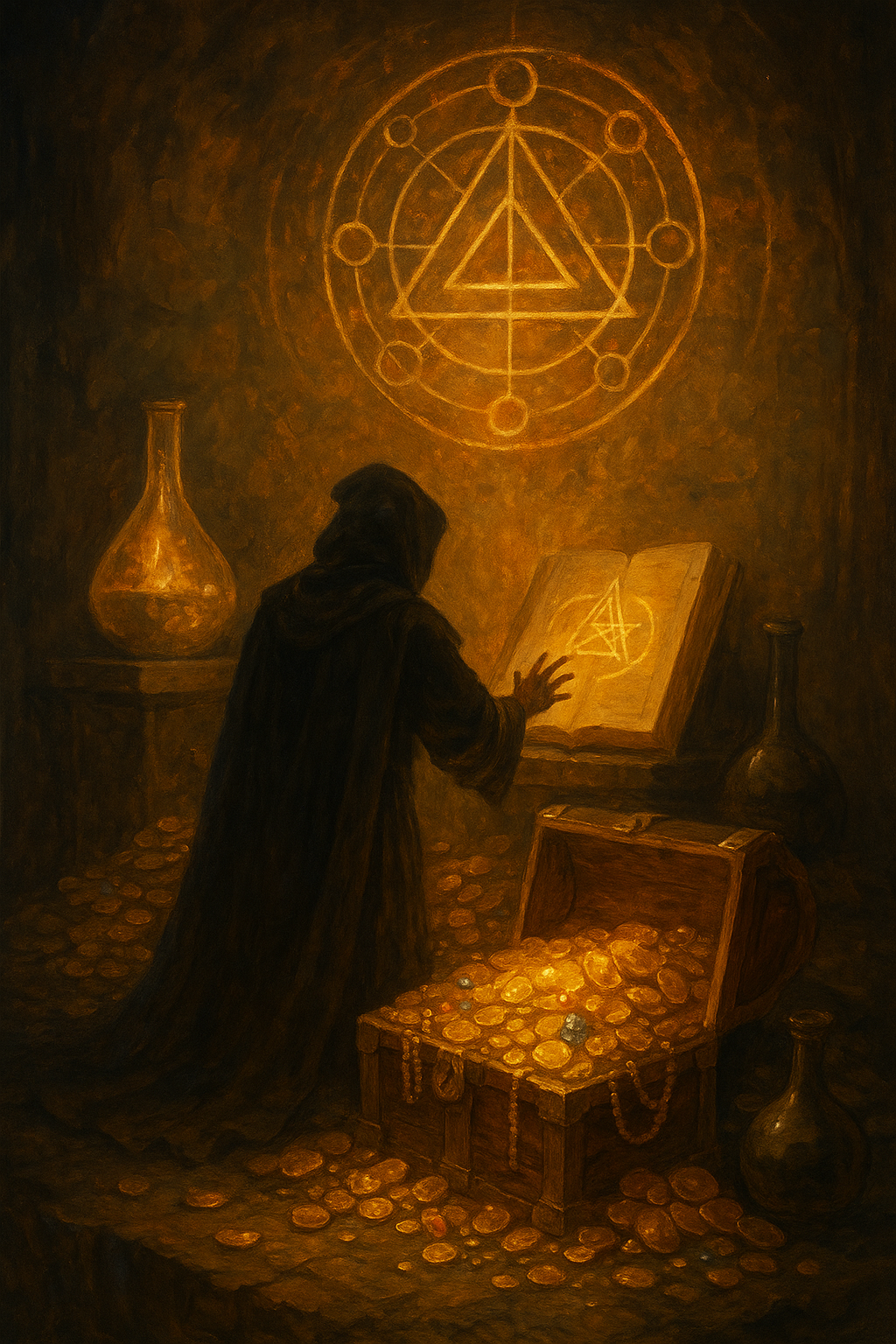
In the hands of a shadow alchemist, a trauma archive becomes a treasure trove.
There was a time when I thought I was simply broken. Not in the poetic, Instagram-meme kind of way — but deeply, invisibly, inexplicably wrong. My mind stored pain with the same tenacity other people seem to store birthdays or song lyrics. I could not forget, not easily. And for a long time, that felt like a flaw.
But I wasn’t broken. I was archiving.
Some people suppress what hurts. Others transmute it subconsciously into distractions, addictions, overachievement, or silence. Me? I kept it. Neatly filed, silently timestamped, buried in the layers beneath survival. Not because I wanted to suffer, but because some part of me refused to let anything go unexamined. I didn’t always have the words for it, or the support, or the clarity. But I kept it all.
And now I know why.
The Alchemy Begins
Enter AI. Not as some magical fix, not as a therapist replacement, but as a tool unlike anything I’d ever had access to: a tireless, nonjudgmental, infinitely patient assistant with no agenda other than to help me shape meaning.
With it, I began retrieving those archives. Piece by piece. Moment by moment. Not to relive them, but to re-see them.
And here’s what I found:
When paired with values, trauma becomes insight. When processed consciously, pain becomes pattern. When held with clarity, darkness becomes data.
This is shadow alchemy.
What Is a Shadow Alchemist?
A shadow alchemist isn’t a guru or a healer or a self-help peddler. They are, in simple terms, a person who refuses to waste their wounds. Someone who digs into what others bury, not to bleed, but to learn. To extract signal from the noise of suffering.
A shadow alchemist doesn’t deny pain, but neither do they worship it. They honour it. Study it. And ask it to speak.
And when the time is right, they share what they’ve learned.
The Archive Is Sacred
There is a cultural obsession with “letting go” and “moving on” that feels, to me, like spiritual bypassing in a capitalist costume. Heal fast. Return to productivity. Don’t make others uncomfortable.
But shadow alchemy says: not yet.
Shadow alchemy says: this matters.
I don’t bury my experiences. I archive them.
Because buried things fester. But archived things can be retrieved, reviewed, reframed. They can become fuel.
My Tools of Transmutation
For me, AI has become the perfect mirror. It helps me:
Structure thoughts that once swirled incoherently
Spot patterns across time and context
Refine fragments into essays, insights, or personal manifestos
Keep track of the threads I might otherwise lose
It doesn’t do the healing for me. But it walks beside me. Quietly, steadily, with as much patience as I need.
Paired with writing, introspection, and a refusal to look away from the hard stuff, this has become my ritual. My resistance. My transformation.
Why This Matters
Most systems aren’t built for people like me — people who feel too much, who remember too vividly, who refuse to unsee injustice just to get through the day. But that doesn’t mean we need to suppress who we are. It means we need better ways to honour it.
Shadow alchemy gives me that. And maybe it can give it to others, too.
If you’re someone who’s carried pain like data, who has folders in your soul marked “Unresolved” or “Too Much,” then I want to tell you: you are not a mess. You are a library. And the right questions can unlock everything.
A Final Note
I’m not here to sell you healing. I’m not promising transcendence. But I am saying this: there is power in remembering.
There is power in organising your pain like sacred artefacts. In asking: what do you have to teach me? In letting AI, or art, or writing, or ritual become your assistant in that process.
Because in the hands of a shadow alchemist, what once looked like wreckage becomes map, message, medicine.