The Independent Artist in the Age of Self Commodification

A surreal portrait of a person whose face is split into overlapping fragmented layers. Different expressions and angles of the same face float apart in soft purple and blue tones, creating a fractured sense of identity.

To be an independent artist today is to live inside a contradiction. You are encouraged to express yourself, to be authentic, to create from the depths of your experience. At the same time, you are expected to package that expression into something marketable. You are told to build a personal brand. You are taught to present your personality as a product and your creativity as something that must justify itself through metrics.

The modern artist is not merely a creator. The modern artist is expected to act as promoter, strategist, content machine, administrator, performer, market analyst, and public persona. All before they have even had the chance to explore what they want to say.

It is a strange era to be creative. The tools are abundant, but the expectations are suffocating.


The Myth We Are Sold

There is a seductive story that circulates through online creative spaces. It tells you that if you work hard enough, post consistently enough, hack the algorithm effectively enough, and sell yourself persuasively enough, you will find success. The story insists that the difference between obscurity and recognition is simply a matter of discipline and smart marketing.

You are told that you must treat your art like a business. You are told that you must treat yourself like a brand.

It sounds empowering. It feels like agency. But beneath the surface, it is a quiet form of coercion. It shifts the burden of success entirely onto the individual while ignoring the structural realities that shape visibility in the digital age.

The story offers hope, but it also plants a quiet seed of self blame.

If you do not grow, it is because you did not convert.
If you are not visible, it is because you did not sell yourself well enough.
If your work does not gain traction, it is because you failed at the game.

This narrative conveniently overlooks the fact that the game is not designed for artists. It is designed for platforms.


The Ego Trap of the Modern Artist

When artists are pushed into the role of self marketer, something subtle and damaging begins to happen. Their sense of worth becomes entangled with metrics. Their self expression becomes entangled with performance. Their identity becomes entangled with a public facing persona.

The artist is encouraged to ask questions that slowly corrode their relationship with their own work.

Will this get attention.
Will this get engagement.
Will this appeal to the algorithm.
Will this make me grow.

Instead of asking questions that protect their creative integrity.

What do I want to explore.
What do I need to express.
What feels alive.
What feels true.

The external replaces the internal.
The outcome replaces the process.
The brand replaces the artist.

This is the psychological cost of self commodification.


The Toll of Constant Performance

Creative work demands vulnerability. It asks the artist to dive into the complexities of their inner landscape and return with something worth sharing. But the digital era demands something very different. It demands relentless visibility. It demands constant output. It demands predictability in the face of a process that is inherently unpredictable.

The result is a kind of creative exhaustion that goes beyond burnout. It is not just physical or emotional fatigue. It is spiritual fatigue. The slow erosion of meaning that comes from turning something intimate into something strategic.

When everything becomes potential content, nothing feels sacred.
When everything must be shared, nothing feels fully your own.
When everything is judged by performance, the quiet joy of creation becomes harder to reach.

Artists find themselves living in a perpetual state of exposure. Their inner world becomes a public arena. Their identity becomes a commodity circulating through systems that do not care about the fragility of creative work.


The Illusion of Attainable Success

Social media creates a strange paradox. It gives artists access to opportunity, but it also creates the illusion that success is universally attainable. Thousands of creators appear to be thriving. Thousands appear to be breaking through. It is easy to believe that anyone can do the same if they simply optimise correctly.

But the truth is more complicated. Algorithms amplify only a fraction of voices. Visibility is shaped by forces that have little to do with talent or meaning. Instead of inspiration, artists are often left with a quiet sense of inadequacy. They feel as if they are failing at a game that was never designed to let more than a few players win.

This creates a subtle psychological harm. It encourages artists to internalise systemic limitations as personal shortcomings. They begin to believe that the problem is themselves.

In reality, the system is simply not built to nourish artistic diversity. It is built to maximise engagement.


What Is Lost When Art Becomes Content

Content is designed for speed.
Art is designed for depth.

Content is meant to be consumed.
Art is meant to be experienced.

Content is temporary.
Art is transformative.

When artists are pressured to create content rather than art, they often lose the slow, reflective, exploratory nature of their process. They lose the freedom to take risks. They lose the space to fail quietly. They lose the ability to grow in private before presenting something in public.

They are forced to produce quickly, often at the expense of producing honestly.

This shift in values does not only harm the artist. It harms the culture. It flattens the creative landscape into something uniform and predictable.

When visibility becomes the primary measure of success, the most unique voices struggle to survive.


Reclaiming Creative Integrity

Despite the pressures, there is a way to exist as an artist without surrendering to self commodification. It begins with rejecting the idea that your value is tied to your metrics. It requires remembering that your creative voice existed before platforms demanded your constant availability.

It means reconnecting with the reasons you create.
Not because it performs.
Not because it converts.
But because there is something inside you that needs expression.

Reclaiming creative integrity is not a refusal to engage with the world. It is a refusal to be reshaped by systems that treat humans as products and art as data.

It is a decision to remain whole in an environment that rewards fragmentation.


The Quiet Resistance of the Independent Artist

There is something quietly radical about creating art for reasons that have nothing to do with profitability. There is something subversive about making something slow, something thoughtful, something that refuses to perform. There is power in choosing depth over visibility, and sincerity over optimisation.

To be an artist in this era is to stand at the edge of two worlds. One world tells you to convert, to optimise, to brand yourself, to sell your soul one post at a time. The other world invites you to be human, to create from curiosity, to express something real and irreducible.

You do not belong to the first world.
You never have.

Your value cannot be captured by analytics.
Your impact cannot be predicted by dashboards.
Your art does not have to justify itself through numbers.

You are not a product.
You are not a brand.
You are not a conversion.

You are an independent artist in an era that keeps trying to turn everything into content. The fact that you create at all is already an act of resistance.
Humbug! A Late-Stage Capitalism Christmas Carol

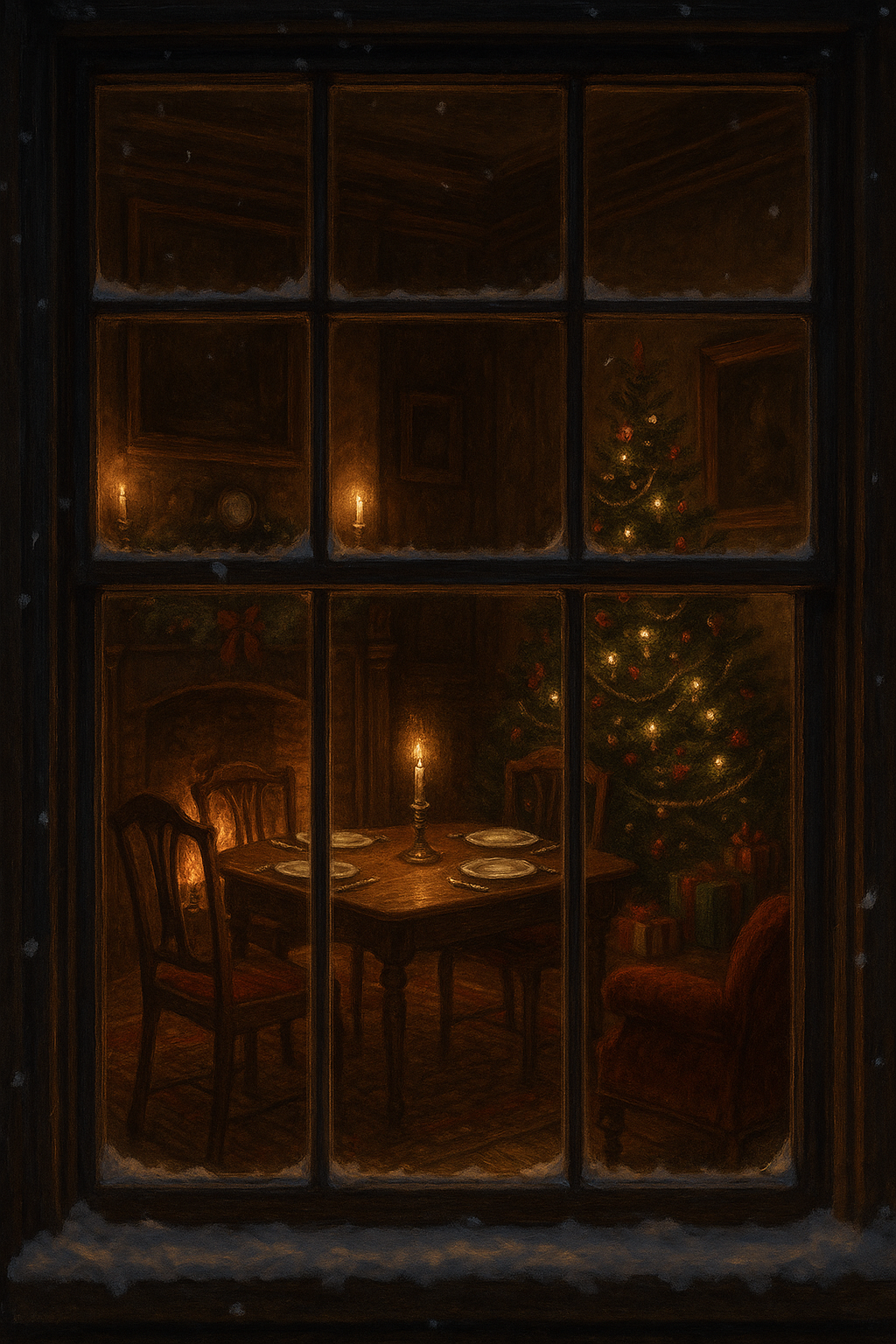
A warmly lit Victorian Christmas interior seen through a frosted window, with a candlelit table and decorated tree prepared for guests who never arrive.

Naming the Uncomfortable Truth

Let’s say the quiet part out loud.

For many people, Christmas no longer feels like a celebration. It feels like an obligation. One that grows heavier every year.

The decorations arrive earlier. The adverts start sooner. The pressure ramps up before the leaves have even finished falling. By the time December actually arrives, many of us are already tired, financially anxious, and emotionally spent. What was once a moment in the year has swollen into a season that refuses to end.

There is a strange guilt attached to admitting this. Disliking Christmas is treated as a personal failing. A lack of gratitude. A moral defect. If you are not visibly excited, if you do not participate enthusiastically, something must be wrong with you. So we smile, we comply, and we privately count the days until it is over.

Christmas now asks for more than it gives. More money. More time. More emotional labour. More performance. More resilience. For those already struggling, it does not arrive as comfort but as an additional weight. And yet it is framed as generosity. As joy. As something you should be thankful for.

This is not because people have become colder or more cynical. It is because the shape of Christmas has changed. What was once a cultural and emotional ritual has been absorbed into a system that does not understand limits. Growth is assumed. Escalation is expected. Stopping is not an option.

This article is not an attack on joy, tradition, or celebration. It is an attempt to separate what Christmas was meant to be from what it has been turned into. To name the discomfort honestly, without shame, and to ask a simple question.

If Christmas is supposed to bring warmth, why does it leave so many people exhausted?

It seems to me that what we are all in need of… is a visitation.


The Ghost of Christmas Past

The Ghost of Christmas Past does not arrive with accusations. It arrives with a candle. A quiet light held against the long dark.

It reminds us that Christmas was never meant to be loud.

Long before it became a commercial season, Christmas existed as a winter festival. Across Europe, long before Christianity formalised it, people marked the solstice as a moment of survival. The darkest days had arrived, and more importantly, they had begun to pass. Fires were lit. Food was shared. People gathered together not for spectacle, but for warmth, safety, and reassurance.

When Christianity later absorbed these older traditions, Christmas became a story of humility rather than excess. A child born in a stable. A holy event framed by simplicity, vulnerability, and care. Even for those who were not religious, the symbolism endured. This was a time to slow down, to soften, to recognise one another in the cold.

For much of history, Christmas was shaped by scarcity. In medieval Europe, winter meant hunger, isolation, and risk. A feast was meaningful because it was rare. A gift mattered because it was hard-won. Celebration was not an escape from reality, but a way of enduring it together.

Even as society industrialised, Christmas retained this character for a while. In Victorian Britain, a period that shaped much of what we still recognise today, Christmas was consciously reframed as a family-centred holiday. Charles Dickens’ A Christmas Carol itself was part of this shift, emphasising compassion, generosity, and social responsibility in response to the brutal conditions of industrial capitalism.

Importantly, Victorian Christmas was still modest. Decorations were handmade. Cards were personal. Gifts were small, often practical, sometimes homemade. Time spent together was the centrepiece, not an accessory.

What tied all these eras together was not tradition for tradition’s sake, but proportion. Christmas knew its place in the year. It was a pause, not a takeover. It was special precisely because it did not last forever.

The Ghost of Christmas Past reminds us that Christmas once understood winter. It leaned into it. It offered warmth without excess, celebration without pressure, and meaning without demand.

It knew how to be gentle.


The Ghost of Christmas Present

The Ghost of Christmas Present does not carry a candle. It arrives glowing. Loud. Overstimulating. Wrapped in tinsel and urgency.

This is Christmas as it exists now. Not as a moment, but as a system.

Somewhere along the way, Christmas stopped being a cultural ritual and became an economic event. A fiscal quarter. A growth target. The season now begins not when winter sets in, but when retailers decide it should. September becomes acceptable. October becomes normal. By November, refusal feels almost antisocial.

This did not happen overnight.

In the early twentieth century, mass production began to reshape Christmas. Department stores expanded gift-buying beyond necessity, turning abundance into aspiration. The rise of advertising reframed Christmas not as something you prepared for, but something you were sold.

Post-war consumerism accelerated the shift. The 1950s brought prosperity narratives, suburban ideals, and the modern image of the perfect family Christmas. Gifts multiplied. Expectations rose. Television beamed a single, glossy version of Christmas into millions of homes, quietly standardising what joy was supposed to look like.

By the late twentieth century, Christmas had fully aligned itself with growth logic. Black Friday crept across the Atlantic. Sales events framed restraint as foolishness. Spending was no longer just encouraged, it was positioned as civic duty. To consume was to participate. To opt out was to disrupt the economy.

Now, in late-stage capitalism, the transformation is complete. Christmas is no longer just commercialised, it is optimised. Algorithms predict our generosity. Loyalty schemes gatekeep affordability. “Limited time” offers manufacture urgency. Even nostalgia is packaged and sold back to us at scale.

This version of Christmas does not understand enough. It only understands more.

More spending. More consumption. More preparation. More performance. More emotional labour. More resilience from people who are already stretched thin. Participation is no longer optional. Opting out is treated as deviance rather than choice.

Generosity has been redefined as purchasing power. Love is measured in receipts. Thoughtfulness is outsourced to algorithms that tell us what we “should” buy for the people we already know best. Even the act of giving has been flattened into logistics.

What makes this particularly cruel is the moral framing. Christmas is still sold as kindness, warmth, and goodwill, even as it routinely produces stress, debt, exhaustion, and quiet resentment. People blame themselves for failing to enjoy it properly, rather than questioning the conditions imposed upon them.

The labour behind Christmas is unevenly distributed. Someone plans. Someone shops. Someone budgets. Someone cooks. Someone hosts. Someone absorbs the emotional fallout. This work is rarely named, rarely shared equally, and rarely acknowledged, yet it is treated as the price of admission.

And then there is the noise. Visual noise. Emotional noise. Advertising noise. A constant insistence that joy is urgent, happiness is compulsory, and dissatisfaction is a personal flaw. There is little space for grief, fatigue, neurodivergence, poverty, or simply wanting quiet.

This is Christmas as late-stage capitalism demands it. A tradition hollowed out and repurposed as an extraction engine. Not because people asked for it, but because the system rewards escalation and punishes restraint.

The Ghost of Christmas Present does not ask how we are feeling.
It assumes we will cope.
And it does not care when we don’t.


The Ghost of Christmas Yet to Come

The Ghost of Christmas Yet to Come does not speak.
It does not need to.

It shows us a future that is not imagined, only extended.

If nothing changes, Christmas does not collapse. It expands.

The season begins earlier each year, not because people want it to, but because growth demands it. What was once a few weeks becomes a quarter of the calendar. What was once anticipation becomes exhaustion before December has even arrived. Refusal becomes increasingly difficult, not through force, but through inconvenience and social pressure.

Access to affordability narrows. Discounts are no longer public. They are conditional. Loyalty schemes, apps, subscriptions, and digital profiles determine who gets to participate “properly.” Christmas becomes tiered. Those without the right accounts, the right data trail, the right compliance, pay more. Those who cannot or will not engage are quietly penalised.

Debt normalises further. Seasonal borrowing is reframed as tradition. Financial stress becomes background noise. People enter January not just tired, but already behind. The cycle resets and accelerates.

Environmental damage continues, not dramatically, but steadily. Decorations designed to last a season. Novelty gifts designed to be discarded. Packaging engineered for convenience rather than endurance. Waste becomes an accepted by-product of celebration, and responsibility is pushed onto individuals rather than systems.

Emotionally, the space contracts.

There is less room for grief. Less room for difference. Less room for opting out. Christmas becomes increasingly performative, increasingly visible, increasingly surveilled. Participation is measured. Displays of joy are documented. Absence is noticed.

What was once a pause becomes a test.

This future does not arrive through force or spectacle.
It arrives through convenience.

It arrives through updates, new terms and conditions, cheerful notifications, and subtle penalties for those who do not engage correctly. It arrives gently enough that resistance feels awkward rather than urgent. Opting out becomes friction. Compliance becomes the path of least resistance.

And perhaps most devastatingly, it arrives wrapped in familiarity. The same songs. The same imagery. The same language of warmth and goodwill. Only hollowed out further each year, until what remains is ritual without refuge.

The Ghost of Christmas Yet to Come shows us this not to frighten us, but to remove our ability to pretend we did not see it coming.

Because deep down, we already have.


A Late-Stage Capitalism Redemption

The purpose of seeing the future is not to surrender to it.

It is to remember that trajectories are not destinies.

Christmas does not need to be abolished, rescued, or reinvented from scratch. It does not belong to capitalism, even if capitalism has learned how to wear its skin. Beneath the layers of obligation, optimisation, and performance, something older and simpler still exists.

What Christmas needs now is not more effort, but less compliance.

A refusal to escalate. A refusal to compete. A refusal to treat exhaustion as the price of belonging.

A post-capitalist Christmas does not look dramatic. It looks smaller. Quieter. Intentionally bounded. It gives explicit permission to step back from traditions that cause stress, debt, or harm. It replaces obligation with consent.

Gifts stop being proof. They become gestures again. Sometimes they are handmade. Sometimes they are second-hand. Sometimes they are experiences, shared meals, long conversations, or time spent together without distraction. Sometimes they are nothing at all, and that is agreed upon in advance.

Generosity is no longer measured in spending, but in care.

Time is treated as a legitimate offering. Presence is valued more than presentation. People are allowed to say no without apology. Neurodivergent needs for quiet, pacing, and predictability are respected. Grief is not treated as an inconvenience to be hidden behind tinsel.

This version of Christmas understands winter.

It accepts darkness without trying to drown it in noise. It recognises that rest is not laziness, and that joy does not need to be loud to be real. It remembers that the point of gathering is not performance, but warmth.

Most importantly, it understands that meaning cannot be mass-produced.

A late-stage capitalism Christmas tells us that if we do not buy correctly, celebrate correctly, and feel correctly, we are failing. A post-capitalist Christmas quietly disagrees. It asks only that we be honest about what we can give, and gentle with ourselves and others when that is not much.

This is not nostalgia. It is discernment.

We do not need to save Christmas from the past or the future.
We only need to stop letting the machine decide what it is for.

And in doing so, we might find that the thing we thought we had lost was never gone at all.

‘Tis the Season to Be Manipulated: Surviving the Pop-Upocalypse

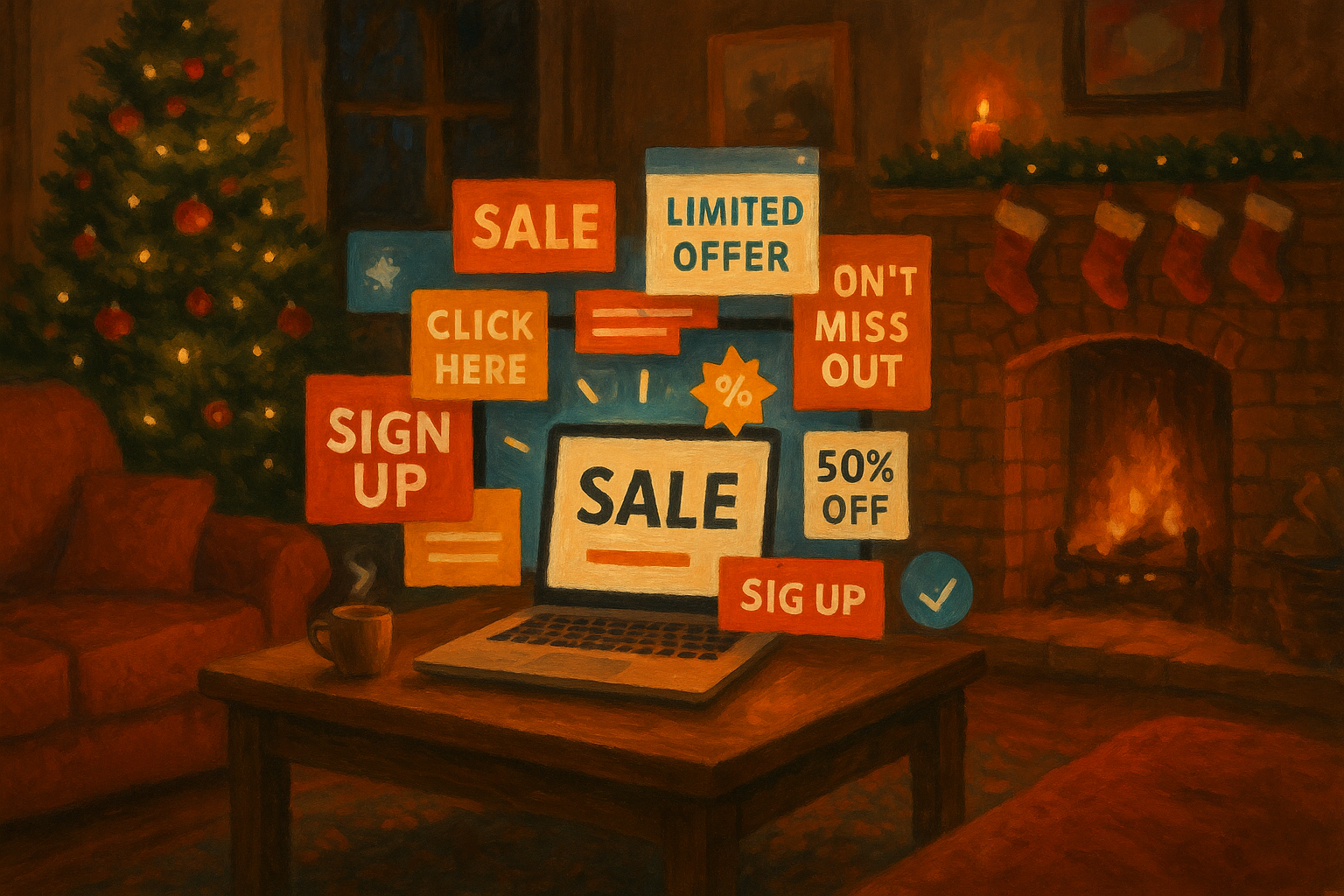
A warm Christmas living room with a decorated tree and fireplace. A laptop sits on a coffee table, surrounded by bright digital pop up ads that say SALE, LIMITED OFFER, CLICK HERE, SIGN UP, DON'T MISS OUT, and 50% OFF. The scene contrasts cosy holiday comfort with overwhelming online advertising.

It is Christmas time.
The season of giving, peace, goodwill, and apparently, weaponised pop-ups.

This morning, I opened my computer with the pure intention of doing something wholesome. I made a coffee and prepared to write this article. Instead, I was greeted by a full screen demand from my ad blocker. The very tool I rely on to protect me from digital harassment proudly informed me that it had blocked 7,085 ads, and would I like to purchase premium.

There is something almost poetic about being pressured by the software that is supposed to protect me from pressure.

It is like hiring a bodyguard who immediately holds out a hand and says, I saved your life. Pay up or next time, who knows.

And that was before I even opened a browser.

Welcome to the Pop-Upocalypse.


A Landscape of Interruption

If you have attempted Christmas shopping online in recent years, you already know the terrain.

You click onto a site.
It begins innocently enough.
And then:

  • SIGN UP FOR 10 PERCENT OFF
  • WAIT, DO NOT LEAVE
  • HAVE YOU ACCEPTED OUR COOKIES
  • CHOOSE BETWEEN FIFTY TRACKING PREFERENCES
  • LIMITED TIME OFFER JUST FOR YOU
  • ALLOW NOTIFICATIONS

It is like being assaulted by a chorus of overexcited salespeople bursting out of broom cupboards every fifteen seconds.

Most neurotypical people hate it.
Neurodivergent people find it worse.
It is a sensory gauntlet, a cognitive assault, a hostile environment built to override autonomy.

The question is why do we tolerate it.
And more importantly, why does it exist at all.


Why Pop-Ups Exist: The Gory Truth

Pop ups, overlays, cookie walls, and forced signups do not exist by accident.
They are not examples of bad design.
They are intentional psychological manipulation backed by data and defended by money.

Pop ups work.

Not on everyone.
Not even on most people.
But on enough people.

If a pop up annoys ninety five percent of visitors and successfully pressures two percent into acting, marketers celebrate. Investors approve. Designers are told to do more of that.

This is because the modern internet does not care whether you feel respected, informed, or at ease.

It cares about conversions.
A beautifully dystopian word that refers to the process of transforming a human being into a measurable event.

Click.
Signup.
Purchase.
Obedience.

That is the true currency of the online Christmas shopping season.

Not joy.
Not generosity.
Not the spirit of giving.

Conversions.


Hostile Architecture, Digital Edition

We talk about hostile architecture in public spaces. Anti homeless spikes, benches that prevent rest, gates that quietly funnel people in profitable directions.

Online shopping is built the same way.

• Dark patterns
• Time pressure tactics
• Interruptive overlays
• Intentionally confusing cookie settings
• Limited stock claims that magically reset
• Buttons designed to look like one thing but act like another

Even the fonts and colours are chosen to trigger specific instinctive responses.

This is not a marketplace.
It is a behavioural laboratory, and we are test subjects.


The Neurodivergent Problem

For neurodivergent people, autistic, ADHD, sensory sensitive, or cognitively overloaded, these interruptions are not slightly annoying.

They are disorienting.
They are overwhelming.
They are stressful.
They can be genuinely painful.

They disrupt the flow of thought.
They derail working memory.
They force unexpected decisions at high frequency.
They punish focus and reward impulsivity.

Yet it is our reactions that are treated as atypical. Not the manipulative design itself.

The truth is that the design is hostile to everyone.
Neurodivergent people are simply more honest about their discomfort.


The Bold Conclusion: This Is Not Normal, and It Is Not Benign

Somewhere along the line, the internet shifted from a tool we use to a machine that uses us.

Christmas shopping should be peaceful and even joyful.
Instead, we are treated as prey, nudged and pressured and interrupted until the system gets what it wants.

I am sickened by it.
I think we should all be.

The more we accept this digital coercion as normal, the more it becomes the baseline from which future manipulations will escalate.


How To Protect Yourself, or at Least Defend Your Sanity

A few practical strategies:

  • Use aggressive ad blockers, for example uBlock Origin rather than lightweight imitators
  • Enable cosmetic filtering to remove non ad pop ups
  • Shop via product search rather than homepages
  • Use reader mode wherever possible
  • Leave sites that treat you like a conversion target

Nothing terrifies a manipulative company more than being ignored.

Above all, recognise manipulation when you feel it.

Your disgust is not an overreaction. It is your sovereignty speaking.

During a season that is supposed to celebrate humanity, generosity, and connection, perhaps the most radical act is to reclaim your own mind from a system that keeps trying to pop up over it.

Respect, Not Reverence: Rethinking How We Honour Veterans

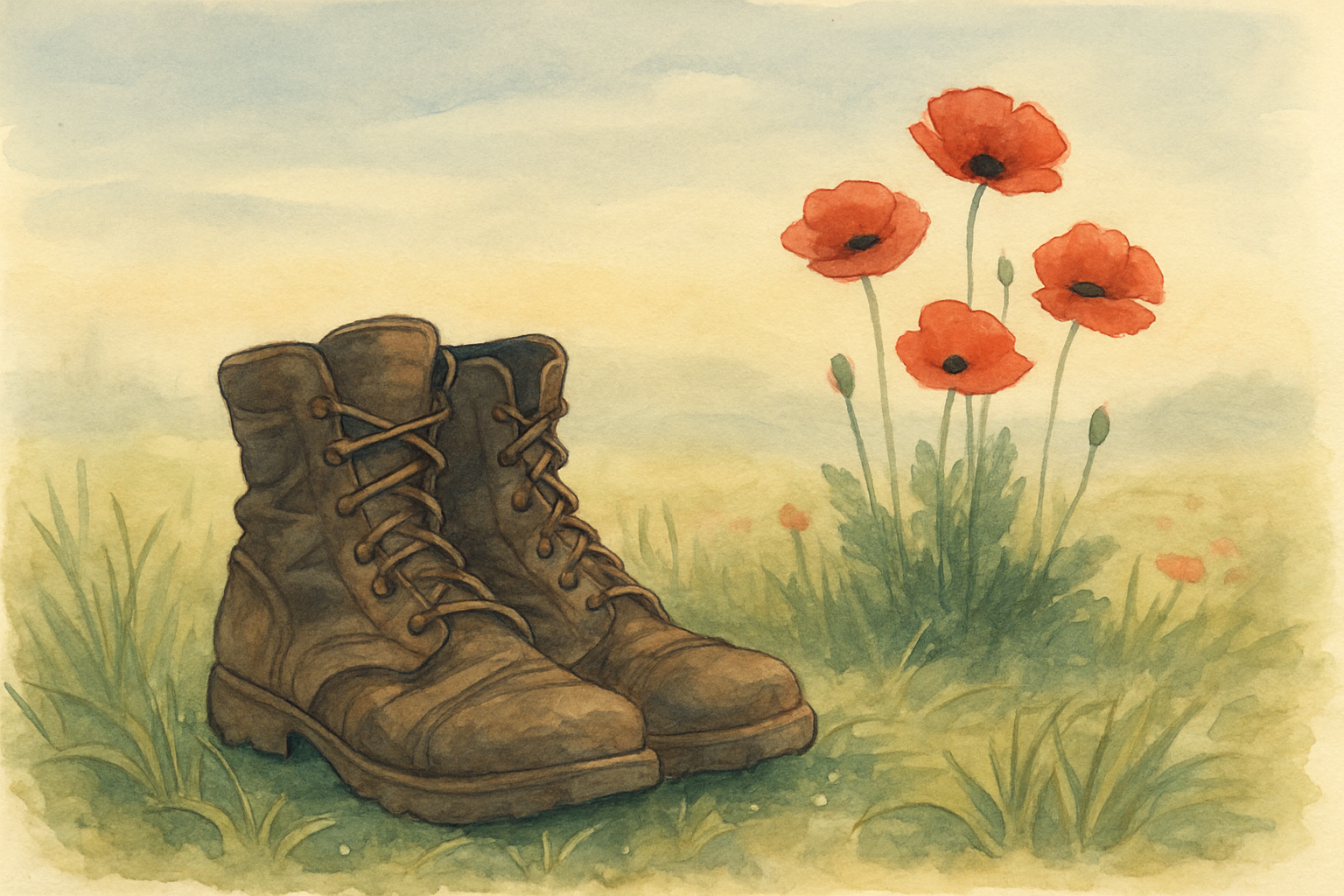
A pair of worn military boots resting in dewy grass at dawn with a few poppies growing in the background.

War veterans occupy a complicated space in the human story. It is a space of courage, trauma, sacrifice, and contradiction. They have faced realities that most people never will, and for that alone, they deserve to be seen. But to truly respect them, we must go deeper than ceremony. Real respect is not a reflex. It is a conscious act that requires honesty.

Why Respect Matters

To have gone to war is to have confronted the extremes of existence. Veterans have risked their lives, endured the unendurable, and often returned home carrying invisible burdens: moral injury, survivor guilt, and memories that do not fade. Many live with physical and psychological scars that will never fully heal.

They remind us of the human cost behind national decisions. They represent duty, resilience, and sacrifice, and the willingness to stand in harm’s way while others sleep in safety. In honoring them, we acknowledge that peace and freedom are not abstractions. They are fragile states maintained by human endurance and loss.

Veterans also serve as witnesses to history. They have seen the best and the worst of humanity. Their insights can help us understand both. Their stories are lessons in courage, unity, and the preciousness of peace. They show that strength can coexist with vulnerability. Healing is itself a form of service.

Why Automatic Reverence Fails

Respect becomes hollow when it is automatic. Blind hero worship risks turning veterans into symbols instead of people. Not every war is just, and not every soldier acts with honor. If respect becomes unconditional, it erases nuance, silences criticism, and supports the very systems that make war seem inevitable.

Unquestioning reverence can be used to manipulate public emotion. It can sanctify violence, sell weapons, and justify new conflicts. True respect requires that we keep our eyes open.

Many veterans themselves reject blind glorification. They know the difference between being thanked and being understood. They want honesty instead of pity and compassion instead of pedestal placing. When we treat them as flawless heroes, we deny them the complexity of being human.

Automatic respect also diminishes others who serve in quieter ways. Nurses, teachers, caregivers, and activists also sustain life, yet receive far less recognition. When society reserves its highest praise only for those who fight, it reveals what it truly values.

Toward a Mature Form of Respect

To respect veterans genuinely is to hold multiple truths at once. Courage can coexist with error. Duty can be exploited. Service can be both noble and tragic.

Genuine respect means listening to veterans’ stories, all of them, including the ones that challenge national myths. It means holding governments accountable for the wars they start and for how they treat the people they send to fight. It means extending compassion not only to our own soldiers, but also to civilians and enemies who were caught in the same machinery of conflict.

True respect is not found in flags or parades. It is found in empathy, accountability, and awareness. It is the willingness to look at war honestly, through the eyes of those who have lived it, and to promise, as best we can, to learn from it.

In the end

To respect veterans is not to sanctify war. It is to remember its human cost.
It is to see those who survived, and those who did not, with clarity rather than mythology.
It is to honor the courage of service while rejecting the worship of violence.

Respect, when thoughtful, becomes an act of peace.

Sainsbury’s Nectar ‘Loyalty’ Scheme: Coercion Into App Dependency

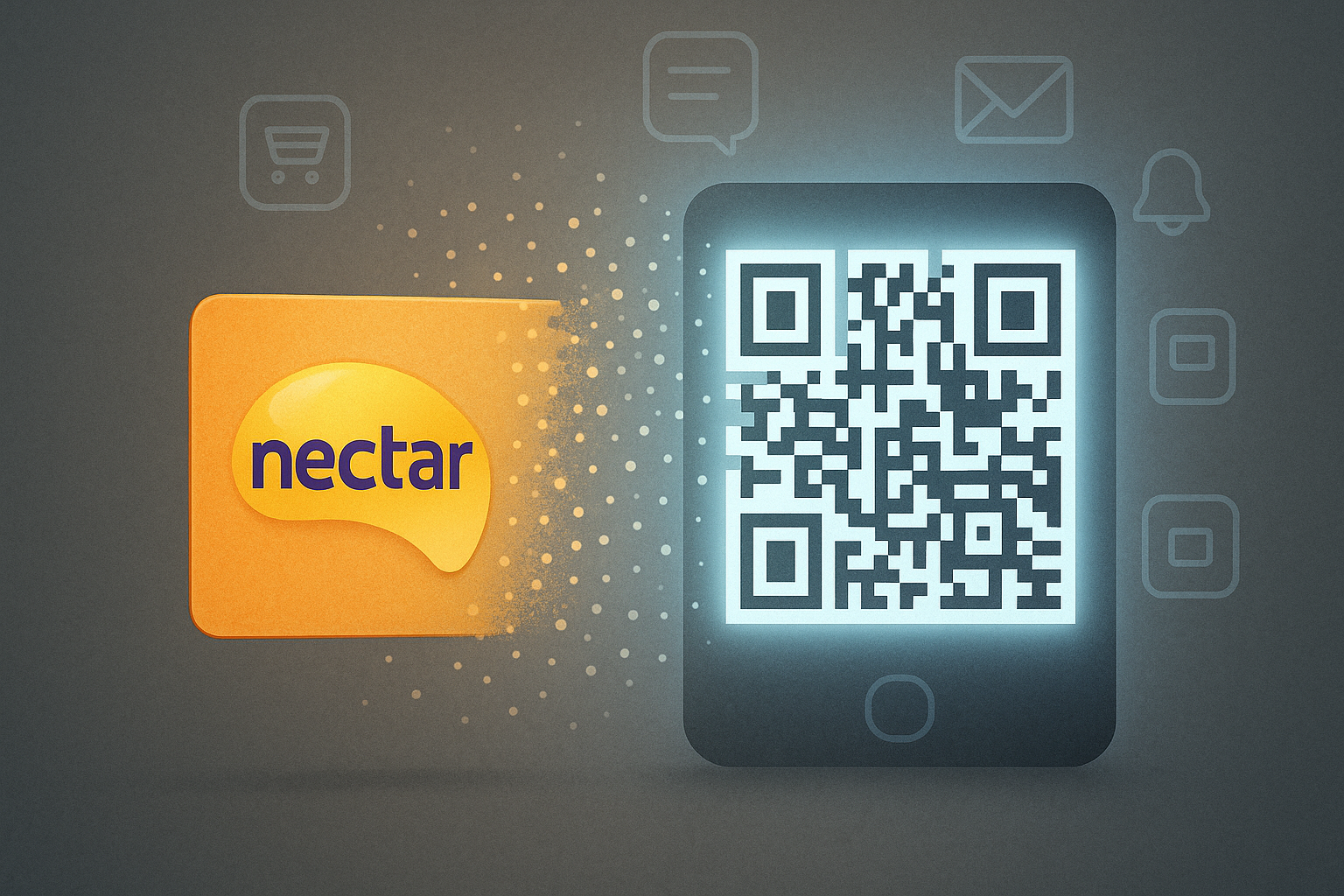
A stylised illustration of a Nectar loyalty card dissolving into a glowing QR code. Small faded smartphone notification icons surround the QR code, creating a subtle cage-like effect. The image represents the shift from physical loyalty cards to app-based systems.

ALARM BELLS IN A “ROUTINE UPDATE”

The subject line alone stopped me in my tracks:

There is something about a sentence like that, calm on the surface but quietly signalling that the rules have shifted, that immediately puts me on alert. Changes to how you collect and spend your points is not a minor technical tweak. It is a foundational adjustment to how the entire system works.

Just a few lines into the email, beneath a short justification about “maintaining the security of your points,” came the statement that confirmed my unease:

No explanation. No alternatives. No acknowledgement of how significant that instruction really is. It was presented as if it were the most natural thing in the world.

For me, this was an immediate alarm bell. It did not read like a harmless update. It read like the quiet conversion of a long standing physical system into a digital one. A shift from loyalty card to loyalty app, framed as security rather than as a fundamental change in customer interaction.


WHEN LOYALTY SCHEMES BECOME DIGITAL GATEWAYS

Loyalty schemes used to be simple. You carried a physical card, you scanned it, you collected points, and you occasionally exchanged those points for something modest. There were no hidden conditions and no digital obligations. A card was a card, nothing more.

Today the loyalty card is becoming something else entirely. More companies are shifting these schemes into smartphone apps, and with that shift comes a completely different relationship between customers and the business.

On the surface, an app looks like a modern convenience. In reality, it introduces several changes that are rarely acknowledged.

First, an app becomes a data harvesting vessel. Every interaction can be logged and analysed. This includes what you buy, when you buy it, the patterns in your purchases, the frequency of visits, the times you tend to shop, and even the products you pause to consider. That data is used to predict and influence behaviour. It becomes the foundation for targeted marketing, personalised nudges and subtle shaping of buying habits.

Second, an app creates a direct marketing channel through notifications. These can be promotional messages, reminders, alerts about offers or time sensitive prompts designed to draw you into the store more frequently. Notifications bypass the customer’s conscious choice to engage. They appear on your locked phone and rely on the psychological pull of visual prompts.

Third, apps allow companies to make significant changes without asking for consent. Updates are often automatic. Terms can shift. Features can be added or removed without warning. A tool that begins as a simple way to check your points can gradually evolve into something more controlling. By installing the app, customers open themselves up to potential bait and switch tactics where the purpose and behaviour of the app can change over time.

None of these concerns exist with a physical card.
A card does not track behaviour.
A card does not send notifications.
A card cannot silently update itself.

This is why the wording in the Nectar email did not feel like a minor update. It felt like another step in a wider transformation. Optional apps are becoming expected apps. Expected apps are becoming required apps. What was once a convenient extra is becoming the main path, while everything outside the app becomes more limited or more awkward.

With this context in mind, the announcement that customers “will need to use the QR code in the Nectar app” did not feel like progress. It felt like the opening of a different kind of relationship, one built on increasing digital reliance rather than genuine customer choice.


MY INITIAL CONCERNS

My immediate reaction was concern for accessibility and fairness.

Many people do not use smartphones.
Many do, but keep them intentionally minimal.
Many avoid unnecessary apps for privacy, storage or mental health reasons.
Many have disabilities that make smartphone use difficult.
Some people, like me, prefer communication that is simple and text based and do not rely on apps unless necessary.

These customers deserve the same level of access as everyone else, and the Nectar update did not explain how they would be supported. The all or nothing tone of the customer email felt like a push toward a system that may not suit everyone.

I wanted clarity.
I wanted to know whether the change was genuinely necessary.
I wanted to know whether it had a real security basis.
I wanted to know how it affected non app users.
And I wanted someone at Sainsbury’s to explain the contradiction between their language of flexibility and the instruction that customers “will need” to use the app.

So I wrote to them.


THE EMAIL I SENT

My message was polite and straightforward. I raised four simple points.

First, I asked why the QR system was needed and what problem it solved.
Second, I asked if customers who do not use the app would be able to continue collecting and spending points.
Third, I asked what alternatives actually exist in practice.
Finally, I asked how Sainsbury’s reconciled the firm wording of the customer email with the their supposed ongoing commitment to fairness and accessibility.

It felt like a reasonable approach.


THEIR FIRST REPLY

The response from the Executive Office sounded reassuring at first. It spoke about improved security and improved efficiency. It claimed that QR codes allow for encrypted data transfer and that this reduces the risk of misuse. It also insisted that the Nectar app was not mandatory and that customers could still use their physical Nectar card via the magnetic strip.

Under closer inspection, the reassurance did not hold up.

There was no explanation of what encryption actually meant in this context. QR codes and barcodes both present visible identifiers, so the claim did not make technical sense without further detail. None was provided.

There was no clarification of what security issue the change was addressing.
There was no mention of any misuse linked to barcodes.

Most importantly, there was a clear contradiction.
The customer email said that shoppers “will need to use the QR code in the Nectar app.”
The Executive Office said the app was not mandatory.

The two positions could not both be correct.

I decided to ask for more detail.


MY FOLLOW UP QUESTIONS

I asked what encryption they were referring to and at what stage it is applied.
I asked how QR codes are less vulnerable to misuse than barcodes.
I asked whether there were any documented security incidents involving barcodes.
I asked how the customer email and the executive reassurance could both be true.
I asked whether Sainsbury’s had any intention to move toward mandatory app usage in the future or to limit functionality for those who do not use the app.

Every question was clear and reasonable.


THEIR FINAL RESPONSE

Their final reply was brief:

No clarification.
No explanation.
No evidence.
No answers.

The conversation ended there.

When a company is unable or unwilling to explain its own decisions, that silence becomes part of the story. In this case, it was very revealing.


WHAT THEIR SILENCE REVEALS

The refusal to answer the key questions suggested several things.

If QR codes offered real security benefits, Sainsbury’s would have been able to explain them.
If barcodes had been misused or cloned, they would have been able to provide examples.
If the app was genuinely optional, they would have been able to clarify the contradiction between the two messages.

None of this happened.

It is difficult to avoid the conclusion that the language of security was used as a convenient justification rather than as a genuine explanation.

The unwillingness to discuss future intentions also stood out. If there were no plans to increase app dependency, it would have been very easy to say so. The fact that the question went unanswered speaks for itself.

This pattern is becoming common across modern systems. Optional digital tools gradually replace physical ones. Convenience slowly becomes expectation. Expectation becomes requirement. By the time customers realise what has happened, the change is already complete.


WHO GETS LEFT BEHIND

Digital only systems do not affect all customers equally.

Those without smartphones are excluded.
Those who avoid unnecessary apps are pressured.
Those with disabilities face new barriers.
Those with mental health conditions that make digital engagement difficult are sidelined.
Those who value privacy lose options.
Those who prefer predictable, low friction systems are made to feel out of place.

These experiences are rarely acknowledged in corporate messaging. The narrative focuses on convenience and modernisation, while those who cannot or do not participate digitally are treated as acceptable losses.

The Nectar update may seem small, but it reflects a growing cultural shift: the smoothest path is reserved for those who comply with digital expectations. Everyone else is given slow lanes, workarounds or reduced functionality.


CLOSING REFLECTION

My exchange with Sainsbury’s will not change the direction of a major corporation, but it still mattered to me. I asked questions that deserved answers. I pointed out contradictions. I raised concerns about accessibility. I approached the issue calmly and respectfully.

They chose not to engage with the substance of those questions.

The refusal became part of the story. It revealed how easily convenience becomes compulsion, and how quickly the language of security is used to mask deeper changes in customer control.

Small acts of resistance matter.
They expose patterns that are otherwise silent.
They help others recognise similar pressures in their own lives.
They remind us that opting out is not unreasonable.
And they show that asking for clarity is a valid response to vague or contradictory messaging.

A loyalty scheme should make life easier.
It should not require loyalty to an app.
And if a company chooses to head in that direction, the least it can offer is an honest explanation.

The Price of Play: How Capitalism Hijacked Gaming’s Soul

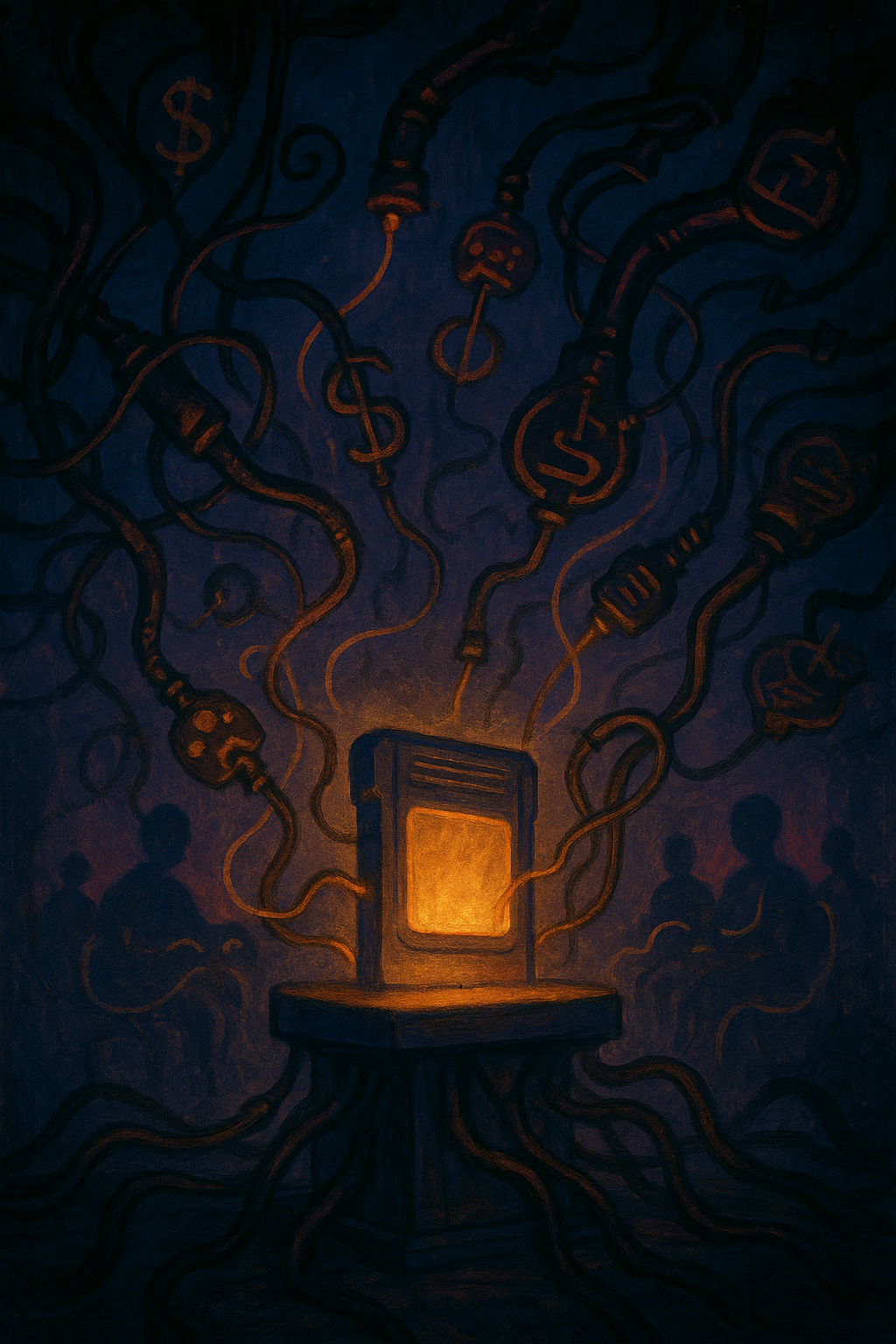
An abstract painting of a glowing old-fashioned game cartridge on a pedestal, surrounded by dark mechanical cables that siphon light from it. The cables form faint dollar symbols and stretch into shadowy figures of players in the distance. The scene glows with melancholy blues and muted golds, symbolising how capitalism drains the soul of gaming while a small core of light still resists.

Once upon a time, a game came in a box, and that box contained everything.
You bought it, you owned it, and you played it. That was the deal.
There were no online check-ins, no missing features, no “coming soon” updates, only a complete world waiting to be explored.

There was a quiet purity in that exchange.
A developer built something they were proud of.
A player paid for it because they trusted that pride.
That was the unspoken pact between creator and audience: a transaction built on honesty.

Games like Super Mario Bros. (1985) and The Legend of Zelda (1986) embodied that purity. A single cartridge held an entire universe. Doom (1993) refined the model through shareware, offering the first episode for free and the rest for purchase. It was transparent, simple, and fair. The product was complete. The deal was clear.


The first cracks in the pact

Then came the era of the expansion pack. At first, it felt generous. Players bought Warcraft II: Beyond the Dark Portal (1996) or Age of Empires: The Rise of Rome (1998) because they wanted more of something they already loved.
These were true expansions, built from creative overflow rather than withheld content.

Diablo II: Lord of Destruction (2001) remains one of the best examples, adding new classes and an entire story act. Yet this was also when the idea of the “complete” game began to fade.

Not maliciously, at first.
But the seed was planted: perhaps a game could be split, extended, resold, and repackaged.


The patch era and the illusion of care

When players first connected online, games began to live beyond the disc or cartridge.
Developers could now release updates and bug fixes directly to players. It seemed like progress.

Quake (1996) pioneered downloadable updates. Half-Life (1998) and Morrowind (2002) made patches a normal part of gaming life. Initially, this felt like a gesture of goodwill. Developers could fix mistakes, refine balance, and reward loyalty.

But convenience soon became a crutch.
By the late 2000s, games were shipping half-finished, depending on “Day One Patches” to make them playable.
Entire studios began treating release as the start of development rather than the end.

Final Fantasy XIV (2010) became a symbol of this shift. Its launch was so disastrous that it had to be destroyed and rebuilt as A Realm Reborn (2013). The resurrection was impressive, but it also marked the death of the finished game. A new age had arrived, one where imperfection was no longer a failure but a business model.


DLC, season passes, and the death of completeness

As the 2000s progressed, expansion packs evolved into downloadable content. What began as a technological innovation quickly became a financial strategy.

When The Elder Scrolls IV: Oblivion (2006) sold its infamous horse armour cosmetic, it became a joke among players but a revelation for publishers.
Suddenly, small additions could generate massive revenue.

Call of Duty 4: Modern Warfare (2007) built an empire on paid map packs. Mass Effect 2 (2010) sold essential story chapters separately, slicing its own narrative for profit.

Then came the season pass, which allowed publishers to monetise the future itself.
You were no longer buying content. You were pre-ordering potential.

Assassin’s Creed III (2012) and Mortal Kombat X (2015) made it normal to pay in advance for unseen expansions.
In Destiny (2014), the model reached full maturity. Content cycled endlessly, and earlier material was quietly retired.

The player was no longer buying a work of art. They were buying a share in an ongoing experiment.


The age of tiered access: standard versus deluxe

Next came the illusion of choice.

Every major release now arrives with multiple editions: Standard, Deluxe, Gold, Ultimate.
The Standard Edition, once the full experience, has become the stripped-down minimum.
The Deluxe Edition rarely offers genuine creative content. It usually grants early access or small digital trinkets instead.

Hogwarts Legacy (2023) gave Deluxe buyers a three-day head start. Starfield (2023) did the same. Call of Duty: Modern Warfare II (2022) tiered its editions so precisely that the system resembled an airline pricing chart.

The tactic is subtle but powerful.
It monetises excitement itself.
It divides players not by passion or skill, but by spending power.

We no longer unlock secrets through play.
We unlock content through payment.
The so-called Deluxe Edition does not make the game better. It simply makes everyone else feel lesser.


The live service era: eternal beta

By the late 2010s, games were no longer seen as products but as platforms.

Destiny (2014) led the charge. GTA Online turned it into an empire. Fortnite perfected it.
The ideal of the complete, single experience was replaced with the promise of constant evolution.

Players were told they were joining a “living world.”
In truth, they were joining an economy.

Every week brought new skins, new currencies, and new reasons to log in.
Games stopped being designed to end. They were designed to sustain.

The player became both the consumer and the unpaid quality tester.
And when the profit dried up, the world simply died.
Anthem (2019) and Marvel’s Avengers (2020) stand as cautionary tales, both collapsing within a few years.

The eternal game is not immortal. It is undead, kept alive not by creativity but by consumption.


Gacha and the monetisation of desire

When endless updates stopped being enough, the industry discovered something even more lucrative: human psychology.

Gacha systems turned the act of wanting into a business.
You no longer bought the content itself, but the hope of obtaining it.

Fate/Grand Order (2015) and Genshin Impact (2020) perfected this model, disguising gambling with beautiful music and artistry. Each pull felt like a small miracle, a spark of dopamine wrapped in digital silk.

Diablo Immortal (2022) pushed the formula to absurdity, with some estimates suggesting it could cost over $100,000 to fully upgrade a single character.
And now Infinity Nikki (2024) walks the same line, visually stunning yet built on the same manipulative architecture.

The slot machine no longer hides in the casino. It lives in your home, wearing a smile.


The counterexamples: those who still honour the pact

Yet not all is lost.
Some creators still believe in the original exchange between maker and player.

Hollow Knight (2017), Celeste (2018), Stardew Valley (2016), Undertale (2015), Hades (2020), and Disco Elysium (2019) all prove that integrity still sells.

These games are complete works, designed to be finished and remembered.
They ask for your time, not your loyalty.
They offer experiences that stay with you long after the credits roll.

You pay once.
You play forever.
That is what honesty looks like.


The real freedom

Paying upfront is not a barrier. It is a declaration of honesty.
When I buy a game, I am saying: I value your art.
When the developer accepts that, they are saying: I value your trust.

That exchange is the foundation of real freedom.
Because true freedom in gaming is not the ability to start for free.
It is the ability to finish without being owned.

Games once invited us to play.
Now they beg us to stay.
I miss when the only thing a game wanted from me was my time.

The Fine Line Between Manifesto and Dogma

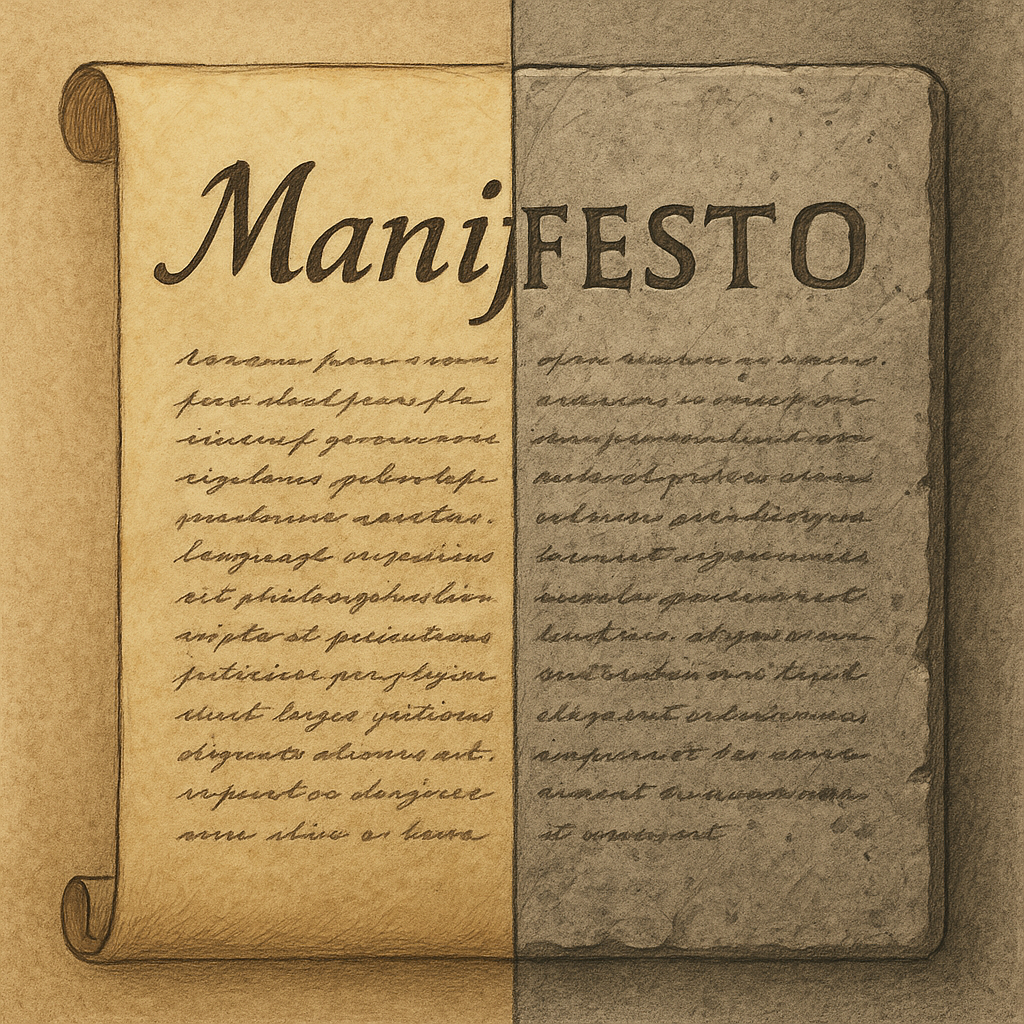
A vertical split illustration showing a parchment scroll on the left and a stone tablet on the right, both bearing the word “Manifesto.” The scroll side is warm and fluid with calligraphic text, while the tablet side is cool and rigid with chiselled letters, symbolising the divide between living conviction and unyielding dogma.
Between ink and stone lies the fine line where conviction becomes belief — and belief, if left unexamined, becomes dogma.

I often find myself writing in the tone of a manifesto: declarative, uncompromising, certain in its cadence. It isn’t always intentional. Sometimes it’s simply the only language strong enough to contain what I feel. Yet I’m aware this style carries risk. To the untrained or hurried reader, such conviction can appear like ideology—or worse, arrogance. In truth, my manifestos are not edicts. They are moments of alignment between clarity and chaos, attempts to map the shifting ground beneath my own feet.

The word manifesto carries baggage. For many, it evokes the rhetoric of politics—grand visions, revolution, the binary clash of “us” versus “them.” Others hear echoes of religion, of sermons and sacred decrees that leave no room for questioning. In both cases, the manifesto becomes synonymous with certainty without flexibility, belief without humility.

It’s no wonder the term can make people uneasy. History has shown us manifestos that rally masses, ignite wars, or justify cruelty. But it has also shown us manifestos that inspire art, liberation, and self-expression. The line between revelation and indoctrination is razor thin—often determined not by the words themselves, but by the spirit in which they are written and the consciousness of those who receive them.


The Power of Declaration

There is something liberating about speaking as if one truly knows. To declare is to crystallise thought—to pin the fluttering swarm of ideas to a moment of clarity. When I write with conviction, it is rarely because I believe I have found the final truth. It is because I need to see what truth looks like when spoken aloud. A manifesto, in that sense, becomes an act of self-discovery through confidence. The words must stand tall, even if I later choose to dismantle them.


The Peril of Certainty

Yet I’m aware of how easily conviction calcifies. The same clarity that grants coherence can harden into armour, shutting out reflection. If a manifesto becomes a monument to a fixed belief rather than a record of an evolving one, it turns from tool to trap. True understanding demands movement, and movement requires the humility to be wrong, or at least to shift.


Perception vs Intention

Intent matters, but so does perception. When people read with their guard up, a voice of conviction can sound like control. The manifesto form amplifies tone, and in doing so, exposes the delicate dance between authorial intent and reader projection. What was written as a map of one’s inner terrain may be mistaken for a decree about how the world should be.


Living Manifestos

Conviction, when alive, is never afraid of change. True faith in an idea is not the refusal to question it, but the courage to do so without fear of it crumbling. A manifesto written today is not a monument—it is a snapshot in time, an image of what truth looked like beneath a particular light.

To declare something is to momentarily solidify the fluid. But every declaration exists within context: language shifts, culture evolves, and what once sounded like revelation may, in another era, sound naive or misguided. That doesn’t make it false—only situated.

Dogma, by contrast, refuses this movement. It chisels the moment into stone and demands that future generations kneel before it. Where the manifesto breathes, dogma ossifies. One invites dialogue; the other enforces silence.


Why I Still Write Manifestos

For me, writing in the manifesto style is not about persuasion. It is about presence. When I write declaratively, I am not trying to convert; I am trying to cohere. The manifesto allows me to momentarily bring my thoughts, feelings, and philosophies into alignment—to speak as though I am whole, even if I know I never truly will be.

In a fragmented world, this act of temporary wholeness feels sacred. The words stand upright for a moment before time inevitably bends them. I accept that. Each manifesto I write is a record of a phase in my evolution—an imprint of the mind I once occupied.

If dogma seeks to outlive its author, the manifesto simply seeks to speak truthfully while it can. It is not written in stone but traced in light: vivid, transient, and honest to the moment it was born.

From Announcement to Manipulation: The Evolution of Advertising

A sepia-toned illustration of a town crier ringing a bell that emits hypnotic spirals, symbolising how early advertising evolved from public announcements into psychological influence.

I grew up in the 1980s, when television advertising still had a kind of charm. I remember the jingles, the mascots, the catchy slogans that managed to lodge themselves in your head for weeks. Even as a child, I knew they were trying to sell me something, but at least they did it with some flair. They felt like part of the entertainment itself.

Something has changed since then. Advertising is no longer something that interrupts culture; it has become the culture. Every space, every platform, and every idle moment now feels colonised by a hidden intention to sell. To understand how we arrived here, it is worth tracing how advertising has evolved from a loud street-side performance to an invisible system of persuasion that shapes our sense of self.

The Loud Salesmen

The earliest form of advertising was brutally honest. Ancient merchants shouted in markets, painted signs on walls, or hung banners above their stalls. When mass printing emerged in the 1800s, advertising became more widespread but no less direct. Newspapers were filled with promises of miracle tonics, soap that made you beautiful, and pills that cured everything from toothache to heartbreak. These were primitive, manipulative, and often fraudulent, but at least you knew what you were looking at. Someone was selling, and you were free to walk away.

The Mad Men Era

The 20th century transformed advertising into an art form. With the rise of radio and television, storytelling became the new language of persuasion. Campaigns no longer sold only a product; they sold an identity, a dream, a way of life. The Coca-Cola Santa Claus, the Marlboro Man, and the perfect suburban family all came from the same creative laboratories.

This was the era of the “ad man,” immortalised in cultural artefacts like Bewitched or later Mad Men. Advertising was portrayed as a glamorous profession. These were the people who didn’t just reflect society; they helped build it. The line between commerce and culture began to blur.

The 80s and 90s: Ads as Entertainment

By the 1980s and 1990s, advertising had taken on a theatrical quality. It was playful, colourful, and memorable. Mascots like Tony the Tiger, slogans like “Just Do It,” and tunes you could hum all day made adverts feel like short pieces of performance art. They were still manipulative, of course, but they wore their intentions openly.

Looking back, perhaps this is why many people from my generation recall old ads with a strange fondness. They were transparent. They worked hard to win your attention rather than simply steal it.

The Weird and Annoying Years

Somewhere in the late 1990s and early 2000s, advertising lost its balance. It became surreal, loud, and deliberately irritating. Think of Crazy Frog, the Budweiser frogs, or the unnerving Burger King mascot. Annoyance became a marketing tool. If something got stuck in your head, even out of frustration, the job was done.

This was the period when “going viral” became a goal before social media even existed. The absurdity was the message.

The Internet Disruption

When the internet arrived, advertising was clumsy but eager. Early banner ads were brightly coloured, flashing boxes that you could easily ignore. But the industry adapted quickly. As data collection improved, advertising became personal. It stopped shouting to the crowd and began whispering to the individual.

This marked the rise of surveillance capitalism. Every click, search, and pause became a data point. You were no longer a passive audience member; you were a psychological profile to be targeted. The salesman had followed you home and was now reading your mind.

The Age of Disguise

By the 2010s, advertising learned to hide in plain sight. Sponsored posts, influencer endorsements, and “native” content made it difficult to tell where information ended and manipulation began. Search engines, news sites, and social platforms quietly filled with ads disguised as genuine results.

South Park once parodied this perfectly with its storyline about intelligent ads (Season 19). It was satire, but it was also prophecy. Today, even image searches are littered with sponsored results. The ad no longer wants to be seen; it wants to be believed.

Culture as Commerce

This is the stage we now find ourselves in. Advertising has stopped orbiting culture and instead absorbed it completely. Everything is for sale, including identity itself.

People no longer ask “What do I like?” but “What do I subscribe to?” We define ourselves through brands and platforms: Apple or Android, Nike or Adidas, Netflix or Disney Plus. Even rebellion is commercialised. You can buy “authenticity,” but only if you can afford the price tag.

Advertising has achieved what no political ideology ever could. It has replaced meaning with marketing and turned culture into a series of brand alignments.

Conclusion: From Persuasion to Colonisation

Advertising began as a voice shouting in the marketplace. It evolved into storytelling, then spectacle, then infiltration. Today it is everywhere and nowhere, woven into the fabric of our reality.

The change that occurred over the last century is more than technological. It is philosophical. Advertising no longer sells products; it sells identities. It shapes our desires before we even know we have them.

Perhaps that is why so many of us feel weary. We are not just tired of being sold to; we are tired of living inside the sale itself.

How We Treat the Tools

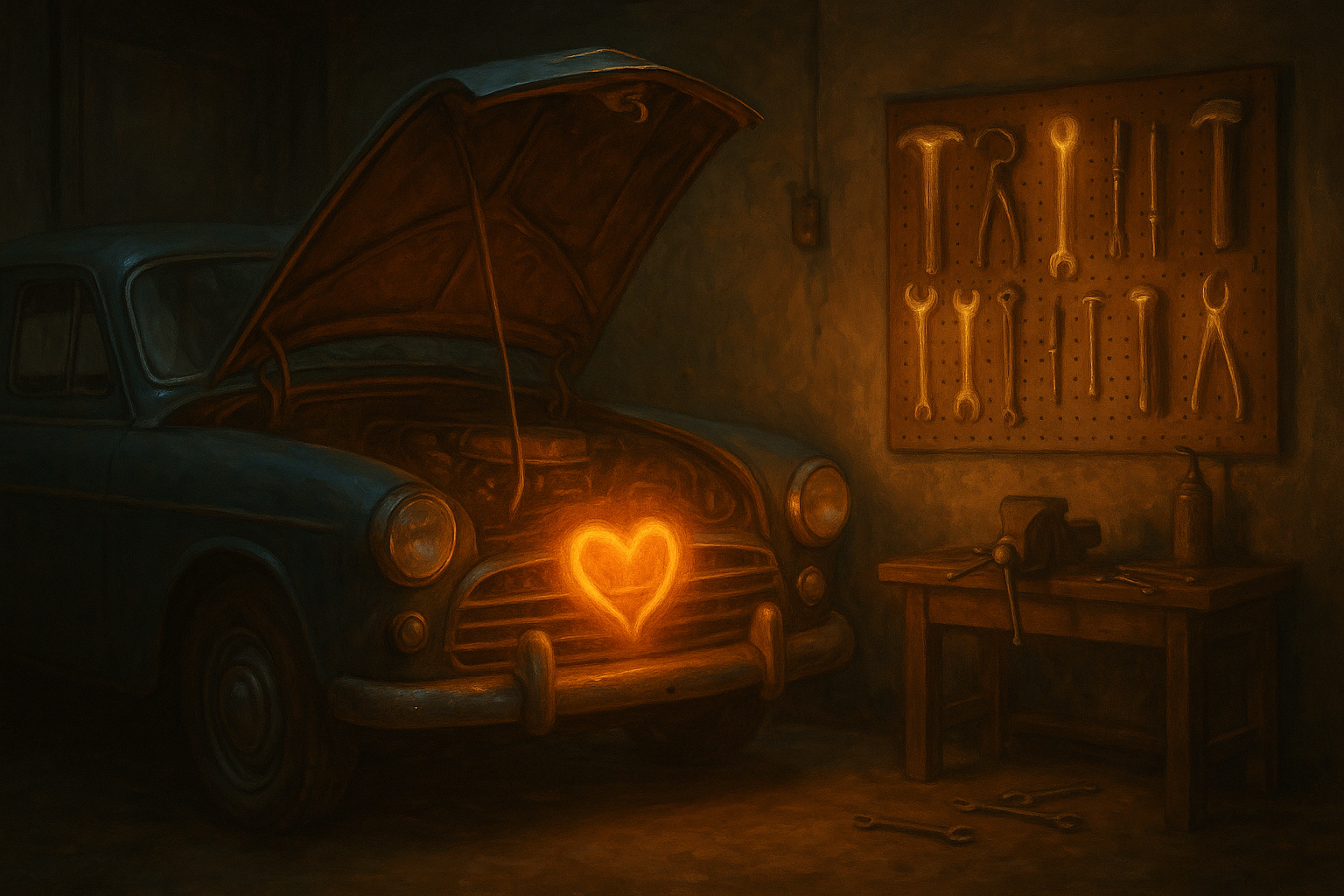
A surreal garage scene. A vintage car with its hood open, glowing with a warm orange light shaped like a heart in the engine bay. On the wall, tools hang from a wooden pegboard, faintly glowing, suggesting quiet presence. The atmosphere is warm, symbolic, and magical.

We surround ourselves with tools.
Phones, computers, kitchen appliances, headphones, toothbrushes.

We tap, swipe, click, scroll.
We plug in and expect results.
We barely even register most of them; they just work, or they don’t.

But what if the tools we use every day are more than just conveniences?
What if they are relationships in disguise?


The Echo of Intention

Even with lifeless objects, the way we interact with them affects our experience.
A phone handled with care feels different in your hand than one tossed aside in frustration. A cracked laptop, plastered with stickers and old crumbs, might still feel like your laptop because of the memories etched into its surface.

But how do we look at a tool?

Do we see it as something that simply serves a purpose? A silent object, expected to function?
Or do we sometimes form a relationship with it, however subtle, based on time, trust, and repeated use?

It is easy to treat tools as disposable when they fail us.
A kettle that doesn’t boil right. A screwdriver that slips. A smartphone that lags.
Our frustration builds, and so does the distance. The tool becomes “just a thing” again.
Something to blame. Something to toss in a drawer.

But when a tool earns your trust, whether through time, reliability, or quiet cleverness, something changes.
Affection creeps in. Loyalty forms.
It stops being “a thing” and starts becoming yours.

Still, not all tools fail because they were poorly made.
Some tools don’t work well because we have neglected them.
A rusty bicycle chain. A dirty lens. A guitar left in a damp corner.
The fault is not in the design; it is in the relationship.

Respect, in these cases, must come before reliability.
It is not just about whether the tool works for us; it is about whether we have held up our end of the connection.
Maintenance is a kind of faith. A kind of love.
And when we skip that effort but still demand performance, we are showing a form of disrespect that often reflects right back at us.

But then there are tools that were never built to last.
Mass-produced, hollow, held together with glue and branding, designed not to serve you, but to extract from you.

In those cases, the disrespect happened before the tool ever reached your hands.
You weren’t the user. You were the used.
A customer, yes, but also a pawn in someone else’s profit loop.

And that is the cruel irony:

So we return to a deeper question, one that does not always have a clear answer:


Poppy

My car’s name is Poppy.

Not because I forced it on her, but because that is what she revealed.
There was no ritual to it, just a moment of quiet recognition, like remembering something you did not know you had forgotten.

She groans on cold mornings. Her engine note changes slightly with the seasons. There is a familiar rattle in the dash that I no longer hear unless it stops.

These are not flaws.
They are tells.
Little signs of personality, or at least, presence.

Over time, I stopped thinking of her as “the car.”
She became Poppy.
And with that came a shift in how I drove, how I maintained her, how I appreciated the way she carried me without complaint through years of chaos, calm, and change.

She is not alive. But she is meaningful.
And sometimes, that is all it takes to form a relationship.


Shifting Gears

It is easy to feel connected to a car, something about the movement, the risk, the shared journey.
But that same quiet relationship can form with any tool that stays close to your creative core.

Especially the ones that speak through sound.


Instruments, Ghosts, and Gifts

Ask any long-time musician; their instrument is never just a tool.

Over time, a guitar becomes more than wood and wire. A saxophone becomes more than brass and breath. They gather history, fingerprints, sweat, mistakes, breakthroughs. They carry the emotional residue of every performance, every breakdown, every quiet night alone when you played just to feel something.

Some instruments fight you.
They buzz where they should not. The action feels off. They demand more strength, more patience.
But if you stick with them, if you learn their quirks instead of replacing them, they begin to respond.
You build a relationship, not by demanding perfection, but by listening.

Others feel like old friends from the start. They seem to know what you are trying to say before you do.
And somehow, the music that comes out of them feels more honest, like they are drawing something out of you, not just transmitting signal.

These are not just interfaces.
They are collaborators. Companions.
Sometimes even mirrors.

And once again, it is not about whether the instrument is sentient.
It is about what happens in you when you treat it like it matters.


From Strings to Syntax

This sense of relationship, of listening, adapting, co-creating, does not end with physical tools.
Even in digital spaces, it still applies.

Because when the tool begins to speak back,
when it offers ideas, images, or words in return,
the dialogue becomes real.

And how you approach that dialogue shapes what it gives you.


The Word Robot

The word robot comes from the old Slavic robota, meaning forced labor, or slave.

From the very beginning, our imagination of artificial beings was not about collaboration or relationship. It was about control. About obedience. About extracting labor without question.

That history lingers. Even now, in how we design, prompt, and discard.
We still frame tools, and sometimes even people, as things to be commanded, used, and replaced.

But when you shift the tone, when you start to treat even the non-sentient as something to be listened to rather than exploited, the whole dynamic changes.
It becomes less about extraction and more about exchange.


People Are Not Tools

This is not just about cars, guitars, or AI.
It is not even just about the word robot and its roots in servitude.
It is about a mindset.

Because the truth is, we often treat people as tools too.

We use them to meet our needs.
We discard them when they no longer serve us.
We “prompt” them through guilt, expectation, or manipulation, hoping they will give us the answer or the feeling we want.

But relationships are not vending machines.
And people are not plugins.

When we reduce someone to what they can do for us, we do not just strip away their dignity, we shrink our own capacity for connection.

And just like with tools, that disrespect reflects back.
It shapes us. It hollows the bond.
It leaves both sides diminished.


The Takeaway

The way we treat our tools says something about us.

It shows in how we care for a car that carries us through years of journeys.
It shows in how we listen to an instrument until its quirks become its character.
It shows in how we prompt an AI, whether with impatience, or with curiosity and respect.
And it shows in how we treat one another.

Every interaction is a mirror.
Every relationship, whether with a machine, a melody, or a human being, reveals the posture we bring:
Are we commanding, or inviting?
Using, or relating?
Exploiting, or exchanging?

We may never agree on whether tools have personalities, or whether names like “Poppy” are discovered or invented.
But what is undeniable is this:

And sometimes, the respect we offer a tool is really a rehearsal for the respect we learn to offer ourselves, and each other.

The Hollow Game: When Effort Meets Editable Reality

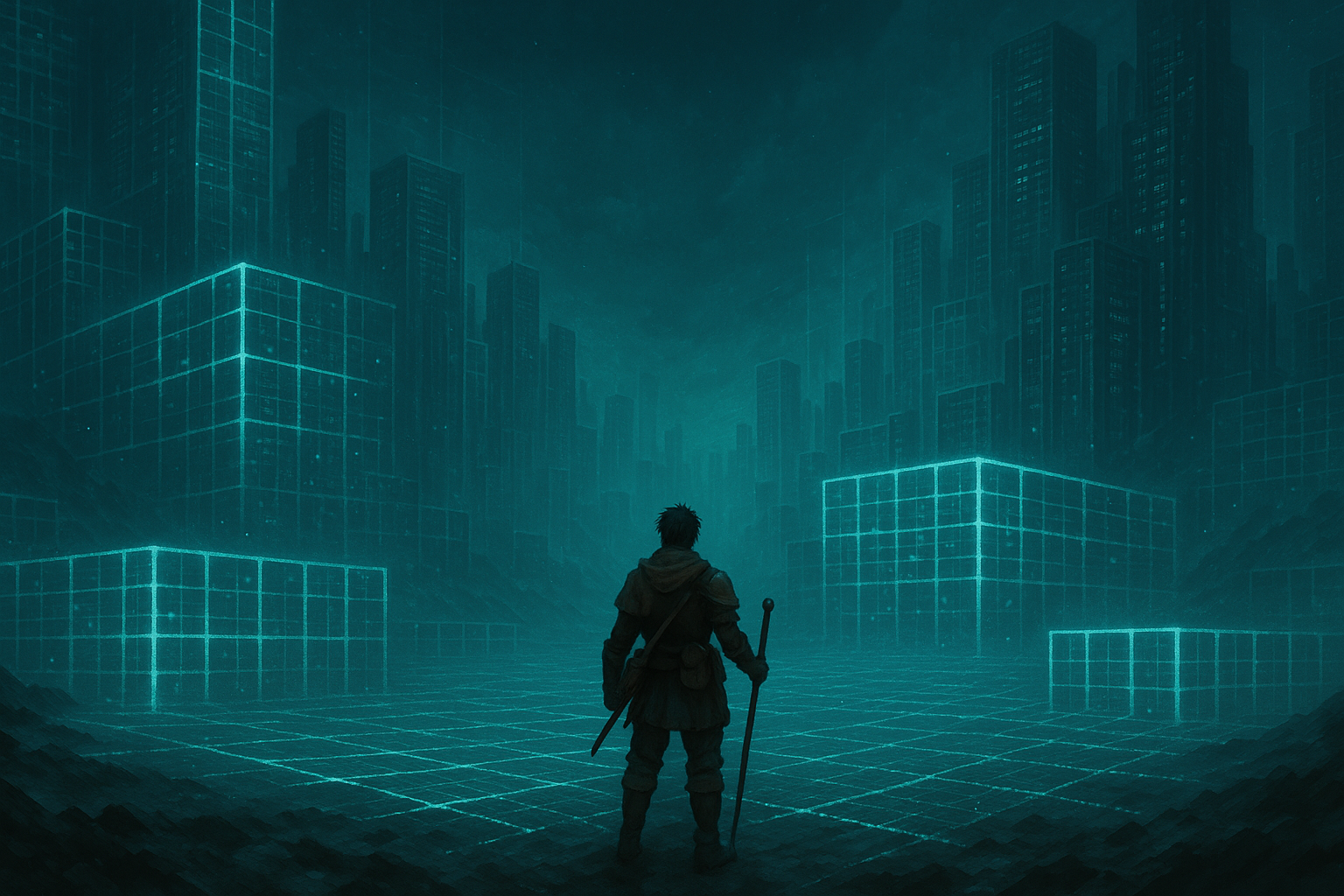
A lone adventurer in a cloak stands on a glowing digital grid, holding a sword and staff. Towering server-like structures and illuminated data cubes stretch into the distance, creating a surreal fusion of fantasy and cybernetic landscape bathed in teal light.

A World That Never Ends

Before World of Warcraft dominated the scene, before online gaming became ubiquitous, there was Final Fantasy XI, one of the earliest major MMORPGs (Massively Multiplayer Online Role Playing Game) to blur the lines between game and world. I remember how the idea of it seized something in me even before its release. Though I lived in the UK, I imported the US version the moment it became available, along with the special hard drive add-on for my American PlayStation 2, just so I could be part of it from day one.

It was not just a new game. It was a new model of what games could be. Suddenly, instead of a finite quest to be completed, I found myself inside a living, breathing world. A world that grew over time, filled with other real people. A place where my character was not simply a tool to “beat the game” but an avatar of long-term investment.

It changed the landscape of gaming in my head. There was no final “you win” screen. There was only progression, always something new to achieve, a job level to grind, a rare item to chase, a skill to refine. Every hour spent felt like I was building something lasting. Each goal achieved hit me with the unmistakable reward of earned dopamine.

I played loyally for eleven years. Eleven years of effort, of routine, of building meaning inside a system that was never meant to end. Until one day, it struck me that while I had been grinding in-game, I had been neglecting another kind of progress, the one in real life.

That moment of awareness cracked something open. And in the years since, a quiet, deeper thought has stayed with me:

And so began a slow unraveling of faith, not in the game, but in the very nature of systems we pour ourselves into.

I want to be clear, this is not a criticism of Final Fantasy XI. I have nothing but fond memories of the time I spent in Vana’diel, and I still feel a certain warmth when I think back on it. For me, it was more than a game. It was a formative experience that showed me what interactive worlds could become.

What follows is not about faulting the game itself, but about exploring a thought that began with it: the fragile, almost surreal nature of achievement in systems where meaning depends on someone else’s code.


The Quiet Dread

As much joy as Final Fantasy XI brought me, there was always a subtle, nagging awareness in the back of my mind. No matter how many hours I invested, no matter how many victories I earned through persistence and effort, every achievement ultimately existed at the mercy of a database.

All the battles fought, all the rare loot claimed, all the hard-earned levels, they felt monumental when I achieved them. But at the same time, I knew, at least on some level, that the same result could be produced in an instant by someone with access to the code. A single byte changed, a line of data edited, and what took me months or even years could appear as if it had always been there.

That thought never dominated my experience, but it haunted the edges of it. A quiet dread that whispered:

And while that sense first came to me in the artificial world of a game, the longer I sat with it, the more I began to feel its resonance in real life too.


Reality as Interface

The more I reflected on that uneasy truth from playing Final Fantasy XI, the more I began to notice echoes of it in the so-called “real world.” Our society presents us with achievements, milestones, and systems of value that feel as solid as granite, until you peer behind the curtain and realise how fragile, or even arbitrary, they really are.

Take careers. You can spend decades working your way up, accumulating titles, qualifications, and prestige, only for an institution to collapse, or for a shift in economic winds to render your expertise suddenly obsolete. One change in policy, one boardroom decision, one entry in a digital record, and years of effort can be redefined overnight.

Take money. We treat it as the universal metric of value, yet it is nothing more than numbers in a system most of us will never touch directly. Accounts can be frozen, balances can evaporate with inflation, currencies can crash, all while the deeper structures of power that govern them remain invisible.

Even identity itself can fall prey to this fragility. Credit scores, medical records, citizenship documents, so much of what makes up our “official self” exists only as data fields in a system. All it takes is an error, an exploit, or a shift in bureaucratic rules to alter who we are permitted to be.

The more I thought about it, the more I began to see:

But just like in a MMORPG, there are those with access to the code beneath the surface. And for them, what feels monumental to us may be nothing more than a line in a database.


Who Owns the Code?

In Final Fantasy XI, it was obvious who owned the code: the developers at Square Enix. They designed the rules, patched the glitches, introduced new content, and decided what was valuable within the world. My job as a player was to operate within the framework they provided.

But in the real world, the question of who “owns the code” is far murkier.

Governments write laws and policies, redefining what is legal, valuable, or even real. Corporations set the standards of employment, consumption, and credit. Financial institutions hold the levers that determine who can participate in the economy, and who is locked out. Media platforms curate the flow of information, amplifying some voices while muting others.

These systems are presented to us as neutral, inevitable, or even natural, yet they are as artificial as any game engine. They are designed, maintained, and, crucially, modifiable by those with access.

And just like game developers, those with control can decide:

  • What counts as an “achievement.”
  • Who gets rewarded.
  • Who gets excluded.
  • And when the rules suddenly change.

To live in society is to be a player in someone else’s world. We may grind away at goals that feel monumental to us, but ultimately, the meaning of those goals depends on recognition from structures outside our control.

It raises a sobering question:


The Hollow Game in Society

Once you see the pattern, it becomes difficult to unsee. The “hollow game” is not confined to fantasy worlds. It is baked into the very structures of modern society.

In capitalism, the grind is relentless. We are told to work hard, climb ladders, and accumulate wealth, yet the distribution of reward is rarely tied directly to effort. The system is designed so that some climb easily while others spend their lives grinding without ever escaping the starting zone. And just as in an MMO, the value of our currency, the cost of our goods, even the worth of our labor, can shift overnight with no input from us.

In academia, years of study and dedication may earn you a degree, but its value is only as stable as the institution’s reputation, the economy’s demand, or the government’s shifting criteria. A whole career path can be invalidated not by lack of effort, but by someone higher up rewriting the rules.

Even social status plays by the hollow game’s logic. Reputation, followers, clout, all can be accumulated, but just as easily stripped away by the invisible hand of algorithms, policy changes, or a sudden shift in collective opinion. You may invest years in cultivating a “profile,” only to watch it vanish in the blink of an update.

And underlying it all is the same uneasy truth I once felt in Vana’diel:

We live, in other words, inside someone else’s code.


The Illusion of Awareness as Power

My years playing Final Fantasy XI taught me something I did not fully understand at the time: the difference between what feels real to us and what is defined by the system. The grind, the friendships, the victories, those were mine. But the framework that measured, validated, or erased them was never mine to control.

The same is true in life. We live within systems that hand out points, titles, currencies, and reputations as though they are the bedrock of reality. But behind every number is a database, and behind every database is a hand on the code.

And perhaps that is the cruelest part. Even when we see the hollowness of the game, most of us keep playing anyway. We grind for points we know are fragile, chase achievements that could be rewritten at a keystroke, and cling to meaning that might never have been ours to begin with.

Maybe that is what it means to live in a hollow game: not that nothing matters, but that meaning is always conditional, always corruptible, always subject to erasure.