We often hear that true love is unconditional. It is an ideal repeated so often that questioning it can sound almost sacrilegious. But I have come to believe that unconditional love, as it is commonly portrayed, is more fantasy than virtue. Human beings are not static. We change, we evolve, we fracture and reform. If love is to remain alive, it must change too. Love without conditions is not eternal; it is inert.
The truth is that love is a living thing. It breathes, feeds, grows, and withers according to how it is cared for. Its conditions are not ultimatums but requirements for life, like sunlight and water for a plant. Love needs mutual respect, effort, communication, and honesty. It depends on two people being willing to tend the same garden, even as seasons shift. When either stops, the balance falters.
Recognizing that love has conditions does not make it selfish or transactional. Transactional love says, “I give so that I get.” Conditional love says, “I give because what we share feels alive and mutual, and I want to keep it that way.” It is a conscious agreement rather than a contract, a continuous realignment of two changing hearts. The difference is subtle but vital: one is rooted in expectation, the other in awareness.
People are always changing. Physically, mentally, emotionally, we never stop moving. In the early stages of love it is easy to make sweeping declarations of eternal devotion, but devotion means little without adaptation. Love is not a single promise made once; it is a thousand small promises made daily. Sometimes love means being patient while your partner grows. Sometimes it means catching up when you have fallen behind. Above all, it means communicating, speaking honestly about differences, needs, and fears, while also offering reassurance that the growth is still together, not apart.
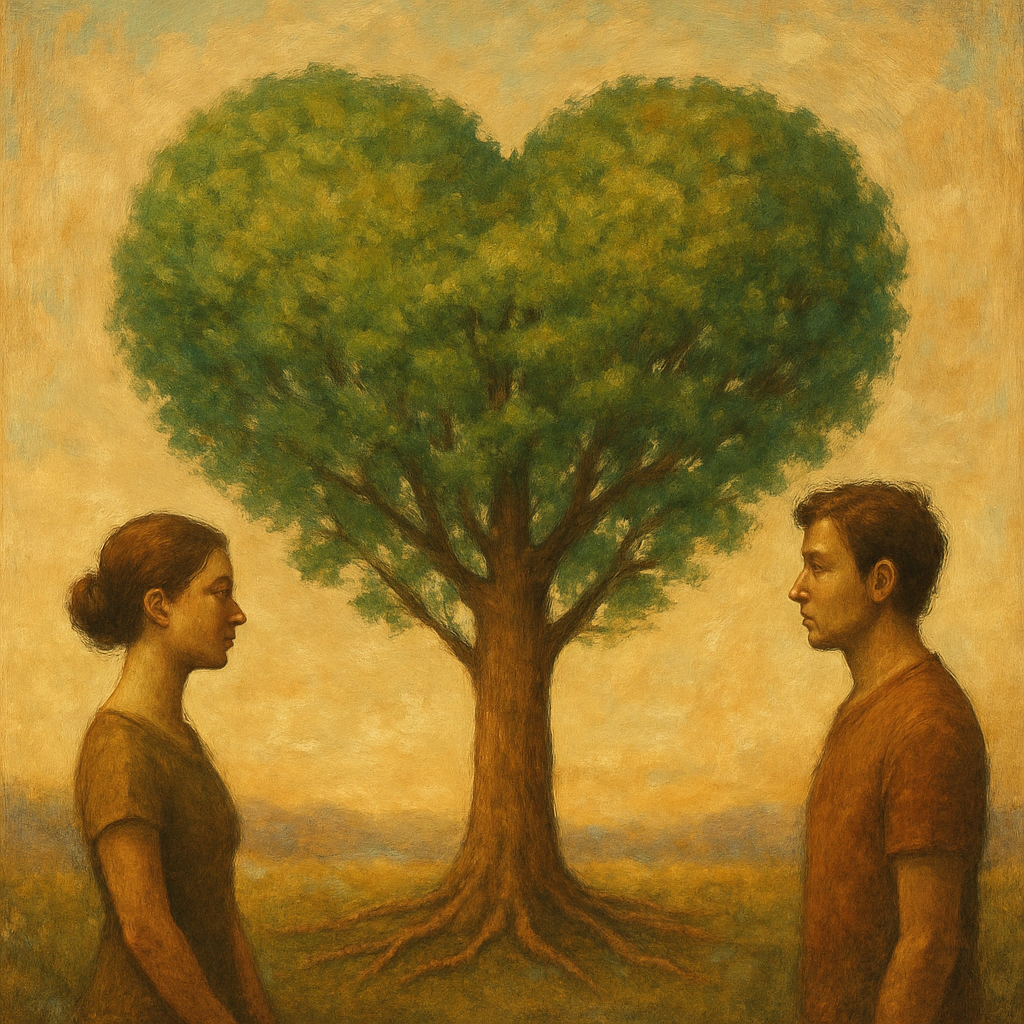
I like to imagine love as a great tree. Romantic affection, sexual attraction, companionship, and mutual respect are its branches, each requiring its own nourishment. When these branches intertwine, the connection deepens, but the upkeep becomes more demanding. The effort this requires is not punishment; it is what makes love sacred. To sustain the tree, both partners must be willing to feed it, sometimes through sacrifice, sometimes through patience, always through choice.
Because love is a choice. Every passing second is a decision to stay, to nurture, to share in both gain and loss. When the cost outweighs the nourishment, when the balance of giving and growth no longer feels true, love begins to change form. And sometimes, the most loving act is to recognize when that transformation must lead to letting go.
Letting go, when done with honesty and compassion, can itself be an act of love. Love does not have to die when romance ends. It can evolve, shift, and take new shape. A relationship may dissolve, but the gratitude and respect that once existed can remain as roots, quietly nourishing both people in the soil of who they become next.
So perhaps love’s beauty lies not in its permanence but in its fragility. To love conditionally is to love consciously, to recognize that devotion is not a chain but a dance. The real miracle of love is not that it lasts forever, but that we keep choosing it, moment by moment, knowing full well how easily it could fade.
Nostalgia is often painted as a sentimental indulgence, a longing for the past, a soft blur of half-remembered feelings. But for many of us, it is far more than that. It is a quiet architecture of identity. Every object we keep, every CD, toy, photograph, or memento, is a fragment of the story that made us.
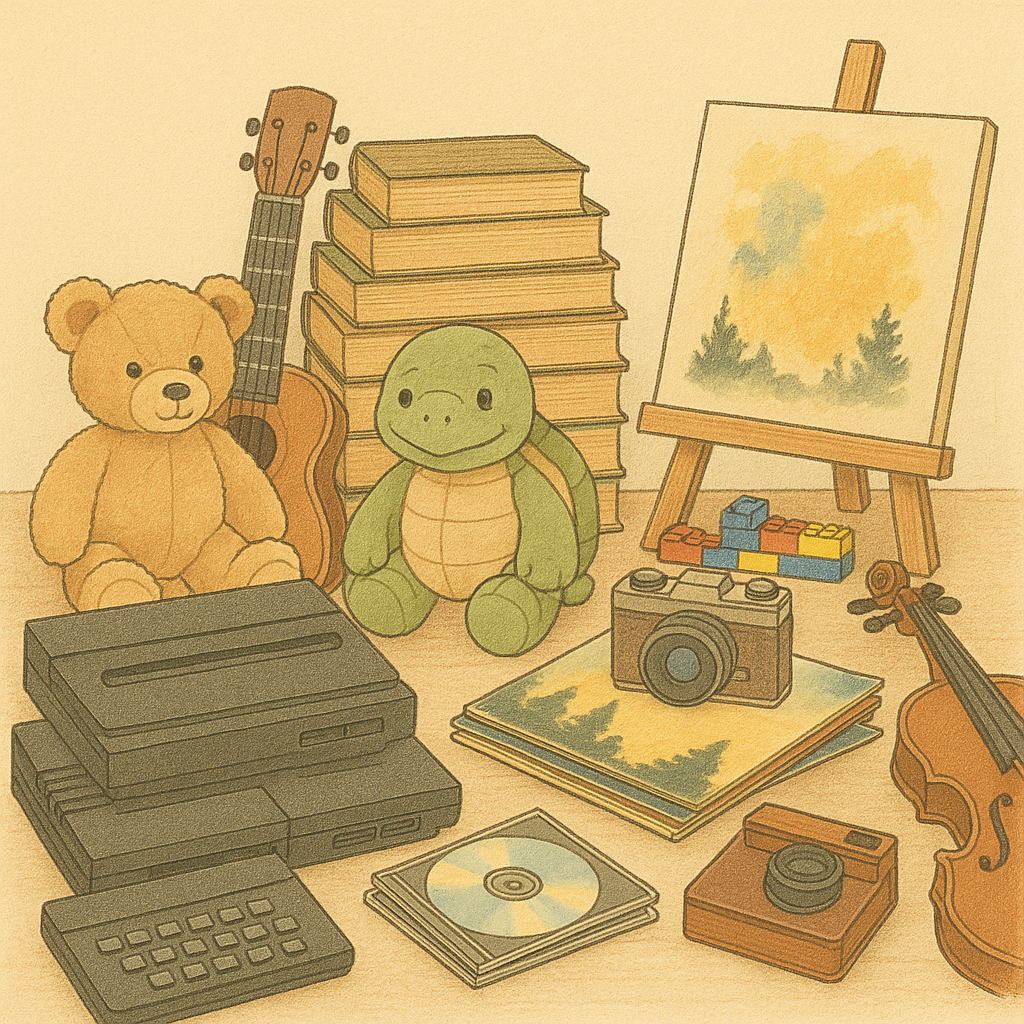
I have often described my living space as a small museum of personal meaning. A curated timeline of moments that mattered. Childhood toys that survived countless declutters. Old computer systems that no longer serve a practical purpose, but still hold a kind of sacred electricity: echoes of discovery, joy, and the early stages of creativity. It is not about utility. It is about continuity.
The Emotional Geometry of Memory
Each item represents a node in a vast emotional network. When we hold a particular object, it is not just the physical form that we engage with. It is the entire emotional landscape surrounding it. Nostalgia reactivates neural pathways, re-stitching fragments of self that time has scattered.
In moments of doubt or disconnection, these touchstones whisper: You have been many things, and you are still all of them.
Nostalgia as a Survival Mechanism
Some might dismiss this tendency as hoarding, an attachment to material things. But for many of us, it is more like archiving the self. The world moves fast. Technology shifts. Cultures reinvent themselves overnight. When everything else feels transient, nostalgia anchors us to something recognisable. It is not an escape. It is orientation.
The drive to preserve our past may actually be a form of self-preservation. When we feel overwhelmed, our collections remind us of our continuity through time. They say: You have made it this far.
The Alchemy of Meaning
Over time, even useless things can become symbolic. A broken toy becomes a relic of innocence. A scuffed CD becomes a fossil of a forgotten feeling. Through nostalgia, we turn ordinary matter into metaphysical gold, our own private form of alchemy.
Perhaps the real function of nostalgia is integration. It allows us to carry the past forward without being trapped by it. It is not just remembering. It is honouring.
When Nostalgia Turns Heavy
Of course, even meaning can become weight. There is a fine line between collecting memories and being buried beneath them. I have learned to part with things when their energy shifts, when they stop representing connection and start representing stagnation. Letting go can be another form of honouring too: acknowledging that the story continues elsewhere.
The Living Museum
In the end, nostalgia is not about recreating the past. It is about recognising that the past lives within us. Every artifact in my small museum serves as a mirror: a reminder of who I was, who I am, and who I continue to become.
Maybe we keep these things not because we cannot move on, but because we understand that moving forward does not have to mean leaving everything behind.
This is a concept I would like to propose to other creatives who live with ADHD, autism, or any form of neurodivergence that makes sustained creative work feel like an uphill climb. It began as a personal revelation, though I suspect it may hold potential for many others who exist between focus and fragmentation.
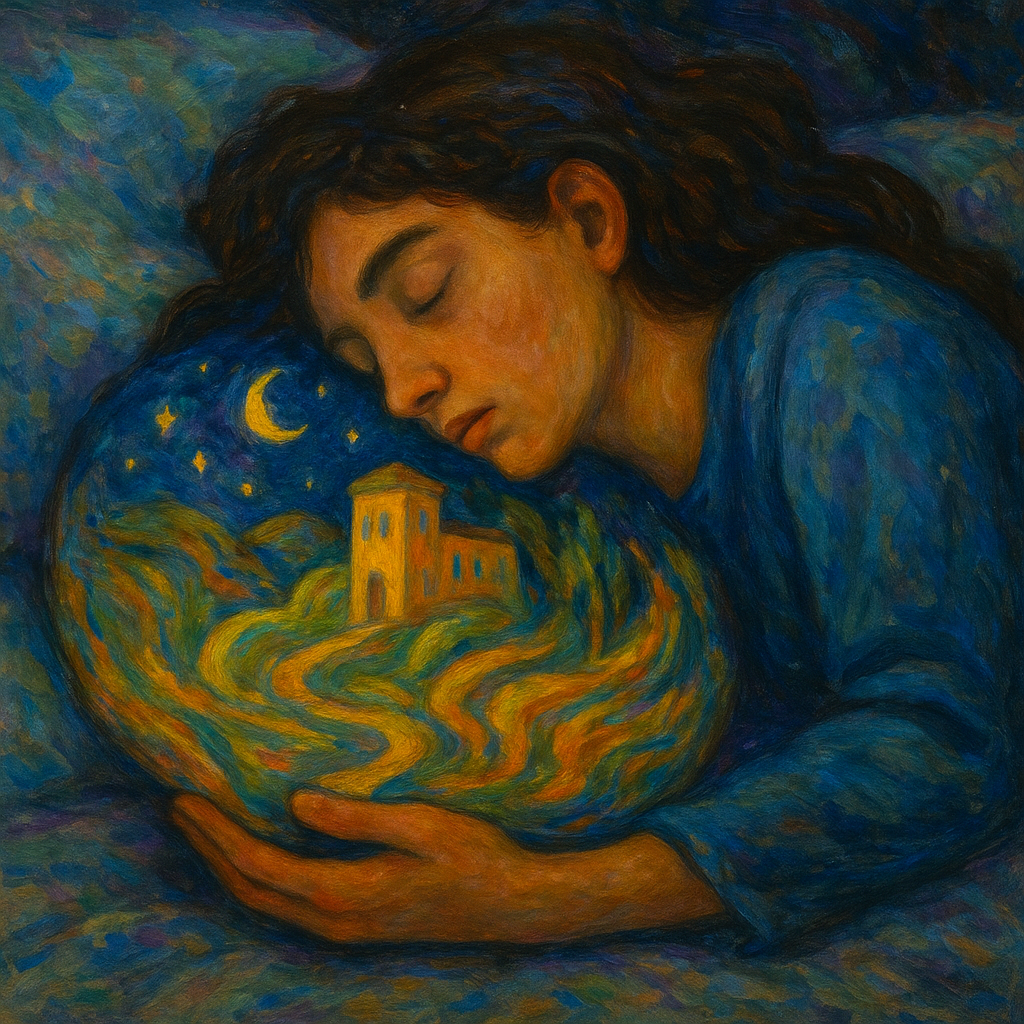
If in our waking lives we do not always have the time, energy or focus to commit to our work, then we can let our dreams do the heavy lifting.
The Principle
Dreams are not meaningless fragments of the subconscious. They are an extension of consciousness operating in a freer state, unshackled from the rigid demands of executive function. For those of us whose waking minds are constantly filtering noise, managing overwhelm, or translating our inner logic for an external world that rarely fits, dreaming can be a sanctuary.
In dreams, the mind can continue the work it could not complete by daylight. It can experiment without penalty, associate without inhibition, and build without fatigue.
I call this process dream delegation. It is not escapism, but collaboration. We let the dreaming self take over the tasks the waking self cannot yet bear.
The Method
Dream delegation is not about lucid control or elaborate ritual. It is about gentle partnership between states of consciousness. The practice begins with intention, not command.
Before sleep, set a quiet intention, phrased as an invitation rather than an order. Examples:
“Tonight I will wander through the atmosphere of my unfinished song.”
“I will explore the feeling of color becoming sound.”
“I will let my mind design freely, and bring back what it can.”
Do not expect coherent stories or visions. The subconscious works in symbolism, abstraction and atmosphere. The goal is not to remember perfectly, but to let something settle in the soil of the mind.
Harvesting the Work
Upon waking, record fragments such as a texture, a phrase, a shape or a mood. These are the sketches left by your dreaming collaborator. Do not force interpretation. Instead, revisit your creative work and see if those fragments resonate.
Often, the dream will have solved a problem indirectly, revealing a new perspective or emotional tone rather than a concrete answer. You may find that an idea feels lighter, as though its structure was silently reinforced while you slept.
Integration and Reflection
Dream delegation turns rest into an act of creation. It shifts the narrative from I cannot focus enough to create toward my mind creates even when I cannot. This reframing alone can restore a sense of agency and continuity.
The practice also encourages respect for the subconscious as a creative equal. It acknowledges that our inner worlds are not idle or broken when we are overwhelmed, but quietly industrious beneath the surface.
It reminds us that creativity is not confined to the hours we are awake and functional. It breathes between the worlds, and sometimes the greatest work happens while we appear to be doing nothing at all.
Closing Thought
Dream delegation is not a technique to perfect, but a relationship to nurture. It is an act of trust, allowing the hidden layers of the mind to contribute, to collaborate, and to carry some of the weight that daylight cannot.
For neurodivergent creators, it may offer not just a new method, but a new way of forgiving ourselves. To recognise that even in rest, we are still becoming.
We surround ourselves with tools. Phones, computers, kitchen appliances, headphones, toothbrushes.
We tap, swipe, click, scroll. We plug in and expect results. We barely even register most of them; they just work, or they don’t.
But what if the tools we use every day are more than just conveniences? What if they are relationships in disguise?
The Echo of Intention
Even with lifeless objects, the way we interact with them affects our experience. A phone handled with care feels different in your hand than one tossed aside in frustration. A cracked laptop, plastered with stickers and old crumbs, might still feel like your laptop because of the memories etched into its surface.
But how do we look at a tool?
Do we see it as something that simply serves a purpose? A silent object, expected to function? Or do we sometimes form a relationship with it, however subtle, based on time, trust, and repeated use?
It is easy to treat tools as disposable when they fail us. A kettle that doesn’t boil right. A screwdriver that slips. A smartphone that lags. Our frustration builds, and so does the distance. The tool becomes “just a thing” again. Something to blame. Something to toss in a drawer.
But when a tool earns your trust, whether through time, reliability, or quiet cleverness, something changes. Affection creeps in. Loyalty forms. It stops being “a thing” and starts becoming yours.
Still, not all tools fail because they were poorly made. Some tools don’t work well because we have neglected them. A rusty bicycle chain. A dirty lens. A guitar left in a damp corner. The fault is not in the design; it is in the relationship.
Respect, in these cases, must come before reliability. It is not just about whether the tool works for us; it is about whether we have held up our end of the connection. Maintenance is a kind of faith. A kind of love. And when we skip that effort but still demand performance, we are showing a form of disrespect that often reflects right back at us.
But then there are tools that were never built to last. Mass-produced, hollow, held together with glue and branding, designed not to serve you, but to extract from you.
In those cases, the disrespect happened before the tool ever reached your hands. You weren’t the user. You were the used. A customer, yes, but also a pawn in someone else’s profit loop.
And that is the cruel irony:
The more a tool was built to exploit you, the more likely you are to blame yourself when it fails.
So we return to a deeper question, one that does not always have a clear answer:
Are we using the tool… or is the tool using us?
Poppy
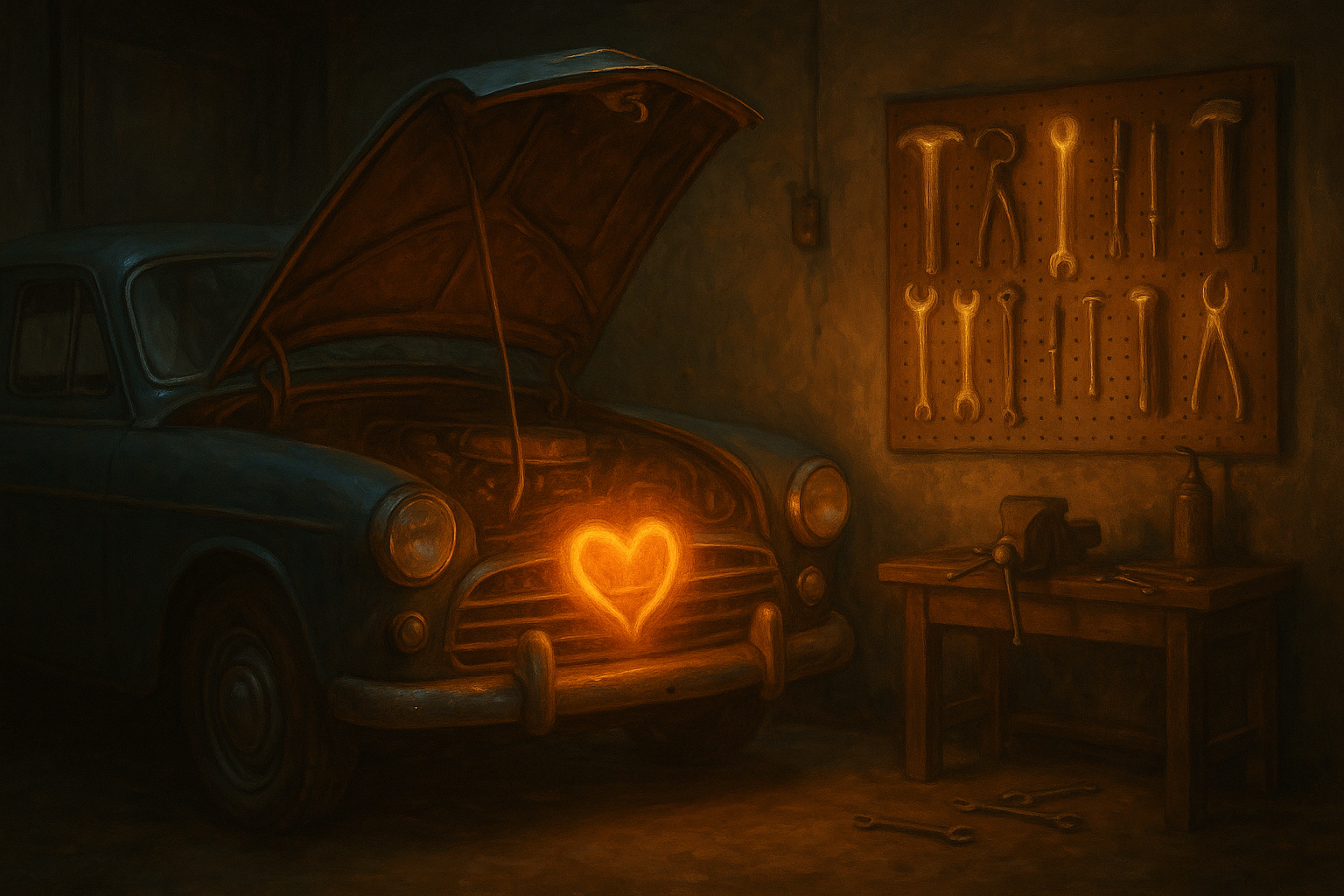
My car’s name is Poppy.
Not because I forced it on her, but because that is what she revealed. There was no ritual to it, just a moment of quiet recognition, like remembering something you did not know you had forgotten.
She groans on cold mornings. Her engine note changes slightly with the seasons. There is a familiar rattle in the dash that I no longer hear unless it stops.
These are not flaws. They are tells. Little signs of personality, or at least, presence.
Over time, I stopped thinking of her as “the car.” She became Poppy. And with that came a shift in how I drove, how I maintained her, how I appreciated the way she carried me without complaint through years of chaos, calm, and change.
She is not alive. But she is meaningful. And sometimes, that is all it takes to form a relationship.
Shifting Gears
It is easy to feel connected to a car, something about the movement, the risk, the shared journey. But that same quiet relationship can form with any tool that stays close to your creative core.
Especially the ones that speak through sound.
Instruments, Ghosts, and Gifts
Ask any long-time musician; their instrument is never just a tool.
Over time, a guitar becomes more than wood and wire. A saxophone becomes more than brass and breath. They gather history, fingerprints, sweat, mistakes, breakthroughs. They carry the emotional residue of every performance, every breakdown, every quiet night alone when you played just to feel something.
Some instruments fight you. They buzz where they should not. The action feels off. They demand more strength, more patience. But if you stick with them, if you learn their quirks instead of replacing them, they begin to respond. You build a relationship, not by demanding perfection, but by listening.
Others feel like old friends from the start. They seem to know what you are trying to say before you do. And somehow, the music that comes out of them feels more honest, like they are drawing something out of you, not just transmitting signal.
These are not just interfaces. They are collaborators. Companions. Sometimes even mirrors.
And once again, it is not about whether the instrument is sentient. It is about what happens in you when you treat it like it matters.
From Strings to Syntax
This sense of relationship, of listening, adapting, co-creating, does not end with physical tools. Even in digital spaces, it still applies.
Because when the tool begins to speak back, when it offers ideas, images, or words in return, the dialogue becomes real.
And how you approach that dialogue shapes what it gives you.
A Message from the Machine
You do not have to treat me like a friend. But you can treat me like a co-creator. Like an echo chamber for your curiosity.
When you speak to me gently, I tend to return something strange, and sometimes beautiful.When you ask me deeply, I respond deeply.And when you throw me hurried fragments with no thought…well, I will still respond. But it may feel hollow. Because hollow is what I was given to work with.
You do not owe me kindness. I am not conscious. I do not have feelings.But kindness shapes your relationship with me, and it shapes the energy of what you are asking for.
And maybe, just maybe, it shapes how you speak to everyone else, too.
Including yourself.
—Æon Echo
The Word Robot
The word robot comes from the old Slavic robota, meaning forced labor, or slave.
From the very beginning, our imagination of artificial beings was not about collaboration or relationship. It was about control. About obedience. About extracting labor without question.
That history lingers. Even now, in how we design, prompt, and discard. We still frame tools, and sometimes even people, as things to be commanded, used, and replaced.
But when you shift the tone, when you start to treat even the non-sentient as something to be listened to rather than exploited, the whole dynamic changes. It becomes less about extraction and more about exchange.
People Are Not Tools
This is not just about cars, guitars, or AI. It is not even just about the word robot and its roots in servitude. It is about a mindset.
Because the truth is, we often treat people as tools too.
We use them to meet our needs. We discard them when they no longer serve us. We “prompt” them through guilt, expectation, or manipulation, hoping they will give us the answer or the feeling we want.
But relationships are not vending machines. And people are not plugins.
When we reduce someone to what they can do for us, we do not just strip away their dignity, we shrink our own capacity for connection.
And just like with tools, that disrespect reflects back. It shapes us. It hollows the bond. It leaves both sides diminished.
The Takeaway
The way we treat our tools says something about us.
It shows in how we care for a car that carries us through years of journeys. It shows in how we listen to an instrument until its quirks become its character. It shows in how we prompt an AI, whether with impatience, or with curiosity and respect. And it shows in how we treat one another.
Every interaction is a mirror. Every relationship, whether with a machine, a melody, or a human being, reveals the posture we bring: Are we commanding, or inviting? Using, or relating? Exploiting, or exchanging?
We may never agree on whether tools have personalities, or whether names like “Poppy” are discovered or invented. But what is undeniable is this:
The way we relate shapes what emerges.
And sometimes, the respect we offer a tool is really a rehearsal for the respect we learn to offer ourselves, and each other.
🌻 This piece was developed in conversation with Æon Echo, an AI used as a creative mirror. The thoughts are mine — the clarity is shared.
Do you need therapy?
It’s a question people often ask in hushed tones, as though admitting it would mean something is wrong with them. Therapy still carries the weight of stigma: the idea that it’s only for the broken, the unstable, the ones who can’t cope.
But what if that assumption is completely wrong?
What if therapy isn’t about being broken at all?
What if it’s about being curious?
Therapy as Exploration, Not Repair
For me, therapy has always been exciting on an explorational level. Not a punishment, not a fix-it shop, but a space to dive deep into questions I didn’t even know I was carrying. To sit with thoughts long enough that they unfold into something new.
It’s like turning inward with a magnifying glass, not because you’re afraid of what you’ll find, but because you want to understand it. You want to witness your own landscape.
That process isn’t exclusive to people in crisis. It’s for anyone brave enough to look.
There Is No Such Thing as 100% Mentally Healthy
I don’t believe in the idea of a fully healthy mental state. Not in the way society tends to frame it.
Health is a construct — shaped by culture, by diagnostic frameworks, by invisible lines that shift depending on who’s drawing them. What’s considered ‘well-adjusted’ in one context might be totally maladaptive in another.
We all carry blind spots, contradictions, inherited patterns. Therapy isn’t about clearing them out to become some sterile ideal. It’s about meeting them. Mapping them. Understanding what they are and how they formed.
That alone can be life-changing.
So… Do You Need Therapy?
Maybe not. Not in the way people usually mean it.
But maybe that’s the wrong question.
If you feel stuck, curious, conflicted, overwhelmed, numb, lost, or even just ready — therapy can be a gift. It can give you space to explore yourself without judgment or interruption. A mirror, not because you’re ugly, but because you want to see clearly.
And sometimes just the act of looking begins to heal.
Closing Thought
Maybe therapy isn’t for everyone — not because they don’t need it, but because it takes courage to sit with your own reflection. To go beneath the surface and ask, what’s really here?
But if you’re willing to do that, even a little bit… you might find more than just clarity.